ESA title

AI for Sustainable Development Goals initiative yields user-focused solutions to enhance food security

The EO & AI for SDGs Innovation Initiative was set up by Φ-lab and the World Food Programme (WFP) Innovation Accelerator to find commercially viable Earth observation and Artificial Intelligence-based solutions to global hunger issues. Launched in 2021, the initiative short-listed four start-ups and then supported them in designing and testing their solutions with users and WFP stakeholders in several countries.

Earth observation (EO) and artificial intelligence (AI) have a significant role to play in helping to increase food security. The focus of ESA Φ-lab in its research and co-funding support is always on innovation led by market and user needs, with particular emphasis on integrating emerging technologies such as quantum computing, blockchain and crowdsourcing.

These principles were very much to the fore when Φ-lab and WFP launched the EO & AI for SDGs Innovation Initiative. In selecting the finalists from the pool of entrants in the challenge, the panel sought commercially oriented start-ups with solutions which could scale up and were sustainable. WFP country offices and programme units were also consulted to gain user input.

As a result of the selection process, four start-ups were identified, all of which were deemed to have the right combination of technical prowess, flexibility and readiness for coaching. All four then attended a four-day workshop where they worked with Φ-lab and WFP stakeholders on initial co-design and piloting plans, before going off to develop their solutions in detail using the human-centred design approach.

With the initiative completed, now is a good time to look back over the progress and achievements of each project.

IBISA: forecast index insurance

Luxembourg start-up IBISA worked with the WFP Guatemala Country Office to design and test a new forecast index insurance product for smallholder farmers in the country’s Chiquimula region. The pioneering IBISA insurance model triggers action based on climate forecasts and observations, granting farmers advance pay-outs ahead of a forecast period of consecutive lack-of-rainfall or dry days. In this way the smallholders can take action to prepare and protect the harvest from damage.

The product is based on a combination of the ECMWF ERA5 dataset, 10-day forecast data and field visits, with pricing ensuring that policies are affordable for local people. IBISA and WFP are currently working together to engage local governments and communities, and product launch is expected later this year.

agriBORA: crop yield prediction and monitoring

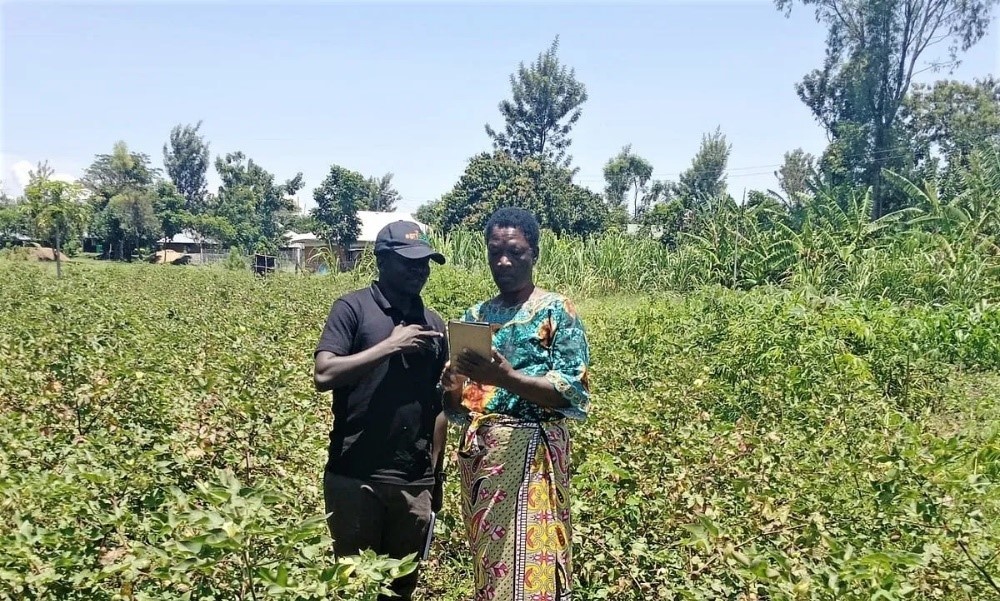
agriBORA is a German company with operations in Kenya. Its platform uses machine-learning (ML) processing of satellite and ground-based data to monitor and forecast crop yields for Farmer Service Centres (FSCs), which provide information, finance and market connections to help farmers move from small-scale to commercial production. Within months of launching the pilot, agriBORA had enlisted 30 FSCs and thousands of farmers, leading to the development of models for both yield prediction and crop classification.

The pilot highlighted the fact that user geo-tagging is an essential factor for training the ML model and thereby increasing prediction accuracy. In terms of further development of the platform, agriBORA is therefore seeking to incentivise FSCs and individual farmers to geo-tag their land so that the precision of the insights they receive back from agriBORA continues to improve.

Oxford Earth Observation Limited: hydrological drought index

Specialising in water management, Oxford Earth Observation is a British start-up that has developed a hydrological drought index based on precipitation, soil moisture and surface water availability. Rather than simply relying on rainfall like the Standard Precipitation Index, the company’s more comprehensive model factors in additional components such as water run-off and infiltration to groundwater, in order to give a more complete picture of green vegetation growth.

In trials in Mozambique and Zimbabwe, Oxford Earth Observation and WFP found that growth forecasting improved by an average of 20% compared with the Standard Precipitation Index. WFP is now planning further validation of the new model and a wider roll-out in drought-prone areas.

RAMANI: CHEETAH

Highway tolls, customs charges and bribes can severely eat into the profits of players in the food supply chain, while poor road quality can destroy crops due to excessive vibration. Dutch company RAMANI has produced an application dubbed Chains of Human Intelligence Towards Efficiency and Equity in Agro-food Trade along the Trans-Africa Highway (CHEETAH). Piloted with sellers, traders and transporters in Ghana and Burkina Faso, the CHEETAH application collected crowdsourced data on charges and measured road conditions through both very high resolution optical satellite imagery and the motion sensor of users’ phones.

The result was a wealth of information that helps to monitor unforeseen costs and protect produce in transit. Possible future expansions of the application include a digital marketplace for crops, access to emergency vehicle repair and measuring CO2 savings.

“Collaborating with WFP Innovation Accelerator on this initiative has been a fantastic opportunity to see the real-world needs of growers and traders in often challenging regions,” commented Φ-lab data scientist Nicolas Longépé. “As shown by the skills and output of the four finalists, AI-powered Earth observation can be a vital tool for humanitarian development, and ultimately the final proof of the benefits is in the ability to improve lives and outcomes in communities around the world.”

To know more: Fighting hunger from space, WFP Innovation Accelerator

Image courtesy of agriBORA

Φ-lab and UNICEF joint dengue fever research receives further award

A project carried out by Φ-lab in conjunction with UNICEF has been selected as one of the UN agency’s top research initiatives of 2022. The success of the project, which developed an Artificial Intelligence (AI) solution for quantifying dengue fever outbreaks, has led to its operationalisation phase receiving significant funding from the Wellcome Trust.

Dengue fever is a major public health issue in the world’s tropical and sub-tropical regions, with the disease registered as endemic in more than 100 countries according to the World Health Organisation. Forecasting outbreaks has traditionally been particularly challenging due to the complex nature of how dengue spreads, but pioneering research by Φ-lab in conjunction with UNICEF has shown that modelling from Earth observation data can successfully predict instances of the disease one month in advance.

The climate-based ensemble model uses multiple Machine Learning approaches to take account of geographical variations in dengue incidence and proved to be more accurate than previous predictive techniques when piloted in Brazil and Peru.

The importance of the research was initially recognised by UNESCO in its 2021 Global Top 100 list of projects solving problems related to the UN Sustainable Development Goals (SDGs). The possibility of further acclaim followed last year, when the project was put forward for the Best of UNICEF Research 2022 competition. This annual challenge seeks to promote research best practices and to award activities with a high potential for impact on policies and programmes that benefit children. Submissions are assessed on the basis of a number of criteria, including originality, relevance, methodology and local engagement.

As a result of the peer review and panel evaluation, Φ-lab’s research was short-listed as one of the three projects in the critical ‘Every child survives’ goal area. In fact, the project was given pride of place in the enticing opening sentence of the UNICEF report on the finalists: “Imagine creating a machine learning model that uses data about rainfall to forecast disease outbreaks.” The report goes on to explain that the 12 selected projects all deliver results for children by informing decision-making, shaping policy and raising public awareness, showing “not only the power of innovation in the face of emergency and crisis, but also the virtues of agility, endurance and scalability.”

Results from the research showing the state-by-state correlation between dengue incidence rate, maximum temperature and humidity in Brazil

The dengue project was then showcased at a UNICEF award ceremony. In a video played to the online audience, Hanoch Barlevi, UNICEF Disaster Risk Reduction/Climate Changes Assessment Specialist emphasised the benefits of the endeavour: “In tandem with the [UNICEF] Innovation Team, and partners like the European Space Agency, we have explored different approaches and techniques and technologies to strengthen health systems, making them better prepared, which will boost estimates of the current and future projection of dengue distribution for children today and tomorrow.”

The foundation laid by Φ-lab’s research has now attracted funding for the crucial next phase, developing an end-user application for predicting dengue outbreaks. The Wellcome Trust has granted over €600 000 to the University of California San Diego, New Light Technologies Inc. and UNICEF to produce the tool, initially for Latin America and then potentially expanded to other regions and diseases.

“We’re truly delighted to receive such recognition for our work,” commented Rochelle Schneider dos Santos, the Φ-lab researcher who led the project. “We hope and believe the dengue research will be a game changer for outbreak modelling, and the multi-disciplinary nature of the awards is particularly rewarding – sustainable development from UNESCO and children’s health from UNICEF. In addition, the grant from Wellcome is another example of how Φ-lab’s AI-powered research can pave the way to third-party funding and customer-focused products and services.”

To know more: UNICEFUNESCO, Wellcome Trust

Competition details and extracts courtesy of Best of UNICEF Research 2022, UNICEF Innocenti – Global Office of Research and Foresight, Florence, 2022

ESA Φ-labbers share stories about their Earth observation activities

A new video provides a chance to meet researchers and business innovators from ESA Φ-lab and get an overview of their stimulating working environment.

The work of ESA Φ-lab covers a remarkably wide scope in both Earth observation (EO) research and support to the commercialisation of EO products and services. In this brief but informative video, Φ-lab members from both the Explore and Invest offices talk about some of the fascinating activities they are involved in, embracing topics such as dengue outbreak risk assessment, embedded artificial intelligence on satellites and collaborating with EO start-ups.

Φ-lab is always looking for new recruits, so if you are interested in pushing the boundaries in leading-edge EO research, please get in touch.

Boosting market traction for agri-monitoring service

Support from ESA’s Earth observation InCubed commercialisation programme has enabled two companies, GeoVille and EOX, to secure a major contract to provide an Austrian Area Monitoring Service. The consortium’s EO-WIDGET software provides the farming sector with critical satellite-derived information and is a key tool in compliance monitoring for the European Common Agricultural Policy.

Agricultural monitoring has gained ever-increasing attention recently in the face of a major global food crisis and growing concerns over food security. Within Europe, the EU’s Common Agricultural Policy (CAP) is a fundamental pillar of the continent’s food supply. The CAP now requires national governments to carry out increasingly extensive checks and controls of agricultural production and payment claims from farmers.

Read the full article on www.esa.int

ESA Member States boost EO Commercialisation at Ministerial Council

At the recent 2022 ESA Council at Ministerial Level, Member States affirmed the success of InCubed by renewing the programme with a 65% budget boost. InCubed’s new, wider remit encompasses a host of actions designed to further stimulate and accelerate European innovation and competitiveness in commercial Earth observation.

The ESA Council is the governing body that provides the policy guidelines within which the Agency develops the European space programme. The Council meets periodically at ministerial level, and at the last meeting, the 2022 ESA Council at Ministerial Level (CM22), Member States gave a ringing endorsement of ESA’s work, with an exceptional 17% subscription increase compared with CM19. This equates to a total of €17 billion, of which 16% is destined for the Earth Observation Programme (EOP) for continuing and developing its efforts in facing the global challenges of 2023 to 2026 and beyond and ensuring European strategic autonomy.

As an ESA Earth observation commercialisation initiative, InCubed is an optional programme for Member States and so is heavily dependent on the outcome of Ministerial Council meetings. For CM22, the Φ-lab Invest office submitted proposals for expanding the scope and reach of InCubed, leading to the successful allocation of additional funds amounting to €176 million overall programme size. Two new countries, Slovenia and Hungary, also joined, bringing the InCubed family to a total of 21 participating states.

Dubbed InCubed-2, the latest incarnation of the programme comprises a suite of enhancements termed ‘Invest Actions’. These have been added as a result of lessons learnt during previous InCubed phases and are intended to create a framework of partnerships and collaborations that will strengthen the InCubed offer and further support the evolution of the commercial Earth observation (EO) sector. Examples of planned activities include research on promising EO markets, awareness campaigns, creating InCubed ambassadors, start-up coaching, InCubed Business Innovation Factories, and a new, faster route for rapidly delivering proofs of concept using emerging technologies.

“The funds granted at CM22 will further empower us in our quest to advance European commercial EO,” comments InCubed Programme Manager Michele Castorina. “InCubed strives to bring together technical capabilities and investment to enable European entrepreneurs to operate in the global EO domain, and the Invest Actions will help underpin this vision by reinforcing relationships with private investors, venture builders and other key stakeholders.”

One Invest Action that is already underway is thematic calls. Conceived as competitive initiatives aimed at selecting and coaching promising companies, thematic calls are based on current societal issues that may benefit from EO technologies and data. The first call, covering the topic of Cultural and Natural Heritage, was launched recently and will be followed by further such competitions in the future.

Other InCubed events and campaigns are also on the way this year, including EO Commercialisation Days in May. This forum for entrepreneurs, investors, institutions and established companies will provide an ideal platform for commercial collaboration. Details of the event will be published shortly.

To know more: CM22, InCubed, Cultural and Natural Heritage Thematic Call

Image courtesy of ESA – S. Corvaja

ESA and Sinergise to collaborate on promotion of EO space entrepreneurship

ESA has signed a letter of intent with Slovenian company Sinergise Ltd to foster Earth observation (EO) entrepreneurship and encourage the development of EO commercial solutions. The collaboration will target companies supported by ESA Φ-lab, the InCubed EO commercialisation programme, ESA’s Business Incubation Centres (ESA BICs) and ESA Technology Brokers.

Sinergise Ltd has extensive expertise in developing advanced geospatial information systems (GISs) based on cloud and web technologies. Established in 2008, the company focuses on high-impact fields such as Earth observation, making it easy for individuals, institutions and companies to retrieve actionable insights.

The intended partnership on Earth observation commercialisation with ESA is aimed at joint efforts between the two entities for bolstering the development of an active and vibrant EO commercial ecosystem, strengthening the usage of innovative technologies and raising awareness of EO-based services. The collaboration is particularly focused on enhancing the business cases of companies that are or have been supported through Φ-lab or the InCubed EO commercialisation programme, ESA BIC or ESA Technology Broker activities.

One of the key actions for accelerating entrepreneurship will be a free one-year enterprise-level subscription for Sinergise’s Sentinel Hub, an award-winning satellite imagery archiving, processing and distribution service. Located either in a cloud-based GIS or within the client environment, Sentinel Hub provides easy access to satellite data from missions such as Sentinel, Landsat, Planet, Pleiades and WorldView, and can help both space and non-space players leverage a wealth of EO-powered information.

Further details on the collaboration and how to take advantage of the Sentinel Hub offer will be communicated to InCubed and other ESA Φ-lab-supported companies in the coming months, and will also be distributed via the ESA BIC and ESA Technology Broker Network.

To know more: Φ-lab, InCubedESA BICESA Technology Broker

Copernicus Sentinel-2 image courtesy of ESA

ESA continues to explore the value of AI in space in partnership with Thales Alenia Space and Microsoft

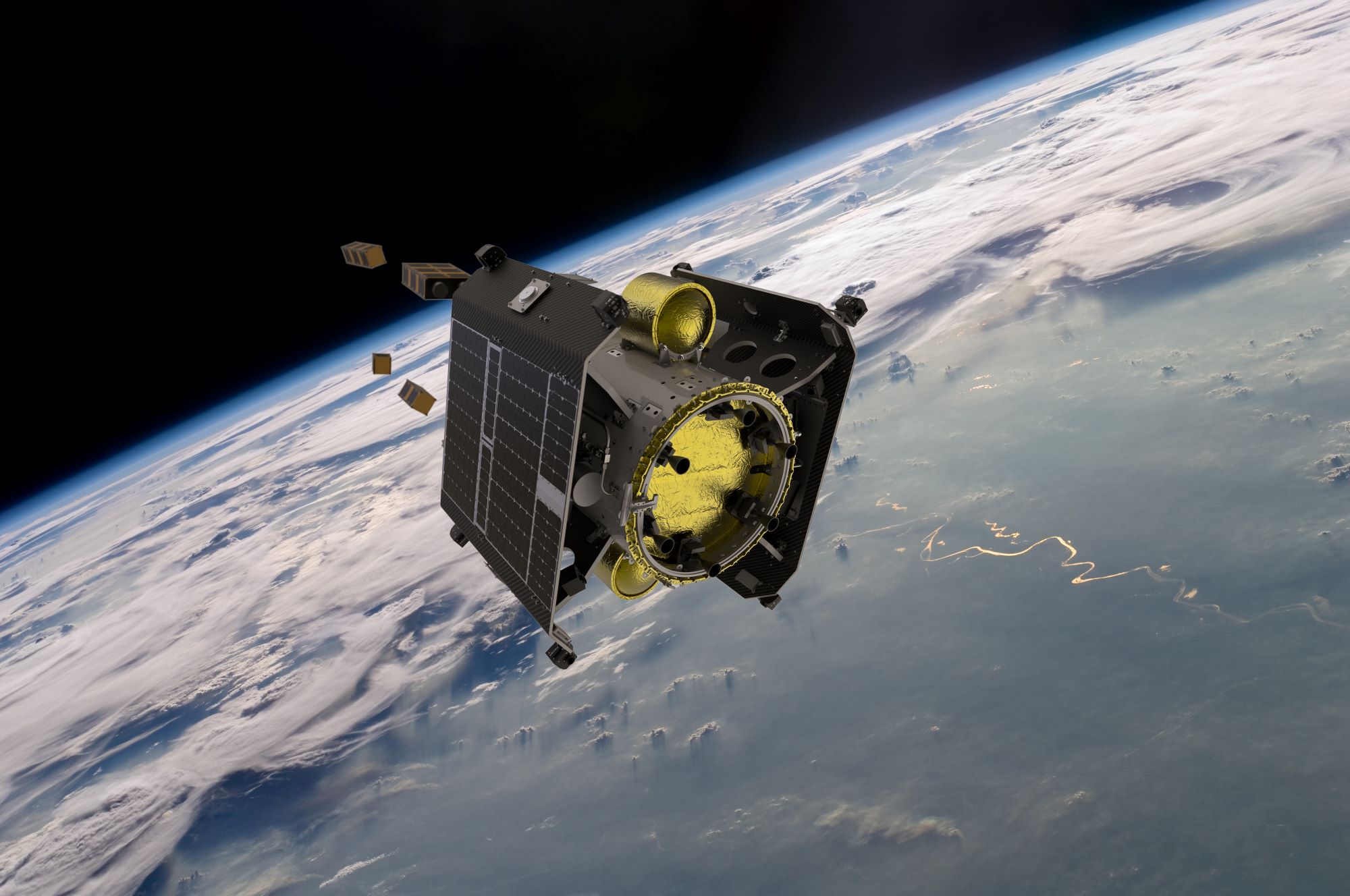
ESA is fostering the advent of Cognitive Cloud Computing in Space (3CS) by capitalising on high-performance Artificial Intelligence (AI) accelerator chips directly onboard satellites. In a recently agreed initiative, ESA Φ-lab will launch a challenge with Microsoft and Thales Alenia Space to develop new Machine Learning (ML) models for a hyperspectral optical sensor aboard the International Space Station (ISS).

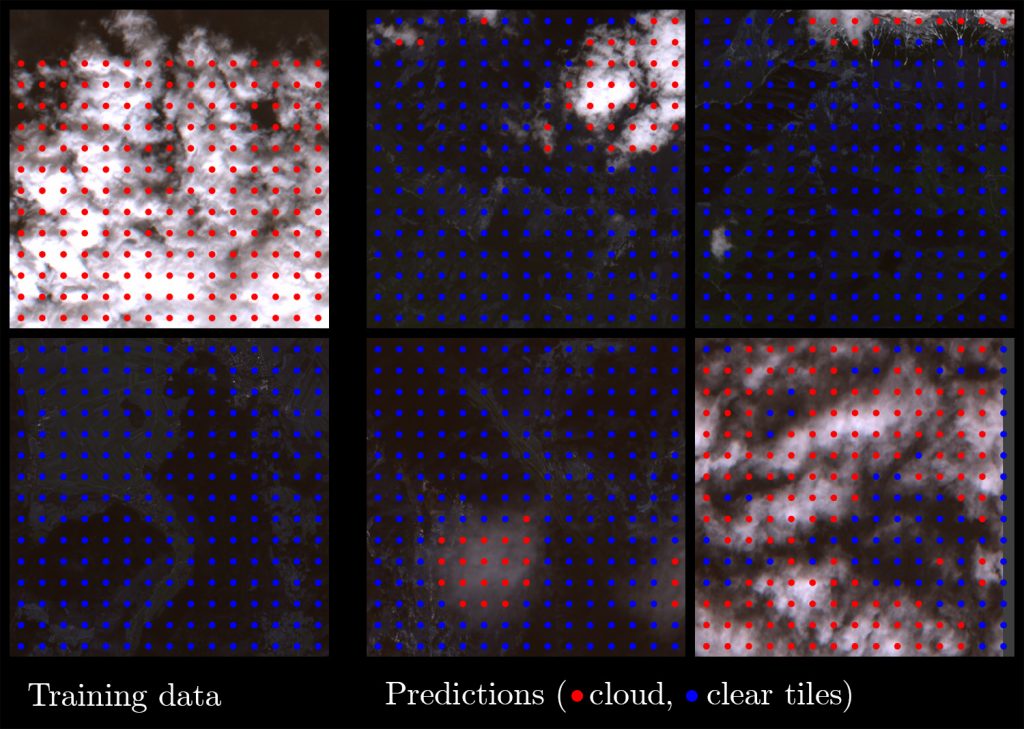
ESA’s vision for edge computing in space is to facilitate the development of an ecosystem of in-orbit information processing, and early work done by the Agency with its partners has proved the feasibility of such an idea. In particular, the Φ-sat-1 mission experiment used a powerful onboard AI processor to successfully filter out clouds from hyperspectral optical sensor Earth observation (EO) data.

The next step was to explore the possibility of classifying additional imagery features onboard and reprogramming the chip, a breakthrough achieved on the subsequent FDL, Unibap and D-Orbit Wild Ride mission. With AI software developed by FDL, Wild Ride enabled rapid segmentation of EO data for flood identification to take place on the satellite, and the software was also shown to be reprogrammable from the ground. This year, ESA’s next-generation Φ-sat-2 satellite will deliver a platform for the in-flight uploading, deployment and updating of third-party ML models.

As part of its remit to nurture innovation in AI4EO, ESA Φ-lab has actively participated in the development of these missions and continues to provide the means for advances in in-orbit data processing. A new agreement with Thales Alenia Space and Microsoft aims to launch an open challenge for ML applications to be deployed aboard the International Space Station (ISS).

Stéphane Terranova, CEO at Thales Alenia Space in Spain, explains his company’s role: “As part of our space edge computing development, we will be launching a high-performance computer, in-orbit application framework and state-of-the-art sensor on the ISS. The package will provide a fantastic opportunity to demonstrate and validate the potential of 3CS. Furthermore, partnering with Microsoft and ESA Φ-lab enables us to leverage their software and EO-data expertise. The mission will unlock new in-orbit climate data processing applications for the benefit of our planet’s sustainability through Earth observation.”

“Broadening access to onboard processing in space will lead to an increase in public participation and discovery of new use cases for Earth observation,” adds Stephen Kitay, Senior Director Azure Space at Microsoft. “By bringing Azure Orbital Space SDK [Software Development Kit] to the ISS installation, we can bring the best of Microsoft developer technology and capabilities to the space industry and this competition.”

The ESA Φ-lab team will create a toolkit for the challenge, giving participants simulated data from the ISS optical payload as the input to their applications. In parallel, the team will be running a similar but separate contest, with entrants submitting applications for Φ-sat-2.

Head of Φ-lab Giuseppe Borghi sums up the significance of the agreement and the challenges: “We’re thrilled to work with these two best-in-class partners in what will be Φ-lab’s first project involving the International Space Station. Our overall objective with both the ISS and Φ-sat-2 in-orbit demonstrations is to lower the space-sector barrier to entry for AI practitioners and in so doing encourage them to develop new models that will further revolutionise EO through 3CS.”

Details of the ISS and Φ-sat-2 calls will be published shortly, and updates can be found on the ai4eo.eu portal.

To know more: Φ-sat-1, Microsoft, Thales Alenia Space, Microsoft Azure Orbital Space

Main image courtesy of NASA/ESA–T. Pesquet

Research fellow call: AI and EO for Climate

Artificial Intelligence (AI) has the power to accelerate the global response to climate change and is the focus of a new research fellowship position call with the European Space Agency.

AI algorithms can systematically organise petabytes of data, uncover new insights and train models that predict change. This makes their application across the fields of Earth observation and climate research increasingly attractive, especially when the need to slow and adapt to negative future consequences is becoming ever more urgent.

The new two-year fellowship is a joint collaboration between two parts of ESA’s Directorate of Earth Observation Programme – the Climate Office, which oversees the development of key global climate satellite datasets (part of its Climate Change Initiative) and informs both the UNFCCC and the wider science community and the innovation-focussed Φ-lab, which connects partners from industry, national and international organisations and the third sector through its AI4EO initiative.

Read the full article on climate.esa.int.

ESA Φ-lab at ESRIN and Thales Alenia Space to work jointly on Earth observation innovation

The ESA Director of Earth Observation has signed a letter of intent with Thales Alenia Space Italy, with the aim of collaborating on disruptive solutions for Earth observation (EO). Cognitive SAR, federated learning, hybrid computing for Artificial Intelligence (AI) at scale and the use of AI and EO in immersive reality are the core elements of the collaboration.

With its mission to accelerate the future of Earth observation through transformational innovation, Φ-lab continues to reinforce Europe’s global lead in the space science and commercial sectors. Partnerships are a key element of innovation, and Φ-lab has a strong track record of collaboration with a broad range of organisations.

Artificial Intelligence and new computing paradigms like neuromorphic, quantum, and edge computing, applied to both optical and radar EO data, are a strategic area of interest for both Φ-lab and Thales Alenia Space in Italy. Specific topics include end-to-end learning for SAR data, physically-based AI for extracting information from SAR data and enabling object detection, recognition and classification, collective intelligence and federated learning at the edge, and the use of AI and EO in immersive-reality scenarios such as AR/VR for satellite data and management.

The aim of the cooperation between Φ-lab and Thales Alenia Space Italy is to jointly explore such innovative technologies and their application to uses cases of significant interest to both entities. The expectation is that this will help ESA Φ-lab to focus on research that seeks to boost the innovation capabilities of the European EO industry, enabling the sector to gain an unrivalled competitive advantage in the face of fierce worldwide competition.

Massimo Comparini is SEVP of Observation, Exploration and Navigation at Thales Alenia Space: “There are both significant opportunities and sizeable challenges in harnessing the power of cutting-edge AI paradigms for Earth observation. We believe that Thales Alenia Space’s extensive industry experience, in combination with ESA Φ-lab’s unparalleled reputation for research, will create a platform for developing practical solutions to real-world problems in EO data handling.”

“With this agreement, ESA Φ-lab is creating another strategic partnership that will push the boundaries of Earth observation innovation, strengthening Europe’s unique competitive advantage through ground-breaking innovation,” added Giuseppe Borghi, the Head of Φ-lab and the main ESA contact for the collaboration. “We are extremely happy that an EO world leader like Thales Alenia Space has proactively identified synergies with ESA that will drive the success of this mutually beneficial initiative on transformative technologies.”

In commenting on the signing of the letter of intent, ESA’s Director of Earth Observation Programmes Simonetta Cheli emphasised the symbiotic nature of the undertaking: “Partnering with Thales Alenia Space in game-changing Earth observation research is yet another example of ESA advancing the European space sector through collaborative innovation. Our joint efforts will pool the know-how of both parties to yield what I’m certain will be remarkable breakthroughs in AI-driven information processing.”

To know more: ESA Φ-lab, Thales Alenia Space Italy

HiVE microsatellite constellation to provide early crop-health monitoring

At a ceremony today at ESA’s ESRIN establishment, German company constellr signed a contract extension to design, develop and customer-validate its HiVE solution with ESA InCubed technical and financial support. Through the development of a microsatellite with an innovative Thermal Infrared (TIR) payload, HiVE will place advanced-warning data on crop stress at the fingertips of agribusiness companies, smart-farm operators and government policy makers.

Traditional approaches to measuring crop water-stress conditions include monitoring irrigation systems, indirect measurement of field temperatures, or aerial remote sensing of temperature via drones, all of which have drawbacks. Satellite remote sensing is available, but generally relies on optical imaging of leaf colour changes, meaning that at the time of detection irreversible crop damage has probably already occurred. Thermal infrared satellite measurements, which eliminate these drawbacks, are however becoming increasingly available.

constellr GmbH, a New Space start-up with offices in Freiburg and Brussels, saw an opportunity to provide immediate monitoring of crop health through specifically created TIR Earth observation satellites. By directly measuring leaf temperature from space, changes in plant transpiration can be spotted so that farmers can take remedial action days or weeks before critical crop deterioration ensues. constellr’s HiVE (High-resolution VEgetation monitoring) system will encompass a constellation of microsatellites with miniaturised TIR sensors in combination with a global ground-station-as-a-service infrastructure and cloud-based data platform. HiVE’s toolset will give both commercial and institutional customers actionable insights on crop conditions, helping to reduce the risk of crop loss and improve yield predictions.

The HiVE development is technically supported and partially funded by the ESA InCubed programme. At the contract extension signing today, constellr CTO Marius Bierdel commented on the significance of the investment: “Supported by the technical expertise and funding of InCubed, constellr is able to expedite the development of its first commercially operational satellite. This is a critical early part of our rapid infrastructure development cycle – a major driver for our competitiveness in the market and the key to bringing us a step closer to being a successful player in the space ecosystem.”

The German National Delegation to ESA was also represented at the meeting. “HiVE is the largest investment that we have made so far within InCubed,” explained Michael Nyenhuis, InCubed Programme Coordinator at the German Space Agency at DLR. “Given the current global issues of drought and food shortages, today’s launch of this development initiative is particularly timely, and we are sure that the final product will have a decisive role in optimising future irrigation management and biomass output.”

“This is a great example of how ESA can aid private-sector advances on solutions to climate problems and support a promising business initiative relevant to the agribusiness sector,” added ESA Director of Earth Observation Programmes Simonetta Cheli. “The technical support and business advice from ESA will undoubtedly provide an essential springboard for constellr in its journey to mission readiness and ultimately the delivery of this crucially important service.”

To know more: constellr, ESA InCubed, DLR