ESA title

OroraTech’s journey from start-up to Copernicus data provider

Since joining ESA’s European Emerging Copernicus Contributing Missions (CCM) activity in June 2023, OroraTech has grown from a space start-up to a leading supplier of thermal sensing data and predictive wildfire solutions.

The Munich-based company now operates a growing constellation of thermal-sensing spacecraft and recently reached a significant milestone – participating in a hands-on workshop directly with the Copernicus Emergency Management Service (CEMS).

OroraTech’s relationship with ESA began through the ESA BIC Bavaria and ESA Kick-Start incubation programmes. This was followed in 2022 by co-funding from ESA’s InCubed programme for the development of FOREST-3 – the company’s first fully internally developed spacecraft, which launched in January 2025.

Read the full article on www.rapidresponse.copernicus.eu.

Photo courtesy of Unsplash/Mike Newbry.

Earth observation community spotlight: Saturnalia

In this article, we speak with Gianni Iannelli, Chief Executive of Saturnalia, about the challenges facing agriculture, the importance of Earth observation in crop monitoring and risk assessment, and how data provided through the TPM programme are helping Saturnalia achieve its aims.

Italy-based Saturnalia is a geospatial intelligence company that harnesses the power of Earth observation data to improve decision-making and risk management in agriculture. The company offers an easy-to-use platform that is used by farmers and agriculture insurers to better protect crops, assess exposure, and enhance productivity.

Saturnalia works with data from ESA’s Third Party Missions (TPM) programme, which disseminates data from commercial and institutional partners to European businesses participating in ESA incubation activities or developing pre-commercial applications.

Saturnalia gained access to these datasets through an ESA InCubed project, which was instrumental in enabling the development of our AI-driven processing pipeline. As part of this work, we integrated data provided by ESA TPM to prove the feasibility of the solution without incurring prohibitive upfront costs.

Read the full article on www.earth.esa.int.

Photo courtesy of Unsplash/Ant Rozetsky

Join us for the 2026 ESA EO Commercialisation Forum

Held in Seville (Spain) from 12 to 14 May 2026, the 3rd ESA Earth Observation Commercialisation Forum will give attendees the opportunity to meet institutions, industry leaders, start-ups, investors, users and entrepreneurs, and connect with potential partners while staying ahead of key Earth observation market trends and challenges.

The 3rd ESA Earth Observation Commercialisation Forum (ESA CommEO) will take place from 12 to 14 May 2026 at the prestigious Hotel Meliá Lebreros (Seville, Spain). Organised by ESA Φ-lab and supported by the Spanish Space Agency, the event will bring together the global Earth observation ecosystem for three days of insight, innovation, and high-level networking.

This years’ edition is focused on the latest trends arising in the Earth observation commercial market, featuring an engaging programme that includes keynote speeches, panel discussions, exhibitor booths, and curated matchmaking opportunities designed to foster new partnerships and boost commercial growth within the Earth observation sector.

The programme is divided into three key axes – ‘Strategy, Finance & Market Dynamics’, ‘Earth Intelligence, AI & Commercial Adoption’ and ‘Key Verticals & Future Capabilities’, creating a well-rounded experience that caters to diverse interests, expertise levels and strategic priorities.

For the first time, the event will offer dedicated sponsorship opportunities, giving organisations the chance to strengthen relationships with end users, institutions, entrepreneurs, and investors. Sponsors will also be able to generate qualified leads by connecting directly with key stakeholders who are actively shaping the future of Earth observation commercialisation.

The event will also feature various parallel sessions, from matchmaking with investors and exploring commercial opportunities in Africa, to supporting New Space companies and exploring Copernicus Contributing Missions.

While the event has a strong focus on commercialisation, it also supports innovation. The top three finalists of the ESA Φ-lab Grand Marathon will pitch their Earth observation-based solutions aimed at protecting civilians in disaster and public-safety contexts.

For the third year, ESA CommEO will give start-ups the opportunity to compete for the CommEO Award. Powered by ESA and Creative Destruction Lab (CDL-Milan), the 3rd ESA CommEO Award is designed for ambitious, early-stage startups looking to anchor their technical innovation in a robust commercial strategy. Prizes include a guaranteed interview for the Creative Destruction Lab’s Global CDL Space Programme, a € 25.000 voucher for ESA Third Party Missions (TPM) data, a € 10.000 voucher for OVHcloud’s cloud computing services, and a free admission to this event.

A great event goes beyond keynote speeches and panel discussions: attendees will have the opportunity to network during the event’s Gala Dinner and wander through the Seville’s grand plazas during the event’s social activity.

More information about the event and registrations is available on the ESA CommEO website.

To know more: ESA CommEO, ESA Φ-lab, Spanish Space Agency, Creative Destruction Lab (CDL-Milan)

Photo courtesy of ESA

A new training explored AI in Earth observation

From 8 to 11 December, ESA Academy’s Training and Learning Facility in Belgium hosted the pilot edition of the Disruptive Innovation and Commercialisation in Earth Observation Training Course. Organised in collaboration with ESA Φ-lab, this first edition brought together 30 Master’s and PhD students from 16 different nationalities, creating a vibrant and diverse learning environment.

One of the aspects that made this course unique was its dual focus. Participants were trained not only in Artificial Intelligence (AI) applied to Earth observation, but also in the business and commercialisation strategies necessary to turn innovative ideas into viable ventures. This combination of technical and entrepreneurial skills was designed to push students beyond traditional academic boundaries.

“The unique combination of AI, business and Earth observation made it truly one of a kind,” said one student. “Collaborating with motivated participants and learning from the ESA Academy and Φ-lab experts pushed me to think beyond disciplines.”

Read the full article on www.esa.int.

New ESA-GEOSAT deal to empower space solutions

ESA and GEOSAT have formalised their commitment to strengthening the space industry by signing a Letter of Intent, promoting entrepreneurship and advancing the development of innovative space solutions.

The latest company joining the portfolio of ESA’s Partnership Initiative for Commercialisation (EPIC) is the Portuguese company GEOSAT, one of Europe’s leading providers in Earth Observation (EO) satellite imagery and data analytics. GEOSAT provides very-high resolution (VHR) optical satellite data in Europe, being certified as a DPS Category 2 Provider (European Earth Observation Established Data Suppliers) and developing innovative EO products and services.

This partnership with GEOSAT will benefit companies supported by ESA Φ-lab, the InCubed Earth Observation commercialisation programme, ESA Phi-LabNET, ESA Business Incubation Centres (ESA BICs) and ESA Technology Brokers, operating under the broader ESA EPIC framework.

As an outcome of this Letter of Intent, GEOSAT will provide VHR data to ESA-supported start-ups, so they can test, validate and improve their services, along with technical mentorship and expertise, and joint outreach and networking activities to foster new opportunities and raise awareness about the societal value of Earth observation technologies. Further information on the collaboration and how to take advantage of the services provided by GEOSAT is now available here.

“By working with GEOSAT and opening access to their Earth observation constellation, we are allowing an easier access to data in order to improve solutions, in areas such as environmental monitoring, agriculture, infrastructure management, and maritime surveillance,” commented Michele Castorina, Head of the ESA Φ-lab Invest Office. “This collaboration not only benefits entrepreneurs and businesses across several sectors but also reinforces Europe’s competitiveness in the global space economy.”

To know more: GEOSAT, ESA Φ-lab, InCubed, ESA Phi-LabNET, ESA Business Incubation Centres, ESA Technology Brokers, EPIC

Photo courtesy of ESA

Four new initiatives to boost Spain’s Earth observation sector

As the result of an ESA-dedicated commercialisation campaign for Spain, the InCubed Programme signed four new contracts with IVSEN, HAPSEYE, CrossBandInsights, and DVSTAI. From energy infrastructure monitoring to security and geospatial object detection, these projects reflect the growing impact of Earth observation data across key sectors.

Following the success of the last dedicated call for Spain, four initiatives signed a contract with the ESA InCubed programme. This call, launched in collaboration with the Spanish Space Agency (AEE), offered different levels of co-funding to develop innovative and commercially viable Earth observation products and services, while benefitting from the European Space Agency’s technical, commercial and financial guidance.

IVSEN is an advanced satellite-based monitoring solution tailored for energy infrastructure operators. It integrates a very-high-resolution payload (< 50 cm) with reduced mass and volume, along with agile observation modes for flexible operations. An on-board pre-processing algorithm works in tandem with the ground-based processing chain to generate specialised data products and analytics. This project is being developed by a consortium – SATLANTIS, Alén Space, DHV Technology, and GeoAI – with direct contributions from users such as Iberdrola to ensure the system meets real operational needs.

“IVSEN represents a strategic milestone for SATLANTIS, as it strengthens our capabilities in very high-resolution Earth observation — a core technology for the company’s future. We are grateful to ESA for their trust and support in driving this project forward, and for enabling us to deliver an agile solution that will help energy operators and other users monitor and safeguard their critical infrastructures,” stated Juan Tomas Hernani, CEO of SATLANTIS.

ICEYE delivers synthetic aperture radar (SAR) data worldwide through its fleet of satellites, supporting applications such as land use monitoring, border surveillance and environmental monitoring. To expand this capability, the company is developing HAPSEYE, a solar-powered, fixed-wing aircraft designed to operate at altitudes above 20 km for extended periods.

Equipped with a SAR payload, HAPSEYE will complement ICEYE’s satellite constellation by providing persistent, high-resolution imaging that overcomes current limitations in coverage and resolution. This next-generation platform will improve disaster response, security and environmental monitoring. The activity is planned to begin after the test campaign of HAPS Prototype-1, scheduled for late 2025.

“As a pioneer in SAR imaging radar satellite innovation, we are delighted to have been chosen for ESA’s InCubed programme in Spain. Initiatives like this are crucial for accelerating technological advancement and strengthening European competitiveness in the Earth Observation sector objectives that resonate strongly with our mission at ICEYE. This commitment is underlined by the high-altitude platform station project we are taking on as part of the programme, designed to aid European natural disaster response and Earth Observation capabilities,” stated Lauri Väin, VP of High-Altitude Platforms at ICEYE.

TRE ALTAMIRA delivers satellite radar (SAR) displacement measurements and mapping solutions for sectors such as civil engineering, mining, oil, and gas. Its product, CrossBandInsights, enhances current single-frequency band interferometric SAR (InSAR) products, by combining X- and C-band observations with higher spatial and temporal observations to improve ground movement monitoring. This allows for engineering firms and authorities to detect subtle changes, supporting smarter infrastructure maintenance decisions and strengthening risk management with enhanced spatial and temporal coverage.

“InCubed Spain has given us the unique opportunity to turn our vision into a concrete product that will bring tangible benefits to the Earth observation market. CrossBandInsights addresses a critical need by merging multi-mission C-band and X-band InSAR data to provide more accurate and timely insights on ground deformation,” commented Roberto Montalti, Project Manager at TRE ALTAMIRA.  

“This innovation will support civil engineering companies and public authorities in ensuring infrastructure safety and resilience. We see this project as a clear example of how public funding can be effectively invested to foster innovation, create market-ready solutions, and strengthen Europe’s position in the space sector,” Roberto added.

Thales Alenia Space, a global leader in space manufacturing, has been delivering advanced solutions in telecommunications, navigation, Earth observation, environmental management, science and orbital infrastructures for over 40 years. Among its innovations is DVSTAI (Deeper Vision Self-Trained AI), an evolution of the SatHound project, designed to overcome the limitations of current geospatial object detection methods: traditional approaches often require expert intervention for model design, training, and deployment, making the process slow, costly, and vulnerable to risks such as unauthorised access or data leakage.

DVSTAI addresses these challenges by leveraging deep learning techniques, allowing even non-AI or non-Earth observation specialists to autonomously train and use models through a user-friendly software solution. These models can be tailored to specific applications, including object detection, change detection, and semantic segmentation.

“DVSTAI is a user-centric AI solution that empowers non-technical users to autonomously create, train, and deploy AI models for object detection and vision tasks over satellite imagery. It simplifies the process, reduces costs, and enhances security by eliminating the need for dedicated AI engineers to develop high performing vision models, making it an invaluable tool for EO analysts and service providers,” commented Julian Cobos, Product Line Manager at Thales Alenia Space Spain.

“Thanks to the ESA InCubed programme, Thales Alenia Space will develop new key capabilities for object detection in Very High Resolution (VHR) and Synthetic Aperture Radar (SAR) data and bring DVSTAI solution to the public Cloud in a Software as a Service (SaaS) model, making it accessible for any user to set-up object detection campaigns over open and commercial data sources,” Julian added.

To know more: ESA InCubed, Spanish Space Agency (AEE)

Photo courtesy of Unsplash/Chris Boland

ESA InCubed and UKSA fund five Earth Observation projects

The joint ESA InCubed/UKSA funding call has awarded over £ 2.5 million to five projects that will turn Earth Observation data into essential public services. The funding supports projects tackling national priorities: CORE for safer infrastructure monitoring, GHGSat’s platform for tracking methane emissions, and three systems – THICKET, FANTOM and EO4Biodiversity – designed to support sustainable land management and enhance biodiversity.

The European Space Agency (ESA) and the UK Space Agency (UKSA) have announced the results of their joint InCubed funding call, awarding over £ 2.5 million to five innovative projects that use satellite data to improve public services.

This initiative is a clear example of how the ESA InCubed programme supports its member states’ governments in the development of a domestic space industry that serves public good. The call’s explicit requirement for proposals to target a public sector end-user shows that ESA is actively steering its investment towards applications that can directly benefit citizens and government operations.

After a very successful and fierce competition, here are the new five ESA InCubed/UKSA-funded projects:

CORE: satellite insights for infrastructure safety

Corner Reflector Enabled Remote sensing (CORE), developed by Geospatial Ventures Limited and Bloc Digital, is a solution for monitoring public infrastructure and ground stability.

Traditional surveying methods are often costly, slow, and pose a risk to personnel, especially when inspecting large building complexes or difficult-to-access terrain. CORE addresses these challenges by combining multiple satellite data streams – from Interferometric Synthetic Aperture Radar (InSAR) and high-resolution optical imagery – to detect small movements, providing a much clearer, more comprehensive view of conditions across urban and rural landscapes than single-source systems.

CORE will translate complex satellite data into actionable intelligence for public sector users, such as engineers, urban planners, and environmental managers. By integrating satellite data with artificial intelligence and machine learning, the system provides early warning of ground shifts, structural settlement, or degradation before issues escalate into dangerous or expensive failures.

“Through CORE, we’re demonstrating how Earth observation—InSAR and optical—can deliver valuable and practical benefits for stakeholders by providing early insights into environmental change, ground stability, and asset condition. ESA’s support through InCubed is essential in helping us accelerate development, integrate advanced EO capabilities, and transform satellite intelligence into actionable information that helps organisations manage risk, reduce maintenance costs, and strengthen environmental resilience,” stated Paul Bhatia, Managing Director at Geospatial Ventures Ltd.

THICKET: a biodiversity mapping tool to support sustainable agriculture

THICKET is a tool being developed by AAC Clyde Space to help farmers enhance sustainability and better support wildlife on their lands.

The system will use the upcoming VIREON constellation of satellites, which will capture frequent, high-resolution multispectral images – with a detailed 1.5-meter resolution – to map habitats across farmlands. This constellation was engineered to provide well-aligned Earth observation data, including spectral bands that align with Sentinel-2 bands, complementing existing initiatives like Copernicus.

By showing farmers what biodiversity assets they have, THICKET provides the data for them to make informed, sustainable farming decisions. This capability is crucial for supporting environmental management and directly helps farmers meet the requirements to access valuable government support programmes like the Sustainable Farming Incentive.

“The ESA InCubed/UKSA co-funding has been instrumental in accelerating the development of THICKET. By combining advanced satellite technology with AI, we are creating a scalable, cost-effective way to monitor biodiversity across farmland. With imagery from our upcoming VIREON constellation, we can now capture fine details like hedgerows and flower margins — features that were previously almost impossible to assess systematically. This collaboration is helping to make biodiversity visible, measurable and actionable, supporting both farmers and the UK’s broader sustainability goals,” commented Pamela Smith, Director of Government Programmes at AAC Clyde Space.

Government GHG Service: tracking methane for net-zero

GHGSat UK and Terrabotics are developing an advanced analytics platform, Emissions Watch Service, to convert satellite observations of greenhouse gases (GHGs) into practical, actionable insights for the government. This service is uniquely positioned to support the UK’s goals of reaching net-zero emissions by 2050. By using their proprietary constellation of satellites, GHGSat traces the source of GHG emissions directly to specific industrial facilities, with a focus on the powerful GHG methane.

The platform enriches raw satellite data with detailed industrial asset information, creating a robust tool for environment compliance and reporting. Its rapid detection capability will ensure accurate data is available within hours of an emission event, allowing the UK government to make informed decisions about targeted mitigation strategies and increase accountability across major emitting organisations.

“ESA InCubed is a powerful programme, harnessing the innovation of space-based technologies for government agencies in the UK and Europe. For GHGSat, the support from InCubed is critical in order to de-risk product development while leveraging ESA’s technical expertise, enabling us to develop a platform that is honed to solve the unique challenges that government faces,” commented Daniel Wicks, Managing Director at GHGSat UK.

“Ultimately, through InCubed, GHGSat will strengthen its analytics prowess, identifying and mapping sources of methane to create a comprehensive view of emissions to inform data-backed policy, strengthen regulatory compliance, and drive methane reduction,” Daniel added.

FANTOM: advanced environmental analytics for land management

FANTOM (Future Analytics for Nature Through Observation and Modelling) is a project from Earth-i and Specto Natura designed to transform environmental land monitoring across the UK. It builds a database of agricultural and biodiversity markers, creating novel environmental indicators directly from satellite imagery.

FANTOM’s scope will extend well beyond agricultural subsidies: the platform is designed to provide content and context that supports not only agricultural schemes but also net zero and broader climate change mitigation activities. The comprehensive database of markers and impact assessments will be made available to all governmental agencies, associated arms-length bodies and commercial companies, enabling them to monitor and measure the progress of their sustainability activities and interventions.

“Earth-i’s FANTOM project, supported by the InCubed programme, will build a high spatial and temporal resolution, UK-centric database of agricultural and biodiversity markers with rich information content,” comments Jennifer King, Project Manager at Earth-i. 

“This will support environmental schemes aligned with the UK’s Agricultural Transition and assist government policy implementations for Net Zero and biodiversity net gain. FANTOM will provide analytics directly to the Rural Payments Agency, which manages farming subsidies and environmental schemes for England. Following this, Earth-i aims to promote the service to other countries, tailoring the analytics products as necessary,” Jennifer added.

EO4Biodiversity: satellite tracking for habitat net gain

EO4Biodiversity is an innovative project led by HR Wallingford to leverage satellite data to improve plant and animal diversity. The project’s aim is to automate biodiversity impact assessments by developing new ways of using Earth observation data to track habitat changes over time.

EO4Biodiversity will streamline the assessment process for land development and environmental management by post-processing existing Earth observation datasets, such as the ones from ESA WorldCover, specifically for biodiversity evaluations. By automating complex assessments, this initiative moves beyond manual surveying, providing public entities and other stakeholders with a powerful and scalable service to inform planning decisions, ensure compliance, and strategically support the long-term sustainability of the UK’s natural environment.

“EO4Biodiversity is a UK-wide project that uses satellite data to improve how we measure the impact of infrastructure projects on nature. With support from InCubed, the team is developing a new tool that will help landowners, developers, and public organisations understand how different building plans affect local biodiversity. This will make it easier to protect and enhance natural habitats while meeting the UK government’s biodiversity net gain targets,” stated Marta Roca Collell, Principal Engineer, Flood and Water Management, HR Wallingford.

The campaign manager, Pejman Nejadi (End-to-end Systems Engineer at the ESA Φ-lab Invest Office), commented: “This campaign stands as a clear demonstration of the value that ESA’s InCubed programme can deliver in partnership with national agencies. By combining ESA’s unique technical expertise and programme management experience, with UKSA’s strong understanding of national priorities, we created an initiative that directly addressed the UK public sector’s need of Earth Observation data. The success of this campaign highlights both the strength of our collaboration and the effectiveness of InCubed in fostering solutions that bring real benefit to society.”

To know more: ESA InCubed, Geospatial Ventures Limited, Bloc Digital, AAC Clyde Space, GHGSat UK, Terrabotics, Earth-i, Specto Natura, HR Wallingford

Photo courtesy of Unsplash/Paul Fiedler

The BiDS Award spotlights top European space start-ups

The BiDS Award, a joint initiative by ESA Φ-lab and ESA BIC Latvia, took place at the 2025 Big Data from Space (BiDS) conference to boost European space start-ups and academia. The award provided visibility and networking opportunities for those working on space-based solutions that address global challenges, facilitating the commercialisation of deep-tech innovations. The winners of the 2025 edition were AgroRisk, SALUTS, and Hyphorest.  

The BiDS Award, organised jointly by ESA Φ-lab and ESA BIC Latvia, took place on 2 October 2025, within the framework of the Big Data from Space (BiDS) conference. This award brought industry, research, and policy leaders together to explore how deep tech solutions and space data can be leveraged to address critical global challenges.

This initiative focused on transforming raw data into knowledge, insight, and foresight, showcasing how advancements on space technologies are boosting data usage to deliver impactful planetary solutions, and providing visibility and networking opportunities for European space start-ups and academia.

While proposals at the intersection of Earth observation and global challenges were central, the scope was broad, encouraging solutions from across the entire space value chain. This included upstream, downstream, and spin-in innovations such as advanced materials, robotics, quantum technologies, satellite communications, in-orbit services, navigation, and AI-driven analytics.

The award’s areas of focus included precision agriculture and food security, environmental sustainability and biodiversity tracking, or sustainable energy and infrastructure monitoring, among many more. The winners were awarded one year of free access to AI-data analytics platforms from Altair (in a total value of € 300.000) and access to satellite imagery from Airbus (valued in a total of € 25.000).

The third place was awarded to Hyphorest (Germany), a Stuttgart-based startup and incubatee of ESA BIC Baden-Württemberg that aims to bring finance to nature by making it easy to invest in restoration, carbon farming, and carbon removal projects that are measurable, transparent, and grounded. Using satellite data, AI, and blockchain, Hyphorest quantifies natural impact such as biomass, biodiversity, CO₂ storage, and ecosystem recovery, while strengthening the role of local and indigenous communities in achieving these goals.

The platform enables companies and individuals to invest in climate and nature-positive projects with measurable outcomes, turning environmental and social impact into a trusted, data-driven asset class. The solution presented at BiDS helps companies invest in nature, track their impact, and report results within their corporate sustainability targets and frameworks. Hyphorest’s mission is to build trust in nature-based investments and make real progress visible to everyone.

“Winning the BiDS Award affirms our belief that space technology is one of the most powerful tools for climate resilience. At Hyphorest, we turn satellite data into living evidence of restoration, making environmental impact measurable, transparent, and investable. Being recognised by ESA Φ-lab and the BiDS community encourages us to keep pushing the frontier where space innovation meets nature,” commented Hojjat Mansourpour, Founder and Chief Executive Officer of Hyphorest.

SALUTS (Germany) confirmed its position as a leading innovator in the European space-tech ecosystem by winning the second place. SALUTS’ mission is to redefine AI-driven autonomy in space and beyond by transforming space computing with ultra-efficient chips that enhance real-time, in-orbit data processing. Their vision was first recognized in 2023 when SALUTS won the 5th CASSINI Hackathon, an achievement that led to their selection by ESA BIC Bavaria to further develop their winning project.

The innovation that secured their BiDS Award recognition is CHIRB (Computing on Hybrid Interplanetary Relay Basis), a revolutionary advanced AI system that acts as the next-generation mission control centre for space, defence, and industrial AI applications. At the heart of CHIRB is Robot-on-a-Chip, SALUTS’ proprietary AI technology, whose chips are engineered to use 90% less power while providing three times more reliable data processing directly on the device.

CHIRB integrates seamlessly with existing infrastructure, featuring a natural language interface that lets any user simply chat their requests, which are converted by the system into working code and hardware control, thus eliminating the need for complex coding or technical knowledge.

“At SALUTS, ‘We Deliver Autonomy at the Edge and Clarity at Scale’. Our platform, CHIRB, combines ultra-low-power hardware modules with advanced AI software to make complex operations autonomous, efficient, and sustainable. The outcome: faster decisions, lower costs, and more reliable operations,” stated Mohamed Sobhy Fouda, Chief Executive Officer and Founder of SALUTS.

The first place was awarded to AgroRisk (Denmark), a climate fintech platform and incubatee of ESA BIC Denmark that quantifies agricultural and financial risks caused by climate change and extreme weather. By combining Earth observation data, weather models, and financial risk analytics, AgroRisk enables banks, insurers, and farmers to assess the climate exposure of agricultural assets at both field and portfolio level.

The platform translates satellite and climate data into actionable financial insights, helping financial institutions comply with new sustainability regulations and supporting farmers in adapting to a changing climate. AgroRisk contributes to food security, climate adaptation, and sustainable finance — leveraging space technology to enable data-driven resilience in the agricultural sector.

“Space data is transforming how we understand and manage climate risks on Earth. At AgroRisk, we use satellite-based insights to translate what happens in orbit into tangible value on the ground — helping banks, insurers, and farmers make smarter, more sustainable decisions. The BiDS Award highlights how space innovation can directly contribute to planetary resilience and sustainable finance,” commented Theodor Christensen, CEO and Founder of AgroRisk.

The winners of the 2025 BiDS Award. From left to right: Sabrina Ricci (AI Ecosystem Coordinator at ESA Φ-lab), Hojjat Mansourpour (CEO and Founder of Hyphorest, 3rd place), Mohamed Sobhy Fouda (CEO and Founder of SALUTS, 2nd place), Theodor Christensen (CEO and Founder of AgroRisk, 1st place), and José Manuel Delgado Blasco (Geospatial System Engineer at ESA Φ-lab). Photo courtesy of ESA/Sabrina Ricci.

A special recognition goes to Andrii Chepurnyi, PhD student at the University of Latvia, who received a prize for his Earth observation-calibration project. As part of the award, he will join the Commercialization Reactor’s Commercialization Dive programme.

Andrii Chepurnyi (middle), PhD student at the University of Latvia, won a special recognition. Photo courtesy of Gatis Orlickis.

“The BiDS Award is another example of collaboration between organisations dedicated to developing the European Space capabilities in Deep Space and Earth Observation. In this occasion, both industry and academia responded positively, as well as partners and sponsors needed to make this award a success. This success, along other parallel efforts, wants to push the limits of Space technology and help develop European champions that proposed solutions to real problems with space technology,” commented José Manuel Delgado Blasco, Geospatial System Engineer at ESA Φ-lab and co-organiser of the BiDS Award.

“In this award, we have collected many brilliant participants addressing problems such as space debris, environmental and atmospheric pollution, and climate change. It has been a pleasure to work with ESA BIC Latvia, Airbus and Altair and I want to thank all the people involved and participants who made this award a success – and a starting point for future collaborations,” José added.

“The success of the BiDS Awards within such a vibrant and diverse ecosystem as the Big Data from Space community confirms how rewarding it is to push the boundaries of space and connect with emerging pioneers of technology. Their contributions help us drive innovation both in Earth Observation and in Space. The enthusiastic response from sponsors, participating companies — including those who did not win — has encouraged us to continue promoting these initiatives as catalysts for new collaborations and interactions,” commented Sabrina Ricci, AI Ecosystem Coordinator at ESA Φ-lab and co-organiser of the BiDS Award.

To know more: BiDS Award, ESA Φ-lab, ESA BIC Latvia

Photo courtesy of Gatis Orlickis

Leadership and technology: AEE boosts Spain’s resilience against wildfires

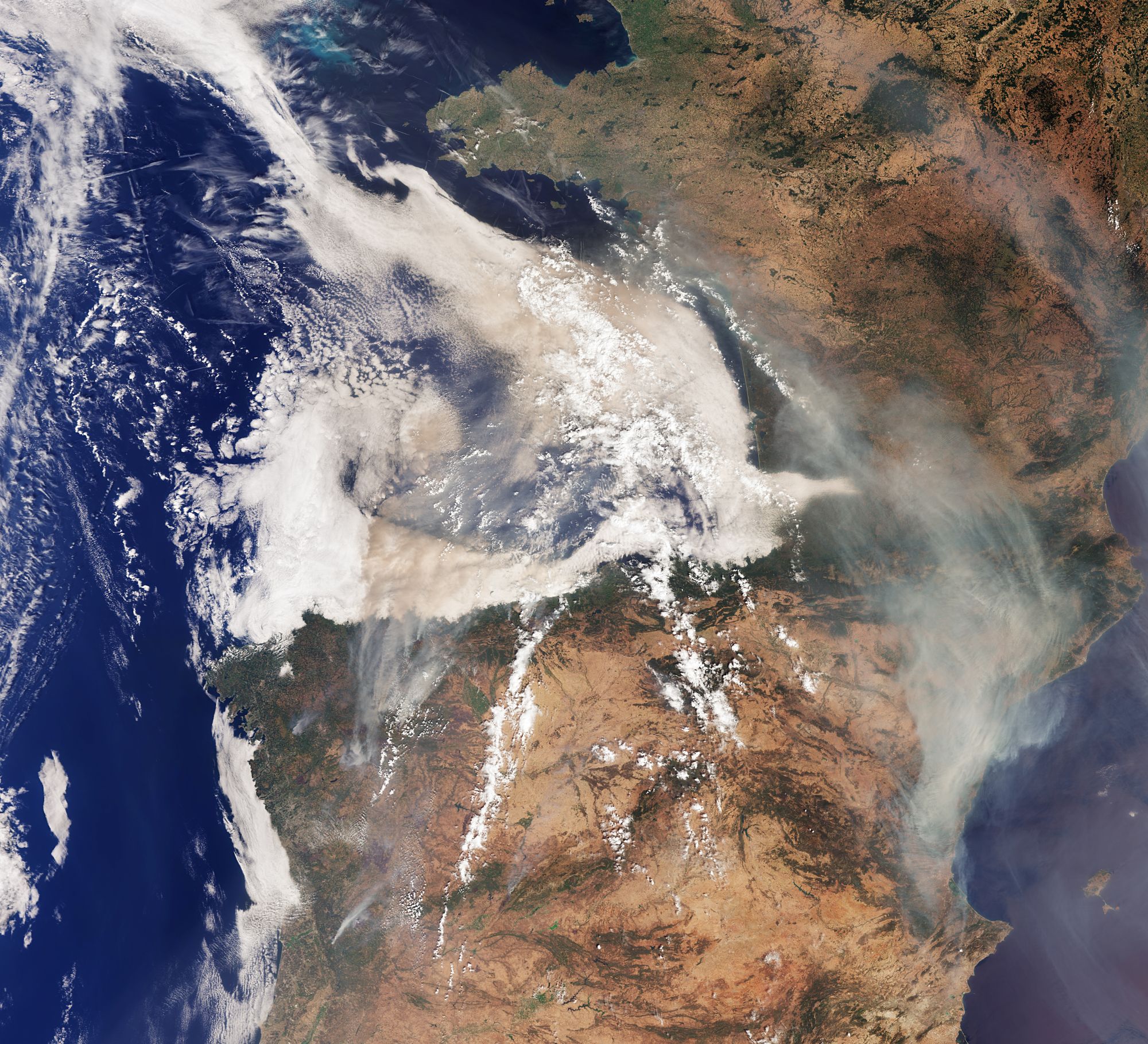
Given the scale of the recent wildfires that have significantly affected Spain’s land and ecosystems, the Spanish Space Agency (AEE) has taken the initiative to strengthen the country’s capabilities in prevention, detection, and response. The objective is clear: to turn the challenge into an opportunity to bolster prevention, detection, and response capabilities, ensuring that Spain has the most advanced tools to protect lives, infrastructure, and the environment.

In collaboration with the European Space Agency (ESA), through its ESA InCubed programme, AEE is launching a pioneering national call for the development of innovative Earth Observation applications.

Read the full article (in Spanish) on www.aee.gob.es.

Improving precision nitrogen management with Messium

Messium is improving agricultural practices with advanced hyperspectral satellite data. Co-funded by the ESA InCubed programme, the company developed a tool that provides farmers with frequent, accurate insights into crop nitrogen levels and optimal fertiliser use, helping to boost yields, cut costs, and minimise environmental impacts.

Nitrogen is one of the most essential nutrients for crop growth, playing a central role in plant development, yield, and quality. In that sense, nitrogen fertilisers are crucial for boosting land productivity and sustaining global food demands.

However, the average global Nitrogen Use Efficiency (NUE) on crops is around 45%, with more than half of the applied nitrogen fertiliser lost as nitrous oxide emissions or leached in the form of nitrate into drinking water sources, contributing to groundwater contamination and surface water eutrophication.

Behind this nitrogen loss is the imprecise nature of fertiliser application. Farmers often apply nitrogen at incorrect amounts and times, a practice driven by a lack of real-time data on a crop’s specific needs. To improve both the sustainability and profitability of modern farming, a shift is required – one that moves away from relying on broad, imprecise fertiliser application toward more targeted, data-driven approaches.

Messium, a UK-based start-up, emerges as key player in precision nitrogen management, by using hyperspectral satellite data and artificial intelligence to assess the nitrogen status of wheat crops and address sub-optimal nitrogen use in farming – something that was not possible with previous multispectral/NDVI-based approaches. Nitrogen, like all chemical elements on Earth, reflects and absorbs radiation in a specific set of wavelengths, creating a unique spectral signature – a ‘fingerprint’ – that is identified by hyperspectral satellite technology.

Messium’s methodology is built on real-world data: 20000 geo-referenced samples from wheat crops were collected, matching the collection with hyperspectral satellite imagery. These samples were then analysed to get precise measurements of nitrogen and biomass. Together, this information was used to train Messium’s unique machine learning models, giving them the ability to accurately analyse crop health from above.

Messium makes crop growth models a viable tool for farmers: the company’s innovative hyperspectral solution provides real-time, in-season data on a crop’s nitrogen percentage and biomass, filling the critical data gap that previously rendered these models unusable for decision-making. Messium integrates this live information with weather, soil, and farm management data to create a comprehensive picture of crop health and nutrient needs. From this, growth models predict the crop’s maximum and most profitable yields, calculate the precise amount of fertiliser required, and can even forecast changes in crop status.

Another key point of Messium’s approach is the nitrogen dilution curve, which maps a crop’s nitrogen percentage against its biomass to determine if it has a nitrogen surplus or deficiency, indicating the ideal time for fertilisation. By combining the timing insights from the dilution curve with the optimal quantity from growth models, Messium optimises the amount of fertiliser and timing of application, increasing the average NUE to 80-85%.

The company follows a B2B2F (business-to-business-to-farmer) model: it provides fertiliser companies and precision agri-tech start-ups with nitrogen estimation insights that are seamlessly integrated into their platforms. Then, these partners deliver Messium’s data to end-user farmers and agronomists through their established networks, allowing weekly, more precise fertiliser recommendations without requiring any behavioural changes.

Messium became one of the leading players in the use of hyperspectral technology for agriculture: last year’s trials across Europe and Australia, using more than 13,000 lab-validated crop samples, found that over 50% of fields were incorrectly fertilised, leading to wasted input costs and unnecessary emissions. Messium’s technology enables a data-driven approach to tackle these inefficiencies, supporting commercial farmers as well as broader food security and net-zero objectives.

“At a time when Europe’s food security and sovereignty are more vital than ever, optimising nitrogen fertiliser use is key. At the same time, tackling harmful nitrous oxide emissions and nitrate leaching is essential to reaching net zero,” commented Vishal Soomaney, co-founder and CTO of Messium.

This start-up has achieved remarkable success through its own innovative approach, with the ESA InCubed programme providing valuable technical support and co-funding that helped accelerate its growth. Having reached a minimum viable product with InCubed in February 2025, Messium has secured £3.2 million in private investment and is now starting an extension of its product with InCubed in 2026.

Its success does not stop there: Messium has been collaborating with Open Cosmos – another InCubed-supported company – as a user of the HAMMER hyperspectral datasets, highlighting the importance of the InCubed ecosystem to find new customers, strategic opportunities, and valuable peer-to-peer feedback.

“With ESA InCubed’s support, we’ve turned Messium from a proof-of-concept into a commercial solution that helps farmers boost profits, cut emissions, and protect soil health for future generations. This collaboration has fostered strong partnerships with organisations like Open Cosmos and shown the real-world impact of space-enabled innovation. We’re excited to continue working with the ESA team to scale these solutions across Europe”, added Vishal.

Crop nitrogen (left, in %) and biomass (right, in kg/ha) in a field under analysis. During the season, the percentage of nitrogen in the crops can vary from 6 to 1%, and crop biomass can go as high as 16 t/ha. Messium’s in-depth analysis of a field at any point in the season allows for better nitrogen management. Credits: Messium analysis of Open Cosmos hyperspectral data.

Michele Castorina, Head of the Φ-lab Invest Office and InCubed Programme Manager, commented: “The collaboration between these two InCubed-supported companies is a clear indication of the programme’s success. InCubed cultivates an ecosystem where these ideas can connect, grow, and create new commercial value. By enabling the development of Messium’s product, we have demonstrated how European space technology can be transformed into a viable business proposition. Their solution is a perfect example of the innovative synergy we foster, showing how InCubed’s support further attracts significant investment needed to scale.”

“At Open Cosmos, our mission is to tackle Earth’s most pressing challenges with actionable data and connectivity from space,” stated Alberto Perez Cassinelli, Vice President of Data at Open Cosmos. “By providing Messium with our advanced hyperspectral data from our OpenConstellation, we are empowering their nitrogen analysis technology to deliver real value to wheat farmers worldwide. This collaboration demonstrates how space-based innovation can translate into practical, real-time insights that improve agricultural efficiency, sustainability, and food security.”

The banner image shows a NDVI-based approach from multispectral satellite imagery previously used by farmers to assess the status of their crops (left) vs. crop nitrogen (kg/ha) provided by Messium, based on hyperspectral satellite imagery (right). In the right image, lower crop nitrogen levels are represented in red and higher crop nitrogen levels in blue. Messium’s weekly insights provide the nitrogen percentage in the crop, the biomass of the crop (t/ha), and the total nitrogen in the crop (t/ha), all at a 5 x 5 m resolution.

To know more: ESA Φ-lab, Messium

Photo courtesy of Messium