ESA title

Where there’s smoke, there’s data: SeasFire’s mission to predict wildfires in Europe

SeasFire, an ESA Φ-lab-supported initiative, uses cutting-edge deep learning algorithms to explore the spatio-temporal connections between Earth system variables and fire regimes, gaining valuable insights into predicting potential wildfires. This project is aligned with ESA’s mission to develop innovative applications of Earth Observation (EO) data that address important societal and environmental challenges. 

Planet Earth undergoes several complex physical processes that occur at variable spatial and temporal scales. Wildfires are notable examples of such processes, since they do not behave the same way in different areas and years. As major hazards, wildfires are deeply influenced by a combination of multiple human and natural factors, such as temperature, soil moisture, relative humidity, wind speed, vegetation – commonly referred to as ‘fire drivers’.

Wildfires disrupt natural ecosystems and cause the loss of lives, properties and infrastructure. Due to climate change, an increase in the number of fires in Europe and around the world is expected, with major wildfire events extending to evergreen forests and boreal regions. Therefore, it is important to improve our capabilities to anticipate fire danger and understand its driving mechanisms at a global scale.

SeasFire – Earth System Deep Learning for Seasonal Fire Forecasting in Europe – emerges as an innovative solution for fire forecasting. Supported by ESA Φ-lab and implemented by the National Observatory of Athens, the National Technical University of Athens, the Harokopio University of Athens and the Max Planck Institute for Biogeochemistry, SeasFire proposes to explore and capture the potential spatio-temporal asynchronous links between pre-occurring and non-overlapping fire-driving forces in the Earth system and European fire regimes to predict seasonal burned area extent in Europe.

How has this been accomplished? SeasFire has made use of two major advancements of our time, namely the availability of a huge amount of satellite data with good spatio-temporal resolution, and Deep Learning (DL) techniques that have proven capable of capturing the spatio-temporal interactions of Earth system variables, treating Earth as an interconnected system.

Some of the DL models developed in this project include an encoder-decoder architecture that takes as input snapshots of fire drivers and is trained to predict burned area patterns in the future; FireCastNet is a Graph Neural Network that can leverage local, mid-range and long-range spatial connections; and TeleViT is a transformer-based architecture, which combines information from local fire drivers and teleconnections to improve long-term forecasting.

Current CO2 estimates rely on factors such as burned areas, vegetation carbon stocks, and combustion completeness. While Machine Learning algorithms have been developed to forecast burned area patterns, prior estimates from vegetation carbon stocks and combustion completeness are model-based and assume fixed emission factors that may not accurately capture larger changes in carbon stocks over longer periods.

SeasFire overcomes these limitations by integrating Earth Observation (EO) data with climate datasets in a hybrid modelling framework. This approach combines process-oriented modelling with observation-based learning, enabling more accurate model parameterisation and reducing biases from model initialisation. By comparing existing carbon models with data from the Copernicus Atmosphere Monitoring Service (CAMS), SeasFire enhances the reliability and precision of carbon cycle predictions.    

The SeasFire DataCube, a public global analysis-ready and cloud-friendly dataset for seasonal fire forecasting, between the years 2001-2021 and at a spatio-temporal resolution of 0.25° x 0.25° x 0.25° x 8 days, includes a combination of variables describing seasonal fire drivers, namely climate, vegetation, oceanic indices, human factors, land cover and the burned areas. In the future, this datacube can also be exploited as a template for modelling different natural hazards like floods, heatwaves and droughts.

From this initiative resulted also an interactive toolkit that allows the visualisation of EO data and model outputs stored in a Zarr file, accessed via the SeasFire GitHub organisation. In this repository, it is possible to find all trained models regarding seasonal wildfire forecasting and modelling of CO2 emissions.

“This project explores a key gap by attempting to capture the interannual variability of seasonal, high-impact wildfire events — an area where traditional numerical models often fall short. By leveraging Deep Learning and teleconnections which dictate climate dynamics, we explore novel machine learning methods that treat the Earth as a system to enhance long term forecast capabilities. Moving forward, we aim to refine models for more precise regional predictions, establish clear benchmarks for comparing our models with existing and future approaches, and strengthen collaborations to validate and operationalise our methodology”, says Ilektra Karasante, SeasFire Project Manager.

“Φ-lab’s support has been essential from the project’s conception to its implementation. Beyond the initial trust in funding this high-risk/high-gain research, Φ-lab has further accelerated our developments by providing access to computational resources through the Network of Resources (NoR), fostered collaborations with leading scientists in the field, and enhanced the project’s visibility through ESA and ECMWF workshops, strengthening our research network and helping integrate our work into the broader scientific community. Through all the above Φ-lab-supported activities, SeasFire outcomes reached a much broader audience.”

Φ-lab hosted a workshop about “Innovations in Data-Driven Seasonal Fire Forecasting: From Models to Visuals” on 7 February 2025. Patrick Ebel, Internal Research Fellow at Φ-lab and SeasFire Technical Officer comments: “It was my pleasure being ESA’s Technical Officer for this activity and its enthusiastic consortium. SeasFire shows how recent advances in Deep Learning and weather forecasting can be harnessed to model wildfires and their impact to tackle one of the greatest challenges Europe will be facing in the coming decades under a changing climate. I appreciated the public’s scientific interest in SeasFire and look forward to future advances building on the achievements of the activity.”

To know more: ESA Φ-lab, SeasFire

Photo courtesy of Unsplash/Mike Newbry

P³ANDA receives second prize at the 2024 Telespazio Technology Contest

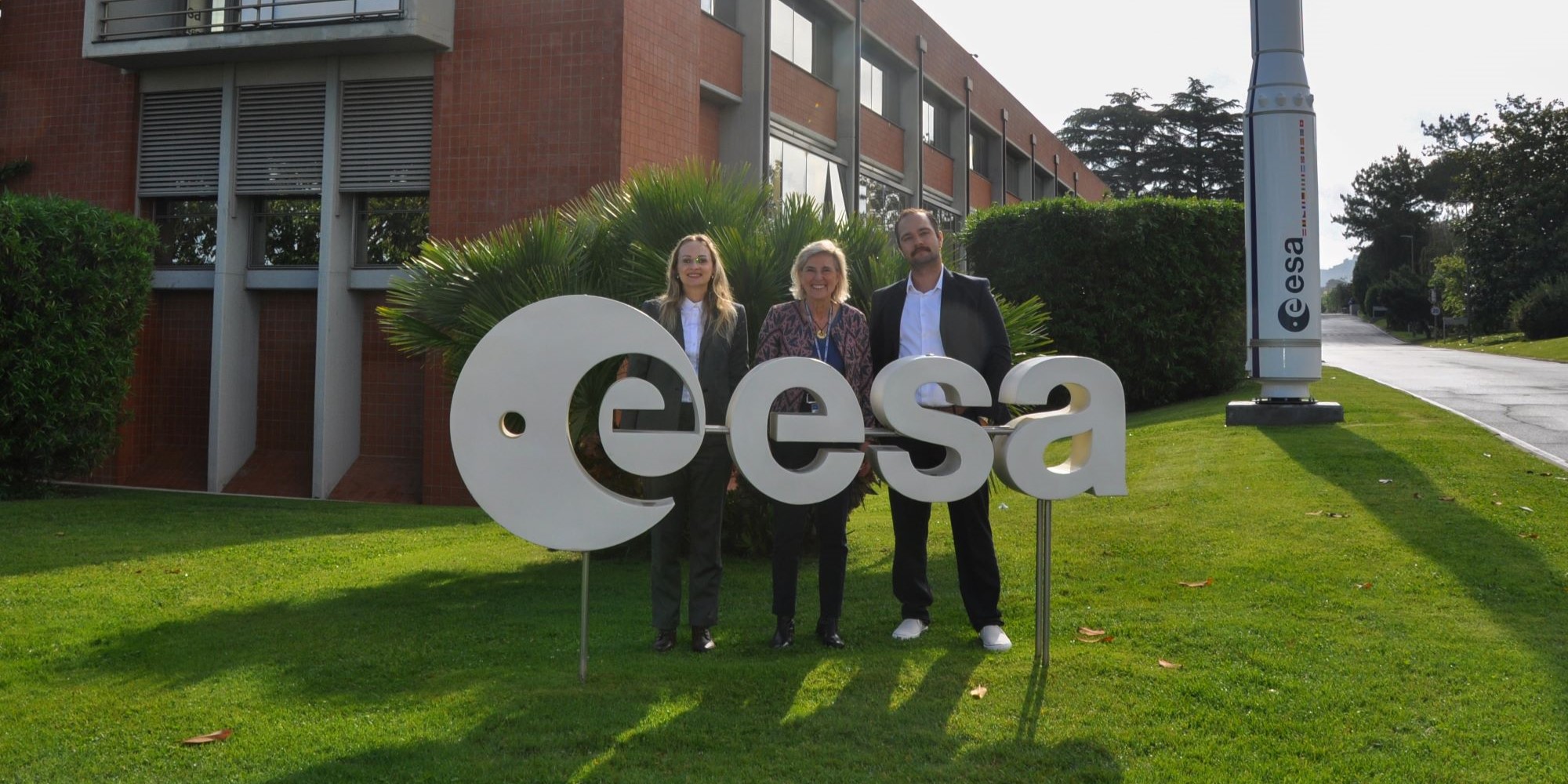
On 28 January 2025, a group composed of one ESA Φ-lab Research Fellow, one Visiting Researcher and one Intern, was awarded the second place at the 2024 Telespazio Technology Contest (#T-TeC). The award ceremony was held in Brussels during the 17th European Space Conference, with the presence of ESA Director General Josef Aschbacher. Their project, P³ANDA, focused on the creation of an AI-powered compact instrument to capture panchromatic images, optimising the acquisition and processing of satellite data in real time.

The Telespazio Technology Contest (#T-TeC) is a global open innovation competition sponsored by Leonardo and Telespazio, aligned with Leonardo Group companies’ innovation needs, and designed to inspire young STEM students from universities worldwide and drive innovation in the space sector.

Its sixth edition brought together a record number of 114 participants, showcasing 29 proposals from 26 universities from 10 different countries. The 2024 edition awarded winners with cash prizes and the chance to transform their ideas into start-ups through acceleration and incubation programmes, helping them bring their projects to market.

The awards ceremony, held in Brussels during the 17th European Space Conference with the presence of ESA Director General Josef Aschbacher, showcased proposals in two categories: ‘Idea’ and ‘Prototype’. The ‘Idea’ category was designed for projects in the early stages of development, while ‘Prototype’ was reserved for more mature projects, in which participants presented advanced prototypes ready for testing and further development.

The teams tackled seven different challenges spanning various aspects of the space sector. The themes ranged from sustainability in space and Earth to advanced Earth Observation and geo-information services, in-orbit services, the circular economy of space, and much more. The competition showed a diverse set of forward-thinking solutions, emphasising their potential to drive meaningful progress, particularly in sustainability.

Roberto Del Prete (Research Fellow at ESA Φ-lab), Domenico Barretta (Visiting Researcher at ESA Φ-lab), and Alessandro Crispiels (Intern at ESA Φ-lab), won the second prize in the ‘Prototype’ category under the theme “Innovative Electro-Optical Technology Solutions for Remote Sensing.”

Left: P³ANDA team at the #T-TeC 2024 Ceremony Award, held during the 17th European Space Conference. Domenico Barretta (left), Roberto Del Prete (middle), Alessandro Crispiels (right). Right: Roberto Del Prete (left) with ESA Director General Josef Aschbacher (right). Luca Del Monte (not shown) was ESA’s representative at the 2024 T-TeC awards ceremony.

Their project, P³ANDA – Panchromatic Plug-n-Play AI-eNabled Data Assembly – integrates a panchromatic imager, an on-board processing unit that runs AI-based and advanced computer vision algorithms, and on-board processing tools in a compact 1U assembly, aligning with the operational needs of small-satellite integrators and Earth Observation service providers. The development of P³ANDA was supported by Ubotica Technologies, IMT, and XCAM.

Designing sensors requires a balancing trade-off among swath width, spectral content, and spatial resolution. While hyperspectral imagers capture and analyse detailed information across a wide range of wavelengths, at the cost of limited spatial resolution, panchromatic imagers collect more photons per unit of time, increasing the signal-to-noise ratio, which results in clearer images, crucial for detailed analyses.

Panchromatic imagers have also an increased modulation transfer function (MTF), which focuses on maximising spatial resolution by emphasising sharpness and clarity. An increased MTF enhances the satellite’s ability to distinguish fine details, essential to applications like target detection or precision mapping.

All in all, P³ANDA is an all-in-one solution: by being AI-ready, it reduces downlink requirements; it is easily integrated with other sensors and includes state-of-the-art lightweight deep learning models.

The team received a cash prize of € 6000 and the opportunity of pre-incubation with cesah GmbH to start their own start-up. They will also have the chance to compete for the incubation process with one of ESA’s Business Incubation Centres.

Roberto Del Prete, Research Fellow at Φ-lab and team leader, says that “This victory in the Telespazio Contest 2024 is not just ours — it belongs to everyone who supported and inspired us. We – Domenico, Alessandro, and I – are especially grateful to Φ-lab for providing the space where our idea came to life. This moment reaffirms the role of disruptive innovation and collaboration in driving the future of space technology”.

To know more: ESA Φ-lab, Telespazio #T-TeC 2024

Photo courtesy of Telespazio

New AI-powered insights with the latest Major TOM embeddings

Building on the success of Major TOM’s (Terrestrial Observation Metaset) inaugural dataset release last year, ESA Φ-lab has launched the first global embedding dataset for Earth Observation (EO), in collaboration with CloudFerro. These embeddings deliver an efficient representation of vast volumes, enabling more precise and scalable analysis of satellite data.

March 2024 saw the release of Major TOM, a collaborative project designed to enable researchers to share, access, and integrate extensive EO datasets. Major TOM’s inaugural core dataset constitutes the largest machine learning (ML)-based collection of Copernicus Sentinel-2 images to date.

Less than one year later, ESA Φ-lab and CloudFerro revealed new Major TOM’s embedding expansions, which will improve the processing of complex information and drive advancements in ML, natural language processing, and computer vision.

With the massive and continuously increasing volumes of EO data in programmes like Copernicus, efficient vector representations are more necessary than ever. By encoding complex data into high-dimensional vectors, embeddings capture relationships and meaning, transforming natural language, images and other data types into a compact form that can be readily integrated in diverse AI pipelines.

This process enables machines to uncover patterns, similarities and connections with precision and accuracy in a manner agnostic to the downstream task. With embeddings, users can efficiently interpret key features of interest from satellite imagery, sensor data and geographic information systems, simplifying the analysis of spatial relationships and optimising time and resources.

This latest release consisted of more than 169 million embeddings, as the result of processing over 62 TB of raw data. Major TOM’s Embedding Expansions, now available for free on HuggingFace, include the Sentinel-2 Multispectral SSL4EO Model (Core-S2L1C-SSL4EO), the Sentinel-1 RTC SSL4EO Model (Core-S1RTC-SSL4EO), the Sentinel-2 RGB DINOv2 Model (Core-S2RGB-DINOv2) and the Sentinel-2 RGB SigLIP Model (Core-S2RGB-SigLIP).

Mikolaj Czerkawski, Internal Research Fellow at Φ-lab, was the leading researcher in this project: “Once applied at the full scale of Sentinel data archives, embeddings will fundamentally change the way users engage with Earth Observation data. This collaboration between Φ-lab and CloudFerro enabled a rapid delivery of an open-source prototype of this technology, showing how open data programmes like Copernicus can deliver further benefits to the global community beyond what was originally foreseen.”

Future work will focus on evaluating how Major TOM embeddings perform across a range of EO tasks, including pattern detection and predictive modelling, and on investigating other foundation models – such as MMEarth and DeCUR – to understand which the differences between how various models interpret EO data. The Major TOM dataset, now enriched with embeddings, will also be made available on the CREODIAS repository, offering open access to researchers and promoting collaborations within the EO community.

To know more: ESA Φ-lab, CloudFerro

Photo courtesy of ESA/Mikolaj Czerkawski

Exploring new frontiers with QC4EO at ESA Φ-lab

ESA Φ-lab has recently launched a new industrial activity in line with the Quantum Computing for Earth Observation (QC4EO) initiative. ‘Towards Operational Quantum Computing for Earth Observation’ focuses on the implementation of QC4EO use cases on quantum hardware with an operational focus. The aim is to demonstrate to the community that this revolutionising technology is quickly progressing with an increasing and positive impact on EO.

Quantum Computing (QC) is a hardware revolution that is increasing our ability to do much more than a conventional digital computer could. Together with AI, one of the most important software revolutions of our times, they are forming an extremely powerful alliance.

But how will QC change the computation paradigm? The first – and most obvious answer – is through its speed. Quantum computers will be able to perform specific calculations much faster than classical computers. They will also perform simulations of complex systems with a much higher degree of accuracy.

When it comes to energy efficiency, quantum computers will be designed to use fewer resources than classical computers and will open a range of new opportunities for problem-solving (e.g., factoring large numbers, optimisation in Complex). Brought together, these features will make QC a very appealing technology for Earth Observation studies.

Aligning with the ongoing technological disruption, ESA Φ-lab is exploring the expected revolution that Quantum software and hardware promises and that will positively impact EO and Earth Action, through the blend of QC4EO industrial, exploratory, and community-building activities.

On industrial activities, and building on the success of the QC4EO and QA4EO studies, Φ-lab has started a large project: ‘Towards Operational Quantum Computing for Earth Observation emphasises the application of Quantum Computing in Earth Observation (QC4EO), with a focus on hardware implementation and operationalisation. This initiative tests and implements quantum-based algorithms, featuring at least two use cases, one of which is associated with Digital Twin Earth.

This project highlights the swift progress and transformative potential of quantum technologies in the Earth Observation domain. Supported by the Foresight Element of FutureEO Block 4, it seeks to foster innovation and advancement in the sector.

Other industrial activities by Φ-lab include a recent co-funded activity, in collaboration with the University of Bari Aldo Moro, for the use of Quantum Machine Learning applied to SAR data for ground motion measurements. While previous activities are still under execution (e.g.,‘Quantum Computing and Artificial Intelligence for Earth Observation’ with CERN), Φ-lab and its partners – Forschungszentrum Jülich GmbH, Jagiellonian University and Nicolaus Copernicus Astronomical Center – have successfully closed relevant activities on the field.

Currently pushing the boundaries of this research field, Φ-lab is developing new exploratory activities focused on Hybrid Quantum Machine Learning for land cover and land use classification, EO image generation, noise filtering in EO image datasets, and prediction and forecasting.

Φ-lab also released an open-source Python library for QC4EO, integrating QC into deep learning frameworks like TensorFlow and Torch, and providing tools for designing and executing hybrid quantum algorithms. For more information on Hybrid Quantum Models, visit the library here.

The Φ-lab QC4EO network has recently experienced a significant growth, connecting around 40 experts on QC4EO and bringing researchers, research centres, universities and agencies together. Additionally, Φ-lab is organising a dedicated session on “HPC and Quantum Computing for EO” at the Living Planet Symposium, in Vienna, and will be present at the 2025 IEEE Geoscience and Remote Sensing Society (GRSS) High-Performance and Disruptive Computing in Remote Sensing (HDCRS) Summer School.

Together with Gabriele Cavallaro, Visiting Professor at Φ-lab, the lab will be part of a new technical committee of IEEE GRSS about quantum technologies for EO (QuestTC). Alessandro Sebastianelli, Internal Research Fellow at Φ-lab, will be leading the working group – a branch of the technical committee – on QC4EO.

“At Φ-lab, we are very proud of this achievement. From building fundamental blocks like quantum neural layers to applying new quantum solutions in EO image filtering and forecasting, we are creating a new path in Quantum Computing for Earth Observation.”, comments Alessandro Sebastianelli. “This confirms the capability of Φ-lab to work on disruptive and revolutionary technologies, leading the R&D of Quantum Computing applied to Earth Observation.”

While advancements are being made in the fields of quantum-safe networks and quantum imaging, future research will bring insights in quantum navigation and simulation in chemistry and material sciences.

To know more: ESA Φ-lab, QC4EO

Photo courtesy of Unsplash/Nicolas Arnold

The 2nd ESA CommEO retrospectives: Setting the Course for Europe’s Space Future at CM25

As the upcoming ESA Council at the Ministerial Level draws near, relive ESA’s strategy to advance Europe’s leadership in the global commercial Earth Observation market, discussed during the 2nd ESA Earth Observation Commercialisation Forum.

The 2nd ESA Earth Observation Commercialisation Forum (ESA CommEO) brought together investors, institutions, entrepreneurs and companies of all sizes from the Earth Observation (EO) sector. This event offered the perfect opportunity to discuss the strategic priorities for the upcoming ESA Ministerial Council (CM25).

As CM25 approaches, ESA reiterated its ambitious strategy for the coming years, focusing on strengthening collaborations with the European Union to ensure alignment in space initiatives, and reinforcing science ambitions, particularly in Earth science, to address critical global challenges. ESA underscored its role in supporting policy development, enabling informed decision-making across sectors, and is committed to advancing resilience, safety and security activities to safeguard the sustainability of space operations and protect vital infrastructure on Earth and in orbit. 

As demonstrated by the 2nd EO Commercialisation Forum, one of the main pillars in ESA’s strategy is to boost commercialisation, positioning Europe as a global hub for space entrepreneurship and investment. In fact, some of ESA’s Earth Observation flagship programmes – such as Digital Twin Earth, ESA InCubed and FutureEO – were extensively discussed during the forum.

The ESA Digital Twin Earth (DTE) proposal for CM25 aims to reduce barriers for accessing and using EO data while integrating the novel capabilities of ESA Member States into the DTE development lifecycle. Built collaboratively with the community, it leverages state-of-the-art technology and industrial excellence to drive environmental sustainability, establish best practices and measure impacts through broad participant collaboration. The programme seeks to explore cutting edge technologies such as quantum computing and AI, while advancing a geographically distributed framework for collaborative DTE component development and local reuse.

The ESA InCubed programme, an Earth Observation Programme managed by ESA Φ-lab, has established itself as a fast and effective mechanism for supporting innovation in EO, funding 140 activities. The ESA InCubed programme has promoted several successful national calls – in countries like the UK, Spain and Portugal – engaging a broader range of stakeholders and aligning projects with regional priorities.

InCubed has been a catalyst for venture capital investments in New Space start-ups, amplifying its impact beyond initial funding. This programme has not only driven growth in the Earth Observation sector but also enhanced its credibility with industry stakeholders, solidifying its position as a key player in the European commercial space ecosystem.

FutureEO, a world-leading R&D programme for the preparation, development, management and use of ambitious EO research missions and data also set its strategic commercial objectives for 2026-2028: to strengthen industrial competitiveness, address critical technology developments and Earth Action, and to reinforce ESA’s role as enabler and customer.

As a first buyer or initial anchor customer, the ESA Third Party Mission (TPM) programme enables New Space EO data to be opened to the broader European scientific community for innovative research and pre-operational application developments, including green commercialisation and Earth Action. More than 17.700 research application development and incubation projects have used TPM data since 2008, highlighting the programme’s role in supporting EO data commercialisation.

EO data buy is a powerful way to support the European EO industry. Through data buy, ESA assesses the quality of commercial EO data, allowing for capacity building, enhanced recognition, trust amongst data customers and investors, and stimulation the synergy between commercial and public EO missions.

The insights gained from this forum will shape ESA’s strategy for CM25, paving the way for Europe to strengthen its position and thrive in the highly competitive global EO sector.

See the full “ESA CommEO Approach Towards CM25” session here.

To know more: ESA CommEO, ESA Φ-lab, ESA InCubed, ESA Third Party Missions, Digital Twin Earth, FutureEO

Photo courtesy of Marc Jacquemin Photography

InCubed launches highlight ESA’s support for innovation

Three InCubed satellites have launched from the Vandenberg Space Force Base, California, highlighting ESA’s role as partner to industry and its support for business and technology innovation.

InCubed, the ESA Earth observation programme for ‘Investing in Industrial Innovation’ managed by ɸ-lab, focuses on developing innovative and commercially viable products and services that generate or exploit the value of Earth observation imagery and datasets.

The launch took place on 14 January on a SpaceX Falcon 9, Transporter 12, which placed multiple small and nano satellites into Sun-synchronous orbits.

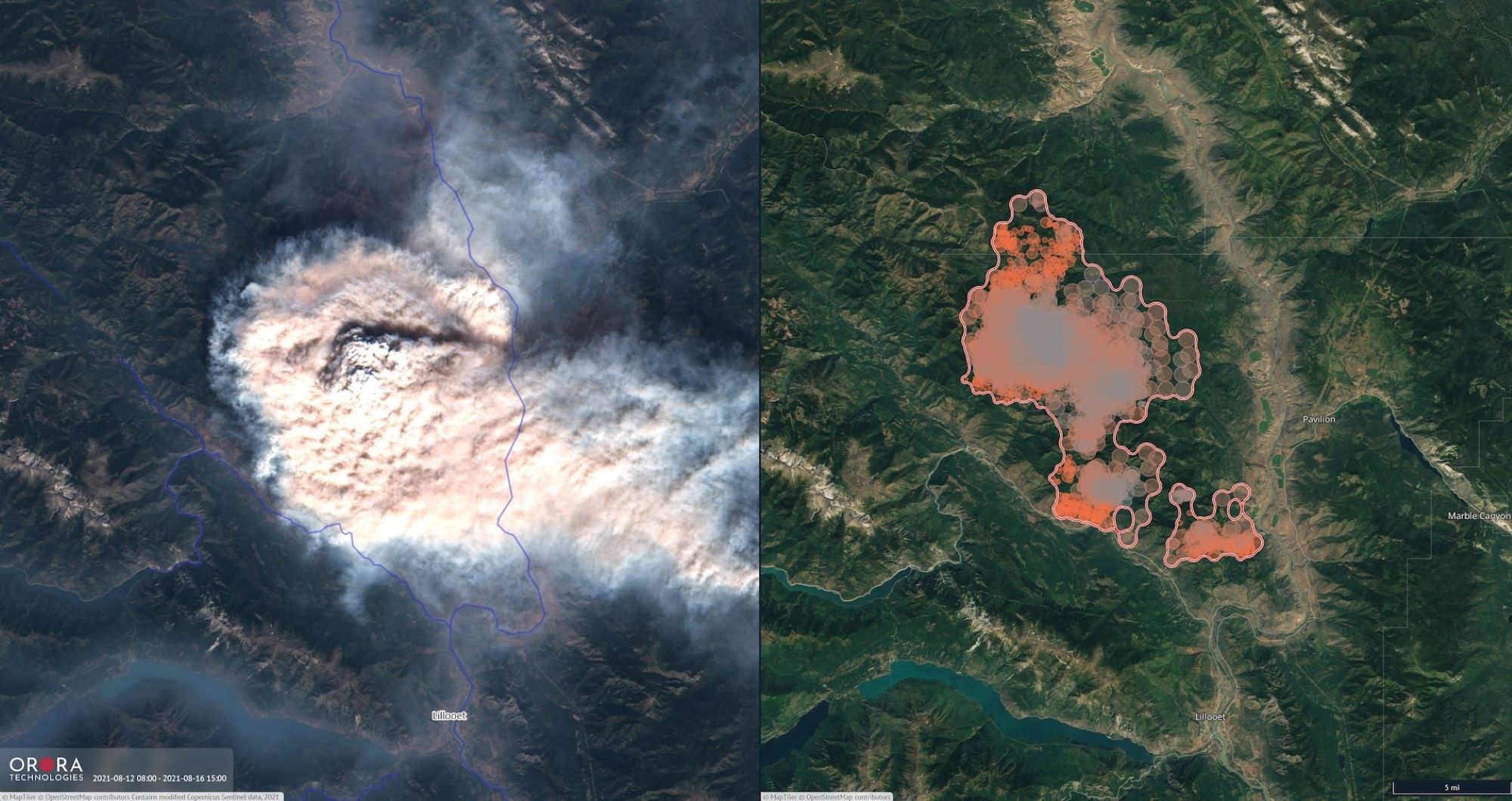
With the launch site approximately 200 km to the North-West of the wildfires that have caused huge damage to northern areas of Los Angeles in the past week, it’s apt that one of the InCubed satellites offers improved detection for wildfires.

Read the full article on www.esa.int.

RUDEO: paving the way for a sustainable future with Earth Observation and Blockchain

The RUDEO Hackathon, funded by ESA Φ-lab and implemented by GMV, took place between 24-25 October 2024, in a hybrid format. Participants were encouraged to propose solutions, leveraging Blockchain and Earth Observation (EO) technologies, in domains such as Climate Action and Resilience, Sustainable Supply Chains and Resource Management, and Risk Assessment and Insurance.

Earth Observation (EO) technologies have become indispensable to address global challenges such as climate change, disaster management and sustainable development. From environmental monitoring and biodiversity conservation to resource management and risk assessment, EO technologies have become a crucial tool for shaping the future. Despite their economic value, EO technologies still have some limitations in their operational efficiency, that could be addressed by emerging technologies like Blockchain.

Why should we integrate Blockchain with EO technologies? Besides its role in Environmental, Social and Governance initiatives, Blockchain can improve data provenance and immutability, ensuring the authenticity and traceability of EO datasets. The tamper-proof nature of Blockchain allows for a secure and verifiable record of data collection and processing, which is essential for applications that require high levels of trust, such as environmental monitoring and disaster response.

In that sense, the RUDEO Project surged as a way to evaluate and demonstrate the potential added value of Blockchain technology within the EO field, in different real-world applications: Climate Action and Resilience, Sustainable Supply Chains and Resource Management, and Risk Assessment and Insurance.The project also included an open-idea challenge, where participants could develop their solutions by using EO and Blockchain in the following areas of focus: sustainability, supply chain transparency, environmental monitoring, humanitarian aid, or urban planning.

This hackathon was organised and implemented by GMV and funded by ESA Φ-lab. Participants received technical and commercial support from ESA Φ-lab Explore and Invest Offices, Romanian Space Agency, research centres, universities and industry.

The winner of the hackathon was CO2 Angels. Within the ‘Sustainable Supply Chains and Resource Management’ theme, the team proposed an app to monitor and manage agricultural emissions using satellite data and blockchain, aimed at improving sustainability in supply chains. CO2 Angels will receive further mentoring support from ESA to scale-up its business ventures.

Of note, BioPolis, a high-school student team, suggested a platform combining EO data and user inputs to provide real-time environmental insights, incentivising eco-friendly actions through blockchain rewards, within the ‘Climate Action and Resilience’ theme.

Read more about RUDEO and its specific activities here

To know more: RUDEO Project, ESA Φ-lab

Photo courtesy of Pexels/Julia M. Cameron

Next ESA InCubed Portugal National Call focusing on ‘Earth Observation for Municipalities’

Supported by the ESA InCubed programme, the Portuguese Space Agency has announced a call for innovative projects to modernise Portuguese cities through the use of Earth Observation (EO) technologies. This InCubed call has a total budget of €1.5 million. The deadlines for the first and second cycle of applications are 12 March and 2 June 2025, respectively.

The ESA InCubed programme plays an important role in growth and competitiveness within the space economies of its Participating States by supporting the development of commercially successful business ventures in the Earth Observation sector. As a longstanding participant in InCubed, Portugal has reaffirmed its commitment by announcing a new call for applications seeking InCubed co-funding.

Building on the ‘EO for Municipalities’ initiative by the Portuguese Space Agency, this new call promotes innovation and the adoption or generation of EO data and services at the local government level, targeting participation from the Portuguese industry.

Possible themes include, but are not limited to, territory and urban planning; climate adaptation and mitigation in urban and rural context; air quality and pollution monitoring; biodiversity monitoring and preservation; forestry management and fire preparedness; natural hazards monitoring and emergency management. The budget for this call is €1.5 million, with no upper limit for individual projects.

Submitted proposals must demonstrate that the proposed product or service will be commercially viable or (pre)operationally ready by the conclusion of the InCubed activity, and they should align with the technical specifications for systems integration outlined by the Agency for Administrative Modernisation, I.P. (AMA), under the framework of the National Strategy for Intelligent Territories (ENTI).

Proposals can be submitted at any time, with two evaluation cycles per year. The first evaluation cycle is scheduled for March 2025 and the second one for June 2025. Two online webinars to explain InCubed opportunities in Portugal will take place on 3 March 2025 and 5 May 2025.

“Launching targeted national calls allows us to collaborate closely with our Participating States to drive Earth Observation innovation within individual countries, and the ‘EO for Municipalities’ initiative from Portugal highlights the strong dedication to support commercial initiatives”, commented Michele Castorina, InCubed Programme Manager and Head of the ESA Φ-lab Invest Office. “We are committed to working closely with our Participating States to expand financing opportunities for Europe’s EO sector, and we look forward to receiving innovative proposals from Portuguese companies.”

Further details can be found on the Portuguese Space Agency website. Applicants should summit their proposals on the Open Space Innovation Platform (OSIP) by 2 June 2025.

To know more: ESA InCubed, Portuguese Space Agency

Photo courtesy of Pexels/Diogo Miranda

Revealing urban secrets with the #MapYourCity Challenge

The #MapYourCity challenge is an initiative supported by ESA Φ-lab in the framework of the AI4EO challenges. The 2024 edition took place from 02 April to 14 July, bringing together researchers and coders, and driving a positive change through the use of artificial intelligence technology (AI) and Earth observation (EO) data for automated building age detection. 

Every building has a story. From its requirements to characteristics such as architectural style, construction techniques and design philosophies, knowing the condition of a building is essential to maintain its structural integrity and safety. In particular, the age of a building is a very important variable to consider during renovations or preservation efforts. Age-related structural and safety issues may require a rapid and tailored action that prevents potential hazards and improves urban city planning policies.

As cities continue to grow, comprehensive and organised monitoring of building age becomes a very difficult task. Manual sampling and strew-view observations are often tedious and time-consuming, being compromised by ongoing construction and demolition projects that alter the urban landscape and obstruct clear views of buildings.

In that sense, the #MapYourCity Challenge emerged as a way to revolutionise the monitoring of urban environments. Supported by ESA Φ-lab, together with Novaspace, EarthPulse, Sinergise and Planetek Italia, this AI4EO challenge took place from 2 April to 14 July 2024, leveraging the use of EO data and AI automation and offering a detailed and diverse perspective on our cities, from street level to satellite view.

Participants were challenged to create their own innovative solution, by training a deep-learning model capable of accurately estimating the construction year of any given building. To achieve this, they were provided with a training dataset – a large group of data used to train AI models, so they can process information and accurately predict outcomes.

This particular dataset, curated by MindEarth, included information from urban buildings in five different countries and over a 100-year timespan, such as building footprints (from EUBUCCO), date of building construction, street-level imagery of the building façade (provided by Mapillary), medium-resolution cloud-free Sentinel-2 images, and very-high resolution (VHR) images by ESA Third Party Mission Airbus Pléiades. Ultimately, the goal was to estimate the age of a building using only top-view perspectives, so that the developed system could be applied at scale.

A total of 123 teams registered for the challenge, with 30 teams actively participating and more than 300 submissions. The winners of the challenge were announced during URBIS2024: the third place was given to Caroline Arnold, from DKRZ (Germany); Tran Hoang Ba from Axelspace (Japan) won the second prize; and the grand prize was awarded to Eric Park, Hagai Raja Snulingga and Steve Immanuel from TelePIX (South Korea). The winners were rewarded with a cumulative prize of € 5000.

Estimating the age of a building is, without a doubt, a task improved by the outcome of this challenge. Nevertheless, the type of approach developed during the competition can also be applied to other important characteristics in a building: the BEE-AI project, funded by ESA and developed by MindEarth, “aims to enrich existing energy certification processes by offering a comprehensive view of urban energy efficiency at the level of individual buildings.”

“Being part of the #MapYourCity Challenge was an exciting journey for MindEarth. Curating the datasets and seeing how participants used them to create innovative AI models for predicting building age was truly inspiring and rewarding. The results showcased the synergy of technical skills tackling this key urban challenge and underscored the immense potential of combining AI and Earth Observation to address real-world issues”, says Alessandra Feliciotti, Project and Operations Manager at MindEarth.

Nicolas Longépé, Earth Observation Data Scientist at Φ-lab, comments the outcome of the initiative: “By bringing together the worlds of artificial intelligence and Earth observation, this challenge promoted not only the growth and engagement of the AI4EO community, but also provided a platform for researchers and developers to showcase their work and make a tangible impact in solving the challenges posed by increased urban growth and the lack of appropriate methods to monitor the conditions of buildings in an optimal way.”

Know more about #MapYourCity and other Φ-lab-supported challenges at www.ai4eo.eu.

To know more: ESA Φ-lab, MindEarth, AI4EO Challenges

Photo courtesy of Unsplash/Mohit Kumar

ESA Φ-lab and Altair join forces to drive innovation in Earth observation

ESA has signed a letter of intent with Altair to encourage the development of Earth observation (EO) commercial products and services. The collaboration will target companies supported by ESA Φ-lab, the InCubed EO commercialisation programme, ESA-PhiLabNET, ESA Business Incubation Centres (ESA BICs) and ESA Technology Brokers, within the ESA Partnership Initiative for Commercialisation (EPIC) framework.

ESA Φ-lab plays a pivotal role in driving innovation and commercialisation in the European EO sector, by providing technical, commercial and financial support to a large group of enterprises through the ESA InCubed programme and other numerous research initiatives. Its contributions go beyond funding and guidance, extending to the formation of strategic partnerships that offer essential business and commercialisation services.

One of such partnerships, established through the ESA Partnership Initiative for Commercialisation (EPIC), was secured with the German division of Altair, which provides software and cloud solutions in simulation, high-performance computing (HPC), data analytics, and AI, and has decades of global experience and reach in the space and newspace sector. Altair is used by primary companies and emerging startups to develop, test, optimise, and build their innovative products, including satellites, launchers, sensors and antennas, probes and rovers.

The partnership between Φ-lab and Altair, within the ESA-Altair Space Acceleration Programme, is focused on the development of a dynamic and thriving EO commercial ecosystem, by making use of digital engineering, AI and data analytics tools, and increasing awareness of EO-based services.

“This collaboration with Altair marks a significant milestone in our mission to push the boundaries of Earth observation exploration and technological development”, comments Giuseppe Borghi, Head of the Φ-lab division. “Together, we aim to leverage the use of HPC and data analytics for the advancement of groundbreaking projects, creating new possibilities within the space research field and enhancing Europe’s position as a leader in Earth observation innovation.”

Further details about this partnership and the two offers for start-ups and large companies provided within the Φ-lab-Altair partnership can be found here.

To know more: Φ-lab, InCubed, ESA BIC, ESA Technology Broker, Altair

Photo courtesy of Pexels/Pavel Danilyuk