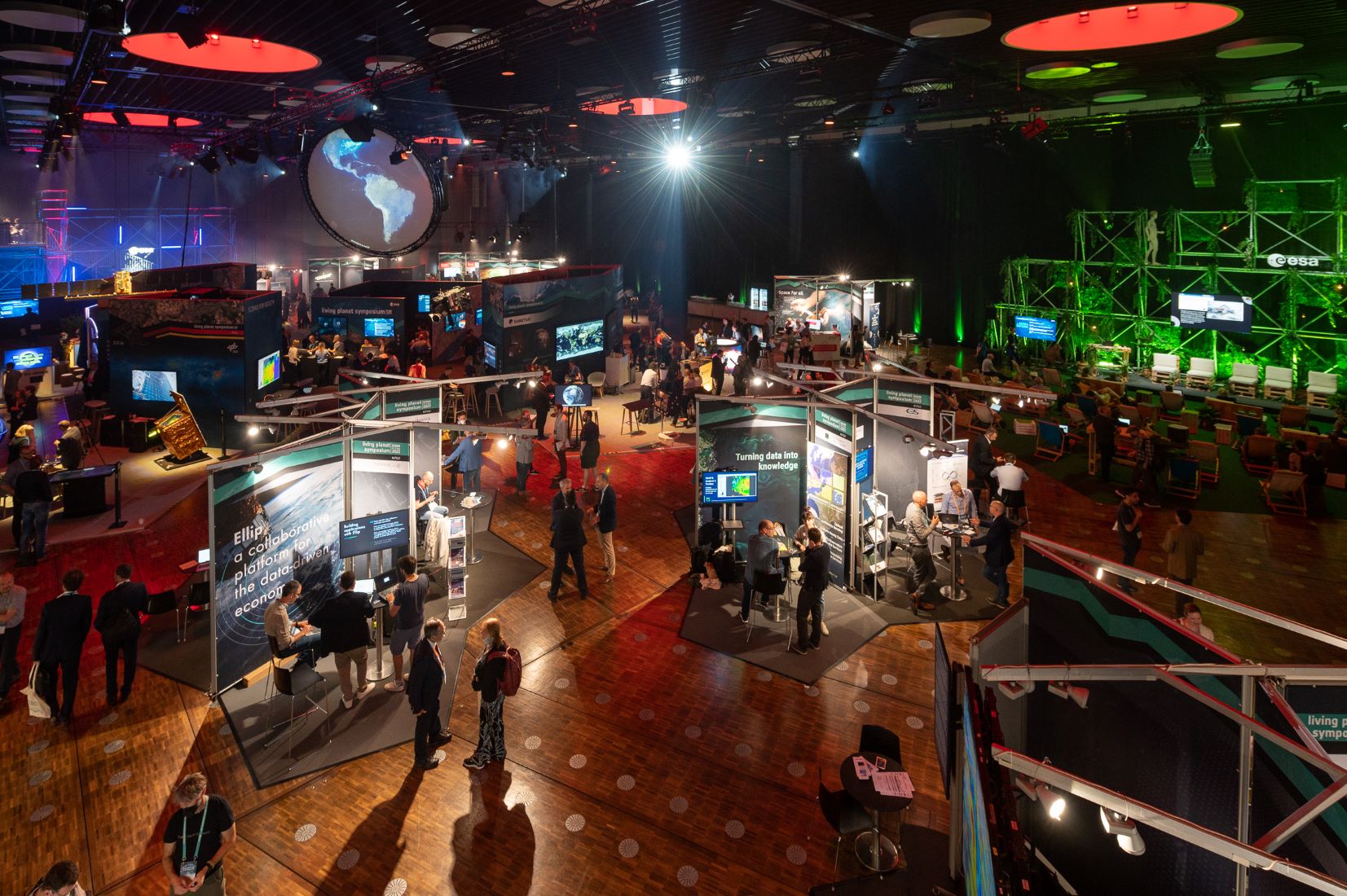
One of the objectives of the Living Planet Symposium, taking place this week in Bonn, is to foster interaction between the institutional and commercial sectors to boost the Earth observation space economy. This is being achieved by highlighting existing partnerships, expanding the number of data users and facilitating access to private funds for companies.
With numerous contributions from industry, investors and ESA’s Commercialisation, Industry and Procurement and Earth Observation Programme directorates, the symposium has brought the business side of observing our planet to the fore. Several sessions featured the ESA InCubed programme, which helps start-ups, mid-cap and large Earth observation players bring their innovative ideas to market through commercial, technical support and investment advice.
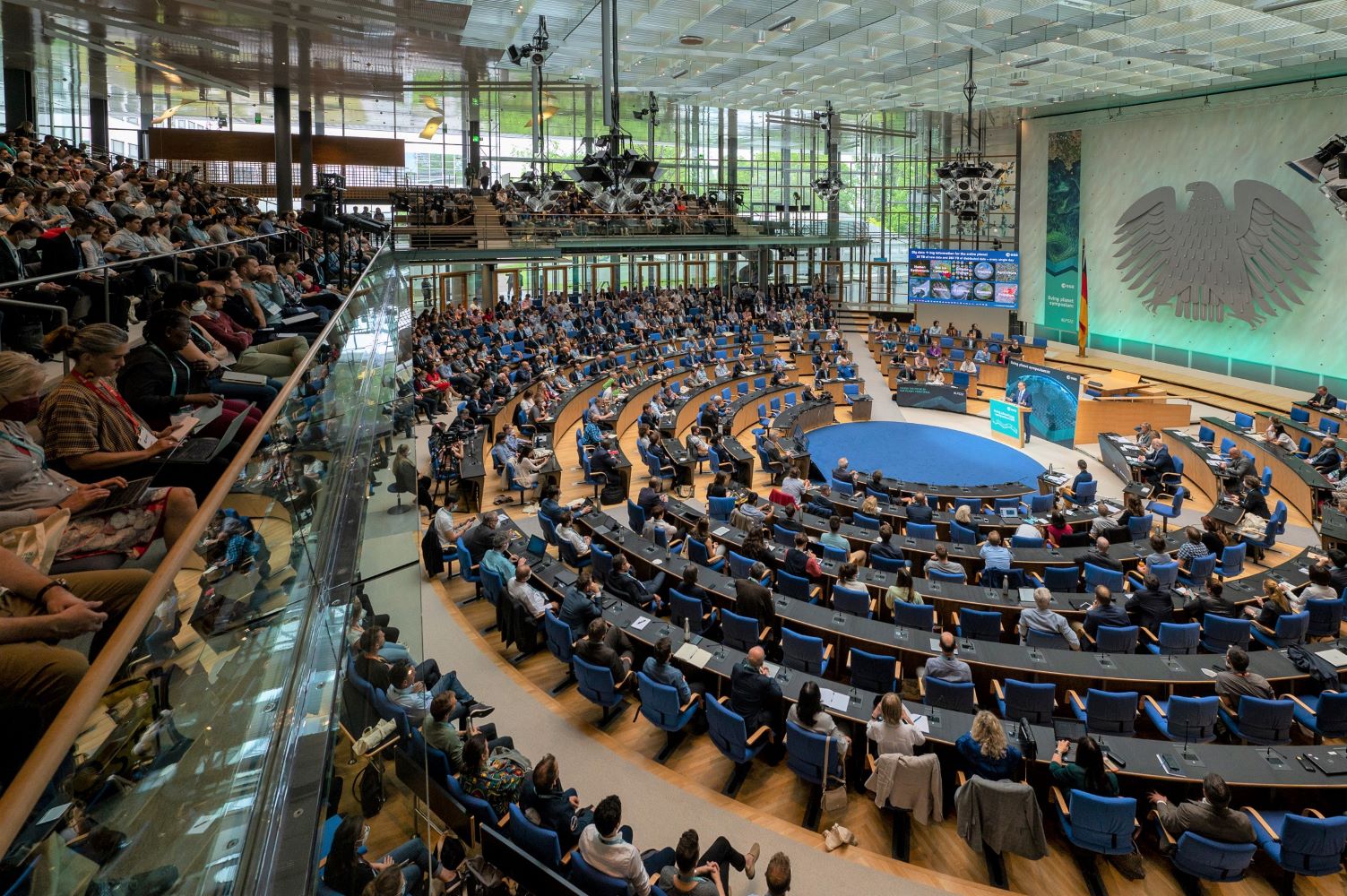
ESA’s Living Planet Symposium has opened with a flourish with over 4000 participants including scientists, academics, space industry representatives, institutional stakeholders, data users, students and citizens gathered to discuss the latest findings on our changing planet, as well as advances in satellite technologies, new opportunities in the commercial world, and ESA’s plans for the future.
The symposium – one of the biggest Earth observation conferences in the world – takes place every three years. With the urgency to understand and monitor our planet from space to address the climate crisis and the growing interest in satellite data for all manner of uses that benefit society and the economy, each Living Planet Symposium garners more interest than the last.
The International Research Centre in Artificial Intelligence under the auspices of UNESCO (IRCAI) has recognised a Φ-lab initiative as part of its Global Top 100, a list of projects solving problems related to the United Nations Sustainable Development Goals (SDGs). The research, carried out in collaboration with UNICEF, developed an Artificial Intelligence (AI) solution for quantifying dengue fever outbreaks from space.
As one of the world’s most common and rapidly spreading arboviral diseases, dengue fever causes major public health and economic consequences in tropical and sub-tropical regions. Forecasting outbreaks is an essential tool for aid agencies and health authorities, but the complex dynamics of the spread of dengue present major challenges for modelling.
A Φ-lab team worked with UNICEF to create an AI-ensemble model for predicting dengue outbreaks based on Earth Observation (EO) satellite data and products. Φ-lab research leader Rochelle Schneider dos Santos explains: “It’s crucial to factor in long-term dependency in time series data when modelling outbreaks, but this is problematic at country level due to geographical variations in dengue incidence. Our climate-based ensemble model used multiple Machine Learning approaches to predict the incident rate one month in advance for each administrative area in Peru.”
IRCAI named the Φ-lab/UNICEF research on its 2021 Global Top 100 list of AI solutions for sustainable development. The project came under the Promising category in recognition of the successful piloting of the dengue predictive model in Peru (the pilot has since been extended to Brazil).
“This project is a perfect example of collaboration between a humanitarian organisation and a research entity to support the UN SDGs,” said Dohyung Kim, Lead Data Scientist at the UNICEF Office of Global Innovation. “Not only is the outcome of the project expected to deliver information and insights for policy makers, it also provides tools which can be directly used by field operators to track the changes in dengue prevalence at a finer scale, thanks to the powerful Earth observation data from ESA.”
Full details on the Φ-lab entry for the IRCAI Global Top 100 can be found here, and the complete list of projects is here. A research paper on the initiative was published in the proceedings of the International Conference on Machine Learning 2021.
Covering satellite automation software, ground-station network access and Copernicus Sentinel-1 image processing, the latest ESA InCubed co-funded activities tap into market needs from across the space economy value chain.
“InCubed supports the entire breadth of the commercial EO arena, from space assets and the ground segment to downstream applications, a fact that is nicely demonstrated by these initiatives with AIKO, Spaceit and KappaZeta. All three companies have identified areas where they can add remarkable value through innovative solutions, and ESA co-funding, technical and commercial de-risking support is helping them achieve a faster time to market – a critical factor for commercial success” – Giuseppe Borghi, Head of ESA Φ-lab.
AIKO: MiRAGE autonomous satellite management
Satellite manufacturers and operators need to optimise their resources and be able to respond rapidly to in-flight events, but the necessity of human intervention often presents bottlenecks and inefficiencies in mission management. To address these issues, Turin-based company AIKO has developed MiRAGE (Mission Replanning through Autonomous Goal gEneration), a Machine Learning-based onboard automation package that renders satellites much less dependent on ground control. MiRAGE analyses in-orbit and operational data to enable the spacecraft to identify and react to unexpected events, thereby lowering operating costs and improving the quality of delivered services.
“MiRAGE empowers satellites to operate autonomously, overcoming the limitations of human-centric mission control,” says AIKO CEO Lorenzo Feruglio. “The software paves the way for benefits such as improved cost efficiencies, increased activity lifespan and boosted resource utilisation. MiRAGE is also highly scalable and will be able to support constellation architectures in which hundreds or even thousands of satellites work collaboratively to reach mission goals.”
The two-year MiRAGE InCubed initiative includes completing product development and acquiring flight hours in order to train and refine the Machine Learning models.
Spaceit: Aggregated Marketplace for Ground Station Services
A further challenge for satellite operators is access to the terrestrial networks that underpin both mission control and data downlinking. Commercial and institutional operators alike need a low-cost, low-latency ground infrastructure at their fingertips, but currently there is a lack of one-point-of-entry communication solutions that are integrated with multiple ground station networks.
Spaceit OÜ, an Estonian start-up founded in 2015, saw a gap in the market for connecting satellite operators with ground stations. Silver Lodi is the company’s CEO and co-founder: “We realised there was a need for a single platform for ground station services, a solution that we were well placed to provide as part of our cloud-based Mission Operations Platform.” The new platform is called Aggregated Marketplace for Ground Station Services, and development under InCubed co-funding started in December 2021. Standalone ground stations, together with virtual and physical networks, will be brought together into one unified ecosystem, allowing users to book services, manage contacts and communicate with satellites in one cross-network environment.
The user interface for Aggregated Marketplace for Ground Station Services, along with the activity to integrate the solution with the ground station segment, are currently being developed, with the Mid-Term Review due in June. In parallel, commercial negotiations with partners and customers are underway, and the product is expected to be ready for launch by the end of this year.
KappaZeta: analysis-ready Sentinel-1 data
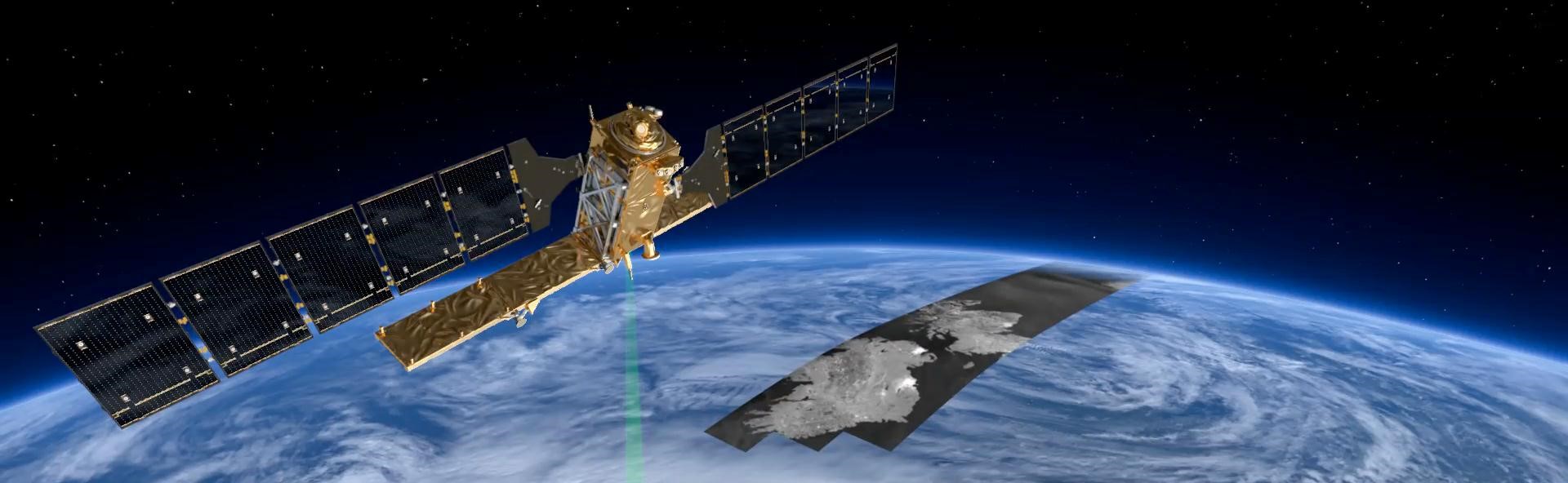
The Copernicus Sentinel-1 mission gathers frequent Earth observation data (currently every three to six days across Europe), using radar to generate medium-resolution images day and night with no interference from cloud cover. Sentinel-2 by contrast produces high-resolution optical images by day, but the presence of clouds may mean that capturing frequent, useful data at a given location is problematic. Crucially for example, cloud-free vegetation images in Autumn may be available only once a month from Sentinel-2, which is far too sporadic for efficient farm management.
The KappaOne solution seeks to provide the best of both worlds by using Artificial Intelligence (AI) modelling to fuse radar and optical imagery. Simulated Sentinel-2 images will effectively be created based on Sentinel-1 data and organised into data layers such as natural-colour satellite images and biomass estimate.
The solution is being developed by KappaZeta, which like Spaceit is based in Tartu in Estonia. CEO Kaupo Voormansik explains the significance of KappaOne: “Providing Sentinel-1 analysis-ready data for commercial and governmental entities is a landmark activity for KappaZeta. We see that Sentinel-1 imagery is largely underutilised and in its raw format is too complex for the majority of users. KappaOne will make data usage very easy – in fact the name derives from our aim to deliver one-click integration of calibrated, pre-processed information.”
Development of KappaOne kicked off in October 2021 with partial funding from InCubed. The first data layer services are due for release in the next few months.
Czech company SpaceKnow is developing GEMSTONE (the Global Economy Monitoring System delivering Transparency and Online Expertise) under an InCubed co-funding initiative. Based on Machine-Learning-derived data from satellite imagery, the platform will provide users with key insights on industry and supply-chain performance.
Businesses and public institutions often encounter a number of problems in sourcing useful industrial Earth observation data. Not only is it difficult to retrieve information promptly due to the time delay between a phenomenon occurring and related data becoming available, but analysts need to search a wide spectrum of sources to pull together actionable insights. Reliability is also an issue, with concerns that the data received may not be impartial or free from bias.
GEMSTONE seeks to address these obstacles by providing a single point of reference for data, based on indices computed through Machine Learning (ML) analysis of satellite imagery. Users benefit from access to performance information on selected industries and commodity supply chains, drawn directly from unbiased Earth observation data and rapidly processed with state-of-the-art algorithms.
With interactive features allowing customers to tailor the platform to their needs, GEMSTONE is primarily aimed at sectors including banking, insurance, government, automotive and energy. Knowledge can be gained for a specific area or country, or topics of interest can be selected such as lithium or wood production. Customers can also pinpoint sites related to a company or product and then monitor accumulated data at these locations.
GEMSTONE forms an integral part of the wider mission of SpaceKnow. Its Economic Products division is creating what it terms a virtual encyclopaedia of the physical world, fusing satellite imagery data with ML and advanced statistics to create actionable geo-information.
“The things we do at SpaceKnow are supporting key decision making all over the globe, and GEMSTONE will be a premium platform delivering our insights to financial and industry leaders,” commented Jaroslav Javornicky, SpaceKnow’s Co-founder and CEO. “Working with ESA’s InCubed programme gives us access to financing and additional EO expertise that together provide a vital springboard for accelerating our time to market.”
For ESA Technical Officer Piera di Vito, the commercial advantages of GEMSTONE are clear: “GEMSTONE aims to offer a fully scalable product that will bring multiple satellite imagery sources into one place and transform location-specific knowledge into business indices. The platform has the potential to satisfy the demand for a state-of-the-art solution that effectively streamlines outputs without the need for further analysis. As such, GEMSTONE is set to become yet another example of the value of EO in industrial applications, and we’re pleased that InCubed is supporting this activity.”
After kicking off in August 2021, the development of GEMSTONE is progressing well, with data sets and data labelling now complete. The next major review of the initiative is scheduled for the end of April.
Cloud service provider OVHcloud has agreed to make a free cloud service package available to innovative start-ups that collaborate with ESA Φ-lab, the ESA InCubed commercial programme, ESA Business Incubation Centres (ESA BICs) and ESA Technology Brokers.
ESA Φ-lab, in its continuing effort to bolster start-ups that develop innovative products and services, is keen to provide such companies with a series of free measures to help boost their growth. The first example of this assistance is access to cloud computing services, a vital tool for the development and deployment of New Space applications.
The selected partner for this initiative is OVHcloud, an international provider delivering public and private cloud services in 140 countries. With over 400 000 servers lodged in 33 data centres, the company also offers domain name registration, web hosting plans and telephony. The OVHcloud Start-up Program has been running since 2015 and has so far helped more than 2000 enterprises with resources, training and advice.
In an agreement signed between OVHcloud and the ESA Directorate of Earth Observation in conjunction with the Directorate of Commercialisation, Industry and Procurement, any company granted a contract as part of ESA Φ-lab, ESA InCubed, the ESA Business Incubation Centres (ESA BICs) or ESA Spark Funding from an ESA Technology Broker, will have access to a number of benefits free of charge. These include up to €100 000 of free credits for OVHcloud products and up to 20 hours of specific technical support from business experts.
ESA will inform its start-up community of the offer, and OVHcloud will promote the various ESA start-up incentives to companies whose products and services may be relevant to the space sector.
“As a leading European cloud provider, we’re very excited to launch this collaboration with ESA as it reflects our common interest in promoting innovation and entrepreneurship in the Space Economy,” said Jonathan Bowman Clarke, OVHcloud Start-Up Program Leader for Southern Europe. “With OVHcloud’s offering in combination with co-funding from programmes such as ESA InCubed, start-ups are able to access services that give an essential helping hand to early-stage ventures in the European space arena.”
For Michele Castorina of the Φ-lab Invest Office and InCubed programme, the benefits of the cooperation are clear: “This multi-Directorate agreement is a clear illustration of the coordinated support that ESA provides for economic operators, from incubation in the BICs to product development with Incubed. OVHcloud’s generous offer is a key enabler for start-ups, particularly during the commercialisation phase when setting up business services becomes a necessary part of getting the company off the ground. As such we’re more than happy to promote the OVHcloud Start-up Program to InCubed-supported entrepreneurs.”
Niels Eldering, Head of the ESA BIC and Brokers section at ESA, added: “We have a strong network of 23 ESA BICs and 7 Technology Brokers in over 70 locations in Europe. For our start-ups and innovative businesses, speed and connectivity are essential ingredients for capturing the market successfully, and we look forward to connecting our community to the opportunities that OVHcloud can bring.”
The offer is available to qualifying start-ups from 01 April. Further details can be found here.
German company EOMAP has launched its development programme for EOSmart, an online solution for Earth observation-based mapping and monitoring of water resources. With funding support from ESA InCubed, EOMAP will collaborate with international stakeholders to produce a tool that puts enhanced information in the hands of water-management decision makers.
The world’s water resources are under ever-mounting pressure, as factors such as population growth and changing living standards drive increases in both industrial and domestic consumption. National and local authorities, together with private water utilities, not only face significant challenges in keeping track of demand and changes in water quality, but must also focus on risk management, budgetary constraints and meeting reporting requirements.
These challenges give rise to a clear need for smarter approaches to managing fresh water and marine environments. But information on past, current and predicted trends in water quality is often hard to come by, and so EOMAP saw a clear opportunity to draw on Earth observation (EO) data to help support water managers in their processes. The EOSmart solution will provide key quality indicators built on satellite-derived measurements of properties including sediment concentration, phytoplankton, cyanobacteria and temperature changes. The platform will transform the data into actionable, relevant information that management teams can integrate into their routine operations.
Karin Schenk, Head of the EOMAP Water Quality Department, explains the game plan: “We’ll co-create EOSmart with both global players in the water market and government bodies, and in fact we expect market-oriented cooperation to be the key to the success of the endeavour. Our aim is to offer an end product that gives customers novel water-quality data at their fingertips.”
EOMAP is already well established in the sector, and supplies bathymetry and seafloor mapping services to a global client base. “For more than fifteen years now we’ve been providing extremely high-quality aquatic data and software based on Earth observation,” adds CEO Thomas Heege. “EOSmart will leverage this deep knowledge and further empower customers to work with physics-based water-quality data. The benefit for them will be increased safety and efficiency – at lower costs. We are also delighted to be among the first German InCubed activities.”
Piera di Vito is the ESA Technical Officer assigned to the initiative: “Supporting the development of a toolbox that helps to manage our most precious resource sustainably is of value for society and a good fit with the profile of EO-centred products and services co-funded by InCubed. We look forward to seeing how EOSmart progresses this year, firstly with product development and then with the pilot, which will be a first chance to demonstrate the performance and potential of the product.”
The time has come to register to attend the European Space Agency’s Living Planet Symposium – one of the largest Earth observation conferences in the world. Taking place on 23–27 May 2022 in Bonn, Germany, and jointly organised with the German Aerospace Center, this prestigious event allows all attendees to hear first-hand about the latest scientific findings on our planet. Attendees will also hear how observing Earth from space supports environmental research and action to combat the climate crisis, learn about novel Earth observing technologies and, importantly, learn about the new opportunities emerging in the rapidly changing sector of Earth observation.
This renowned event not only attracts scientists and academics, but also those working in the space industry, institutional stakeholders, data users, students and citizens.
In short, the week-long symposium is open to everyone – to attend in person you just need to register by 9 May. Please note that the symposium will be an in-person event and not remote, thanks to the decline of COVID.
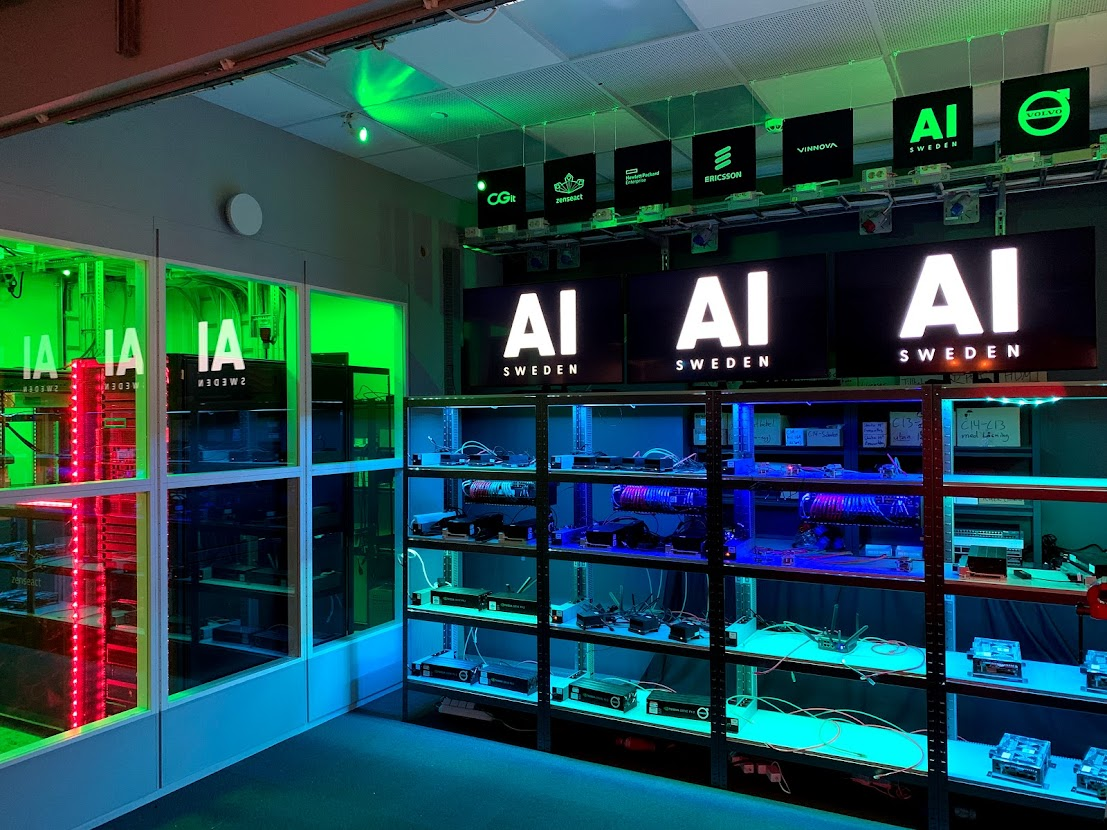
Building on its experience in fostering transformative innovations aimed at market adoption in the Earth observation (EO) sector, the model of Φ-lab@ESRIN is being replicated across Europe by ESA. Under the leadership of the newly established Directorate of Commercialisation, Industry and Procurement, ESA has signed a Letter of Intent with AI Sweden to set up a pilot development of Φ-lab@Sweden, a collaboration that will develop solutions in the area of Edge Learning in Space.
As part of the Boost Green and Digital Commercialisation priority of its Agenda 2025 strategy, ESA will create a dynamic network of Φ-labs across ESA and Europe. Building on the experience of the existing Φ-lab@ESRIN, with its focus on delivering transformative innovations aimed at market adoption, ESA is adopting an ‘innovate and apply under-one-roof’ approach, teaming up with academia, research centres, national space centres, industry and private investors, including venture capital, to boost disruptive innovation in emerging commercial space domains.
First off the starting blocks is Φ-lab@Sweden, a partnership between ESA and AI Sweden, the Swedish national AI centre. Working hand in hand with ESA Φ-lab@ESRIN and the ESA Advanced Concepts Team, Φ-lab@Sweden will serve as a platform for building advanced European capabilities related to the development of Artificial Intelligence (AI) onboard satellites. The collaboration will focus on supporting innovation initiatives, research calls and educational programmes, ultimately leading to rapid knowledge transfer across industry sectors.
“Together AI Sweden and ESA will pursue the strategic goal of ensuring that Europe spearheads Edge Learning innovation in Earth observation technology,” said AI Sweden’s Martin Svensson at the signing ceremony. “By developing capacity and providing an engaging environment, we will stimulate individuals and organisations to work together and contribute to this goal with bold and highly original solutions.”
Géraldine Naja, Director of Commercialisation, Industry and Procurement, signed the agreement on behalf of ESA: “We’re very excited to be getting the first pilot of ESA Φ-labNET off the ground, and I see the partnership as a prime opportunity to collaborate very closely. AI Sweden will grant our researchers access to their resources, and we’ll also share ESA Φ-lab’s knowledge and experience. The agreement is not only mutually beneficial for ESA and AI Sweden, but crucially will also help keep European transformative innovation at the forefront of AI in Space.”
Giuseppe Borghi is head of the ESA Φ-lab@ESRIN division: “We’re very much looking forward to both the launch of Φ-lab@Sweden and the ground-breaking research that it will undoubtedly produce. I’m also extremely glad to contribute to this initiative as a member of their Edge Lab Advisory Group, where we’ll be able to explore synergies and exchange ideas with our colleagues at AI Sweden.”
The inauguration of Φ-lab@Sweden is scheduled to take place in late spring of this year.
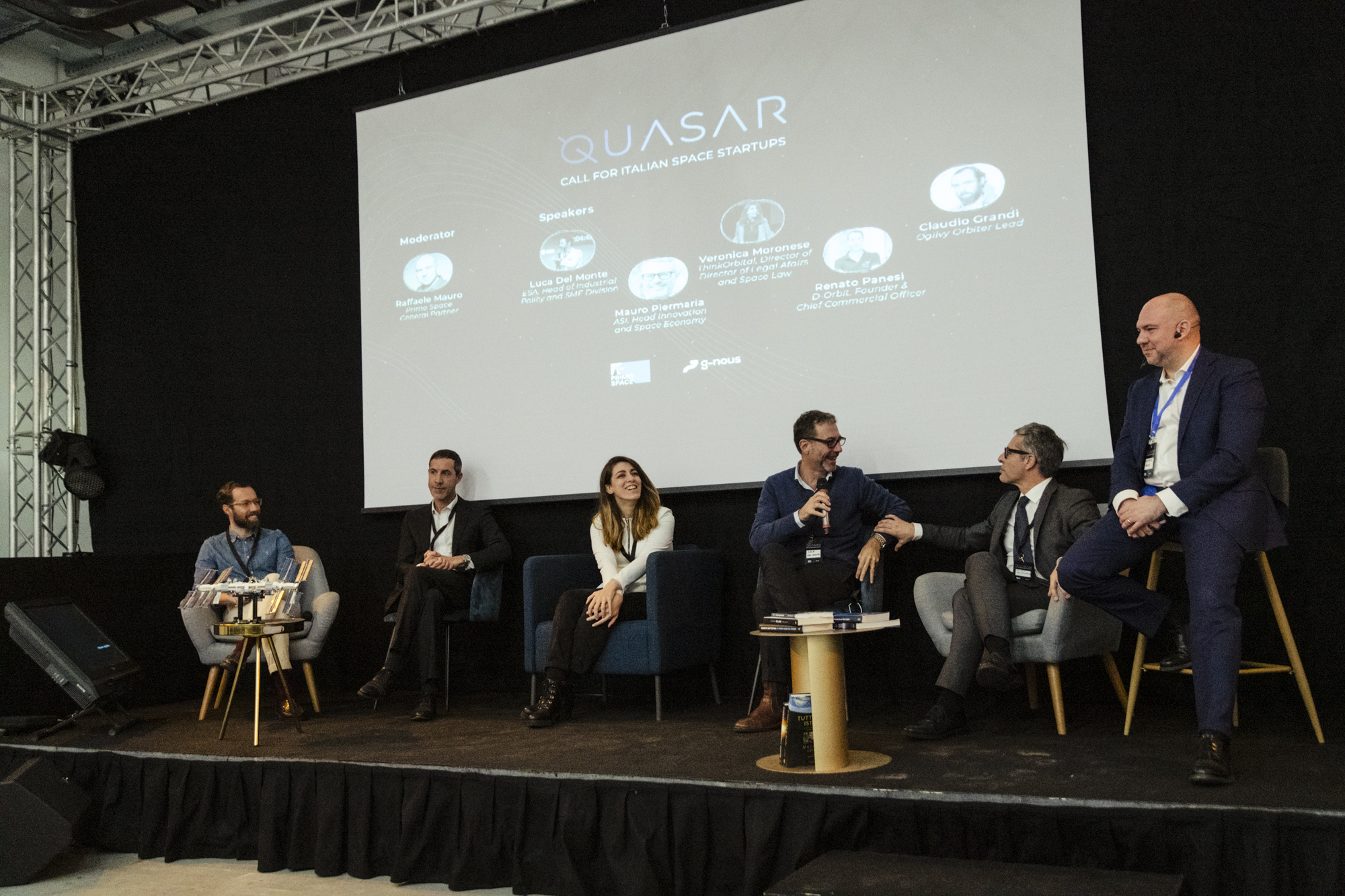
Φ-lab has provided coaching for the six chosen start-up companies in the Quasar challenge. Set up by venture capitalist fund Primo Space in conjunction with g-nous, the challenge culminated in an event where the finalists were able to pitch their value propositions to space industry representatives.
The Quasar open call is aimed at strengthening entrepreneurship in the Italian space sector by placing promising early-stage start-ups in contact with industry leaders and institutions. Launched in September 2021 by Primo Space and space-sector consultancy g-nous, the initiative fosters skills exchanges and new partnerships in an effort to reinforce Italy’s innovation potential in international space markets.
Start-ups submitting their application were evaluated in October based on relevance to the sector, level of innovation and team competence. The six chosen finalists then underwent an intensive, tailored mentoring programme during November, covering the areas of technology, business, fundraising and legal matters. Φ-lab has a wide-ranging partnership agreement with Primo Space and was one of the key contributors at this stage, with four mentors from the Φ-lab Explore and Invest offices offering advice and feedback to the start-up teams.
Explore Office researcher Gabriele Meoni found mentoring a stimulating experience: “I collaborated with two companies that are focused on my specialist area of cognitive computing in space. One of the most rewarding aspects for me was to see just how quickly industry is moving forward in this field, along with the fact that by exchanging ideas from our differing research and market perspectives, I feel we were able to learn a great deal from each other.”
Fully primed from their coaching, on 10 December the six start-ups had the opportunity to present their companies and meet investors, space entrepreneurs and industry representatives. The event hosted a sector-focused panel discussion with experts from ESA, D-Orbit, The Italian Space Agency, Ogilvy Orbiter and ThinkOrbital, while D-Orbit’s CEO Luca Rossettini also provided food for thought for the finalists in his inspirational keynote speech.
“We’ve been particularly impressed by the energy and innovative spirit of the finalists,” said Raffaele Mauro, General Partner at Primo Space. “We’ve also received great support from our partners and mentors, and the challenge even provided a catalyst for several Italian entrepreneurs living abroad to enter the fray. The drive and skills demonstrated by all involved parties are further proof of the continuing growth of Italy’s burgeoning space ecosystem.”
As a result of the initiative, the six finalists will now have a number of opportunities, including being prioritised within the Primo Space deal flow and investment analysis process, and gaining access to a wider space industry network. Primo Space and g-nous are already planning the follow-up challenge, to be launched later this year.