


Michael studied computer science and aerospace engineering at the Technical University of Munich.His focus is increasingly on time series and the extraction of essential insights.
Archives: Team
Michal Siemaszko

I am a PhD student at the University of Warsaw. I finished my Master’s degree in Theoretical Physics at the University of Wrocław in Poland. My main research interest is in quantum computing with a focus on quantum machine learning.
Michele Castorina
Michele Castorina owns a master degree in Electronics Engineering from University of Roma TRE and a master in International Business Engineering. In 2005 he started to work in the aerospace sector between Italy and the UK for a leading Italian aerospace company. During this time he had several roles in business development and corporate strategy both in the Space Telecommunications and in the avionics, electro-optics, UAVs lines of business. In 2010 Michele joined ESA-ESTEC in The Netherlands working for the Telecommunications and Space Solutions Directorate; during this time he has focused on supporting European industry to develop downstream products and services using space assets (SatCOM, GNSS (Galileo/EGNOS), and SatEO). He has coordinated ESA cooperation between EC-GSA and EC-ERA for the rail sector, and he has initiated the ESA Space4Rail initiative. In 2019 Michele moved to ESA-ESRIN to the Earth Observation Directorate Φ-lab Invest Office in order to support the development of the co-founded InCubed programme with the objective to help the commercial Earth Observation sector in Europe to flourish. Today his main interest is to support the European industrial ecosystem (Space and non-Space related) to develop innovative and commercially sustainable products and services using Earth Observation solutions, connecting promising ideas with investors to generate growth for ESA member states.
Mihai Datcu

Mihai is Senior Scientist and Data Intelligence and Knowledge Discovery research group leader with the Remote Sensing Technology Institute (IMF) of the German Aerospace Center (DLR), Oberpfaffenhofen, and Professor with the Department of Applied Electronics and Information Engineering, Faculty of Electronics, Telecommunications and Information Technology, University Politehnica Bucharest, (UPB), Romania. His main research interests are in Data Science, Machine Learning and Artificial Intelligence, and Computational Imaging for space applications. Mihai received the MS and PhD degrees in electronics and telecommunications from UPB and the habilitation title in computer science from University Louis Pasteur, Strasbourg, France. He was awarded with 2017 Chaire d’excellence internationale Blaise Pascal for EO Data Science. He is a IEEE Fellow.
Mikolaj Czerkawski
Mikolaj focuses on the applications of AI and computer vision techniques for understanding and enhancing satellite image data. A common theme of Mikolaj’s work relates to generative methods, such as image inpainting, super-resolution or image-to-image translation, but also covers extracting knowledge from satellite images via classification, segmentation and detection.
Mikolaj is an active contributor and supporter of the open-source community with past projects including a free course on generative AI and various tools for image synthesis.
Mikolaj’s background expertise covers computer vision, machine learning, and signal processing, with other research interests including Doppler radar signal processing and agritech applications of AI. He completed his BEng at the University of Strathclyde in Glasgow, Scotland and is currently in the process of finalizing his PhD at the same institution on the topic of computer vision techniques for satellite image cloud removal.
Nicolas Longépé
M.Eng. in electronics and communication systems and the M.S. degree in electronics at the National Institute for the Applied Sciences, France. + PhD degree at Uni Rennes I. Worked at EO Research Center of JAXA, as a Japan Society for the Promotion of Science Fellow, and then as an invited researcher. Worked at CLS, France, as a research engineer in the Radar Application Division.
Nermine Hendy

Mrs. Hendy is currently a dedicated and accomplished PhD student in the field of Electrical and Electronic Engineering at RMIT University, situated within the esteemed School of Engineering. With a profound passion for research and a commitment to advancing knowledge in her discipline, Mrs. Hendy has established herself as a prominent figure in the academic community.
Having already achieved a significant milestone in her academic journey, Mrs. Hendy completed her master-by-research degree in Electrical and Electronic Engineering back in 2013. This earlier accomplishment not only showcased her intellectual prowess but also laid the foundation for her subsequent pursuit of a doctoral degree.
Currently immersed in the rigors of a PhD program, Mrs. Hendy’s research focus lies on the applications of Artificial Intelligence (AI) and advanced signal processing techniques to addresses the critical and complex challenge of interference detection and mitigation in spaceborne Synthetic Aperture Radar (SAR) systems. The choice of this research area reflects Mrs. Hendy’s forward-thinking approach and recognition of the pivotal role spaceborne SAR plays in modern technology and scientific exploration. Her dedication to exploring innovative solutions at the intersection of AI and signal processing underscores her commitment to pushing the boundaries of knowledge and contributing to the advancement of her field.
Beyond her academic pursuits, Mrs. Hendy is an active participant in the academic community, engaging in conferences, seminars, and collaborative efforts that foster the exchange of ideas and the growth of collective knowledge. Her work not only showcases her technical expertise but also highlights her ability to apply theoretical concepts to real-world challenges to leave a lasting impact on the intersection of AI, signal processing, and spaceborne SAR technology.
Nikolaos Dionelis
I am enthusiastic about collaborating with the Φ-lab team at the European Space Agency (ESA) to contribute to Earth Observation (EO) science and research on projects related to deep learning, computer vision, machine learning, Artificial Intelligence (AI), and signal processing. I aim at accelerating the future of Earth Observation (EO) and remote sensing by developing innovative Artificial Intelligence (AI) technologies and solutions, including deep generative models and discriminative classifiers, to more accurately quantify and understand the impact of climate change and predict climate change applications.
I am a Research Fellow at the European Space Agency (ESA). My background is in deep learning and computer vision. I have experience in (i) deep generative models, including Generative Adversarial Networks (GAN), invertible flow-based models, Variational Autoencoders (VAE), and diffusion models, and (ii) deep discriminative classifier models, including Convolutional Neural Networks (CNN) and Residual Networks (ResNet). My models perform Out-of-Distribution (OoD)/ anomaly detection, object of interest detection and classification, and OoD/ novelty detection in the real Open World (e.g., (a) joint classification and OoD detection, i.e. Open-Set recognition, and (b) Open-World classification). My methodologies are based on semi- and self-supervised learning, contrastive similarity learning, and representation learning. My methods are also based on few-shot learning, data augmentation, probability density estimation, and confidence assignment and assessment (aleatoric and epistemic uncertainty quantification and reduction). I have four-year Post-Doctoral experience working as a Research Associate in Machine Learning at the University of Edinburgh (UoE) and the University Research Collaboration in Signal Processing conducting research on Robust Generative Neural Networks, a PhD degree in Signal Processing from Imperial College London, and a Masters MEng degree (including Bachelor’s level study) in Electrical and Electronic Engineering from Imperial College London
Parampuneet Kaur Thind
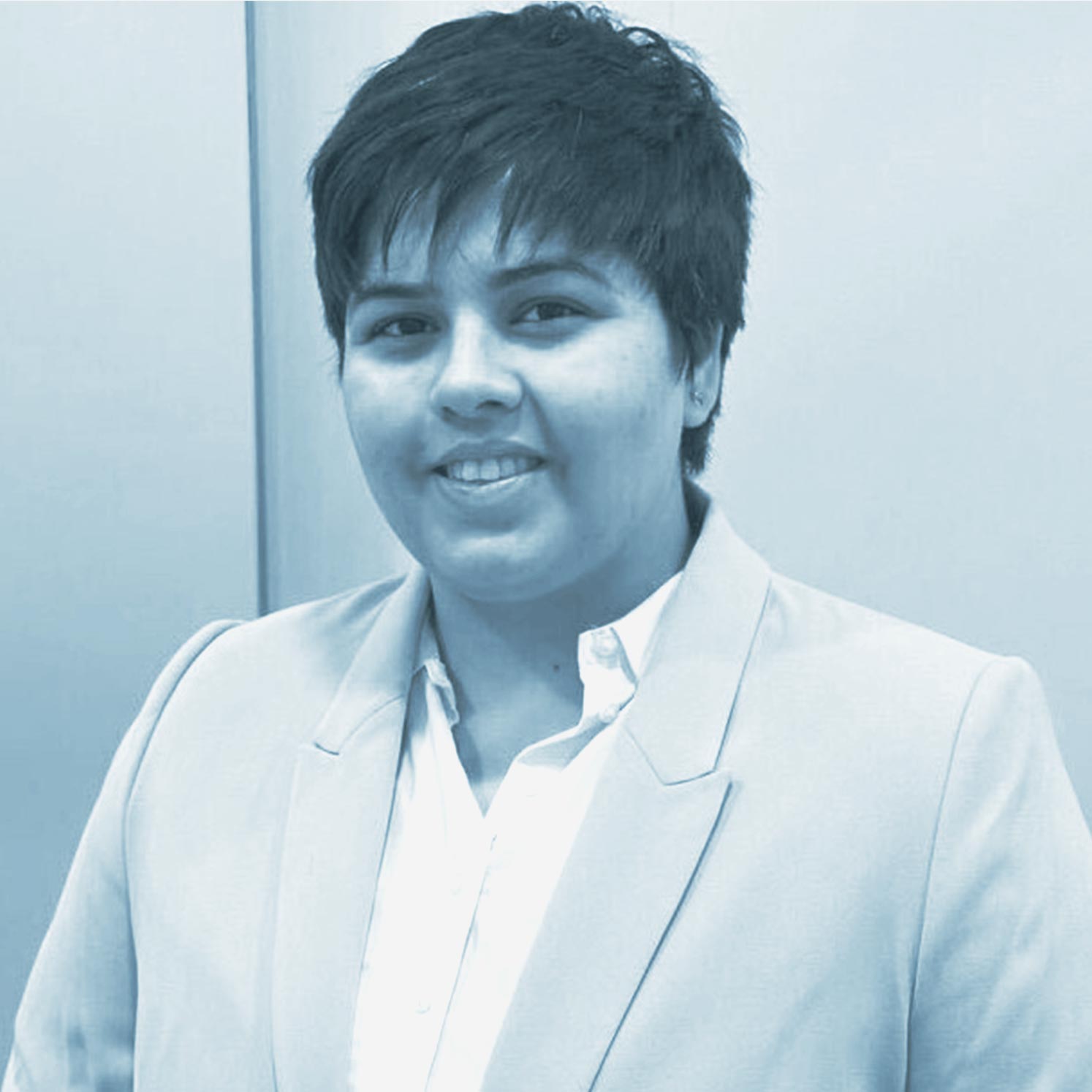
With a robust academic background encompassing both a Bachelor’s and a Master’s degree, Param’s focus has consistently gravitated towards the realms of machine learning, statistical analysis, and computer vision. Param’s scholarly contributions include the publication of four research papers, where Param prominently served as the lead author in two instances. A notable achievement among Param’s research endeavors was the introduction of an innovative ensemble learning technique, which demonstrated a remarkable enhancement of voting system accuracy by up to ~10% compared to conventional borda methods. Furthermore, Param ventured into the interdisciplinary domain of Human-Computer Interaction (HCI), leveraging EEG signals to devise novel formulas for calculating central tendencies in multimodal data. Following the culmination of Param’s academic pursuits in New York, Param embarked on a professional journey as a Data Scientist at LPL. In this capacity, Param’s primary responsibilities revolve around the strategic design and implementation of models tailored for deployment on the edge. Notably, Param specializes in crafting end-to-end MLOps pipelines, ensuring seamless integration and optimal performance of machine learning models in real-world scenarios. However, Param’s professional aspirations extend beyond mere utilization; Param is steadfast in Param’s commitment to deepening Param’s understanding of the intricate mathematical frameworks underpinning model architectures and diverse loss functions. Param’s ultimate objective is to transcend the role of a proficient user, evolving into a proficient architect capable of conceiving and constructing AI solutions from inception to fruition, guided by a nuanced and comprehensive perspective.
Noelle Cremer
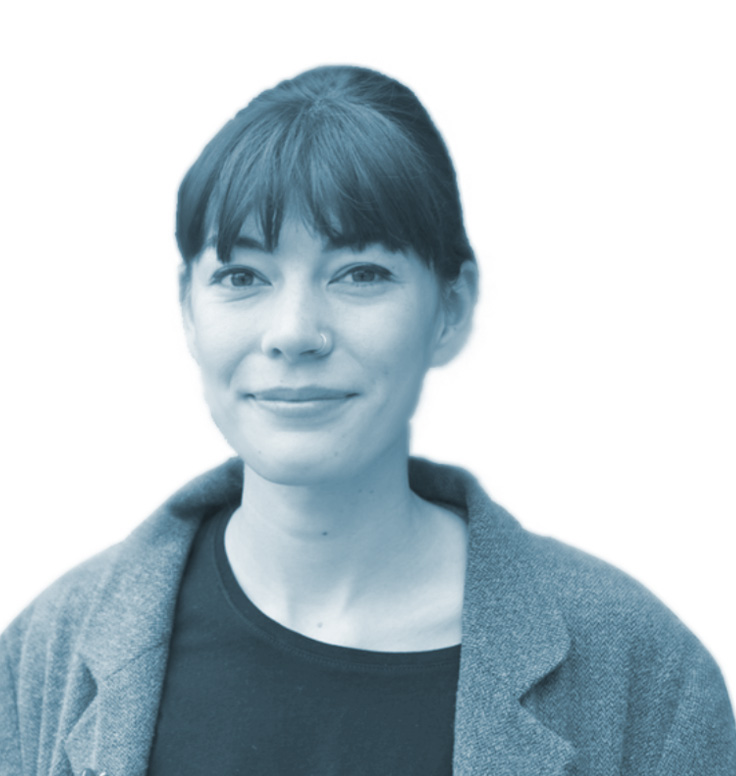
B. Sc. in Geography at Humboldt University of Berlin and an internship with the German Research Centre for Geosciences, she is currently enrolled in the M. Sc. Applied Geoinformatics at the University of Tier. At ESRIN, she is involved in the Phi-Lab to further explore the wider potential of Artificial Intelligence of Earth Observation applications, with a specific focus on multi-sensor data fusion.