ESA title

InCubed co-funding launches EOMAP water-quality portal development

German company EOMAP has launched its development programme for EOSmart, an online solution for Earth observation-based mapping and monitoring of water resources. With funding support from ESA InCubed, EOMAP will collaborate with international stakeholders to produce a tool that puts enhanced information in the hands of water-management decision makers.

The world’s water resources are under ever-mounting pressure, as factors such as population growth and changing living standards drive increases in both industrial and domestic consumption. National and local authorities, together with private water utilities, not only face significant challenges in keeping track of demand and changes in water quality, but must also focus on risk management, budgetary constraints and meeting reporting requirements.

These challenges give rise to a clear need for smarter approaches to managing fresh water and marine environments. But information on past, current and predicted trends in water quality is often hard to come by, and so EOMAP saw a clear opportunity to draw on Earth observation (EO) data to help support water managers in their processes. The EOSmart solution will provide key quality indicators built on satellite-derived measurements of properties including sediment concentration, phytoplankton, cyanobacteria and temperature changes. The platform will transform the data into actionable, relevant information that management teams can integrate into their routine operations.

Karin Schenk, Head of the EOMAP Water Quality Department, explains the game plan: “We’ll co-create EOSmart with both global players in the water market and government bodies, and in fact we expect market-oriented cooperation to be the key to the success of the endeavour. Our aim is to offer an end product that gives customers novel water-quality data at their fingertips.”

EOMAP is already well established in the sector, and supplies bathymetry and seafloor mapping services to a global client base. “For more than fifteen years now we’ve been providing extremely high-quality aquatic data and software based on Earth observation,” adds CEO Thomas Heege. “EOSmart will leverage this deep knowledge and further empower customers to work with physics-based water-quality data. The benefit for them will be increased safety and efficiency – at lower costs. We are also delighted to be among the first German InCubed activities.”

Piera di Vito is the ESA Technical Officer assigned to the initiative: “Supporting the development of a toolbox that helps to manage our most precious resource sustainably is of value for society and a good fit with the profile of EO-centred products and services co-funded by InCubed. We look forward to seeing how EOSmart progresses this year, firstly with product development and then with the pilot, which will be a first chance to demonstrate the performance and potential of the product.”

To know more: EOMAP, InCubed

Register for ESA’s Living Planet Symposium in Bonn

The time has come to register to attend the European Space Agency’s Living Planet Symposium – one of the largest Earth observation conferences in the world. Taking place on 23–27 May 2022 in Bonn, Germany, and jointly organised with the German Aerospace Center, this prestigious event allows all attendees to hear first-hand about the latest scientific findings on our planet. Attendees will also hear how observing Earth from space supports environmental research and action to combat the climate crisis, learn about novel Earth observing technologies and, importantly, learn about the new opportunities emerging in the rapidly changing sector of Earth observation.

This renowned event not only attracts scientists and academics, but also those working in the space industry, institutional stakeholders, data users, students and citizens.

In short, the week-long symposium is open to everyone – to attend in person you just need to register by 9 May. Please note that the symposium will be an in-person event and not remote, thanks to the decline of COVID.

Read full article on www.esa.int

ESA and AI Sweden sign letter of intent for first pilot of ESA Φ-labNET

Building on its experience in fostering transformative innovations aimed at market adoption in the Earth observation (EO) sector, the model of Φ-lab@ESRIN is being replicated across Europe by ESA. Under the leadership of the newly established Directorate of Commercialisation, Industry and Procurement, ESA has signed a Letter of Intent with AI Sweden to set up a pilot development of Φ-lab@Sweden, a collaboration that will develop solutions in the area of Edge Learning in Space.

As part of the Boost Green and Digital Commercialisation priority of its Agenda 2025 strategy, ESA will create a dynamic network of Φ-labs across ESA and Europe. Building on the experience of the existing Φ-lab@ESRIN, with its focus on delivering transformative innovations aimed at market adoption, ESA is adopting an ‘innovate and apply under-one-roof’ approach, teaming up with academia, research centres, national space centres, industry and private investors, including venture capital, to boost disruptive innovation in emerging commercial space domains.

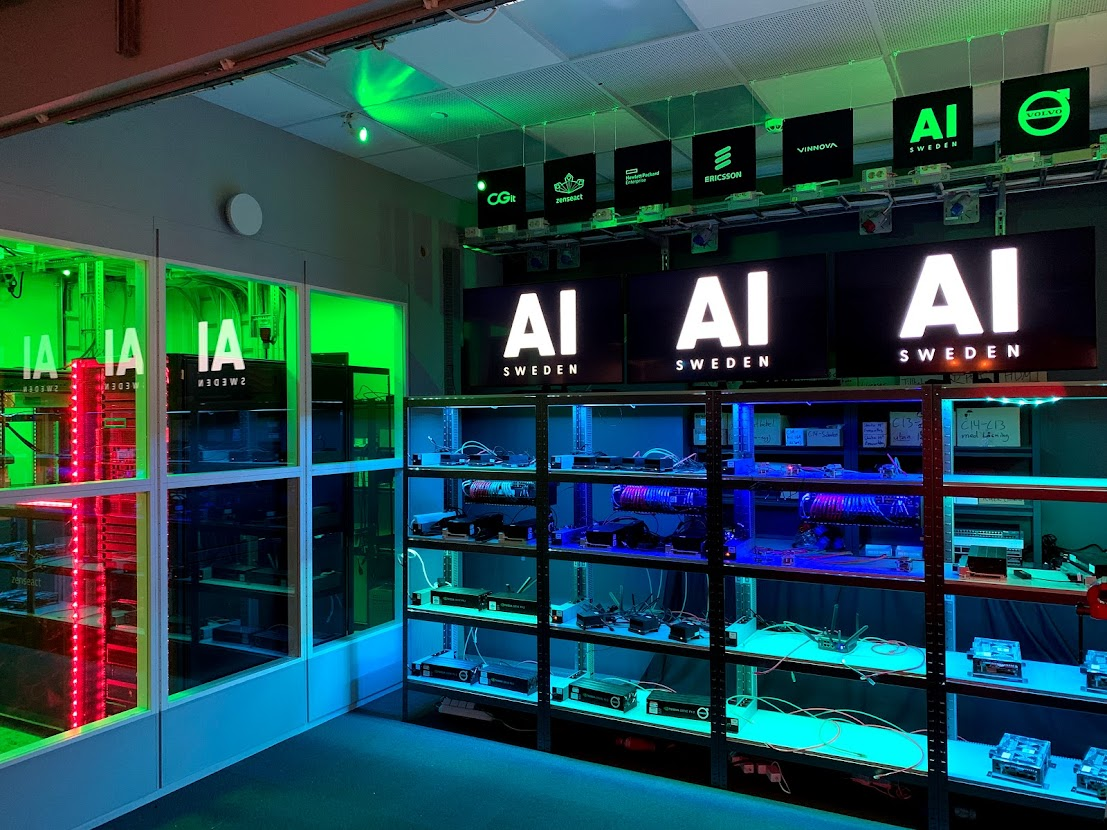
First off the starting blocks is Φ-lab@Sweden, a partnership between ESA and AI Sweden, the Swedish national AI centre. Working hand in hand with ESA Φ-lab@ESRIN and the ESA Advanced Concepts Team, Φ-lab@Sweden will serve as a platform for building advanced European capabilities related to the development of Artificial Intelligence (AI) onboard satellites. The collaboration will focus on supporting innovation initiatives, research calls and educational programmes, ultimately leading to rapid knowledge transfer across industry sectors.

“Together AI Sweden and ESA will pursue the strategic goal of ensuring that Europe spearheads Edge Learning innovation in Earth observation technology,” said AI Sweden’s Martin Svensson at the signing ceremony. “By developing capacity and providing an engaging environment, we will stimulate individuals and organisations to work together and contribute to this goal with bold and highly original solutions.”

Géraldine Naja, Director of Commercialisation, Industry and Procurement, signed the agreement on behalf of ESA: “We’re very excited to be getting the first pilot of ESA Φ-labNET off the ground, and I see the partnership as a prime opportunity to collaborate very closely. AI Sweden will grant our researchers access to their resources, and we’ll also share ESA Φ-lab’s knowledge and experience. The agreement is not only mutually beneficial for ESA and AI Sweden, but crucially will also help keep European transformative innovation at the forefront of AI in Space.”

Giuseppe Borghi is head of the ESA Φ-lab@ESRIN division: “We’re very much looking forward to both the launch of Φ-lab@Sweden and the ground-breaking research that it will undoubtedly produce. I’m also extremely glad to contribute to this initiative as a member of their Edge Lab Advisory Group, where we’ll be able to explore synergies and exchange ideas with our colleagues at AI Sweden.”

The inauguration of Φ-lab@Sweden is scheduled to take place in late spring of this year.

To know more: Agenda 2025, AI Sweden, Advanced Concepts Team

Φ-lab helps mentor Italian start-ups in the Quasar space challenge

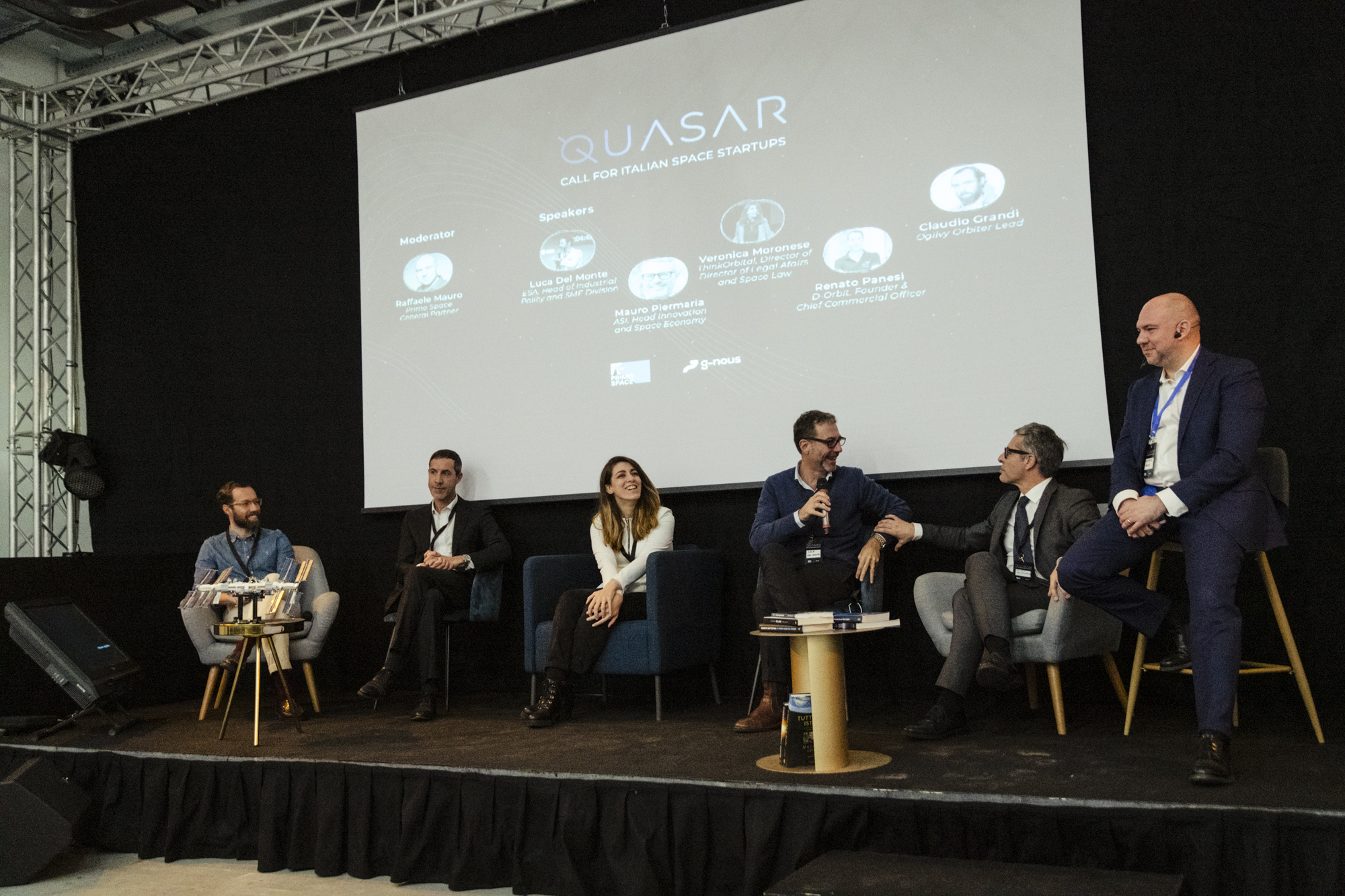
Φ-lab has provided coaching for the six chosen start-up companies in the Quasar challenge. Set up by venture capitalist fund Primo Space in conjunction with g-nous, the challenge culminated in an event where the finalists were able to pitch their value propositions to space industry representatives.

The Quasar open call is aimed at strengthening entrepreneurship in the Italian space sector by placing promising early-stage start-ups in contact with industry leaders and institutions. Launched in September 2021 by Primo Space and space-sector consultancy g-nous, the initiative fosters skills exchanges and new partnerships in an effort to reinforce Italy’s innovation potential in international space markets.

Start-ups submitting their application were evaluated in October based on relevance to the sector, level of innovation and team competence. The six chosen finalists then underwent an intensive, tailored mentoring programme during November, covering the areas of technology, business, fundraising and legal matters. Φ-lab has a wide-ranging partnership agreement with Primo Space and was one of the key contributors at this stage, with four mentors from the Φ-lab Explore and Invest offices offering advice and feedback to the start-up teams.

Explore Office researcher Gabriele Meoni found mentoring a stimulating experience: “I collaborated with two companies that are focused on my specialist area of cognitive computing in space. One of the most rewarding aspects for me was to see just how quickly industry is moving forward in this field, along with the fact that by exchanging ideas from our differing research and market perspectives, I feel we were able to learn a great deal from each other.”

Fully primed from their coaching, on 10 December the six start-ups had the opportunity to present their companies and meet investors, space entrepreneurs and industry representatives. The event hosted a sector-focused panel discussion with experts from ESA, D-Orbit, The Italian Space Agency, Ogilvy Orbiter and ThinkOrbital, while D-Orbit’s CEO Luca Rossettini also provided food for thought for the finalists in his inspirational keynote speech.

“We’ve been particularly impressed by the energy and innovative spirit of the finalists,” said Raffaele Mauro, General Partner at Primo Space. “We’ve also received great support from our partners and mentors, and the challenge even provided a catalyst for several Italian entrepreneurs living abroad to enter the fray. The drive and skills demonstrated by all involved parties are further proof of the continuing growth of Italy’s burgeoning space ecosystem.”

As a result of the initiative, the six finalists will now have a number of opportunities, including being prioritised within the Primo Space deal flow and investment analysis process, and gaining access to a wider space industry network. Primo Space and g-nous are already planning the follow-up challenge, to be launched later this year.

The six chosen start-ups are OhmSpace, Revolv Space, LEOcloud, StratoboticAdapTronics and Witted.

To know more: Quasar, The Φ-lab Explore Office, InCubed

Photo courtesy of Soukizy

OroraTech receives InCubed co-funding for its wildfire detection CubeSat system

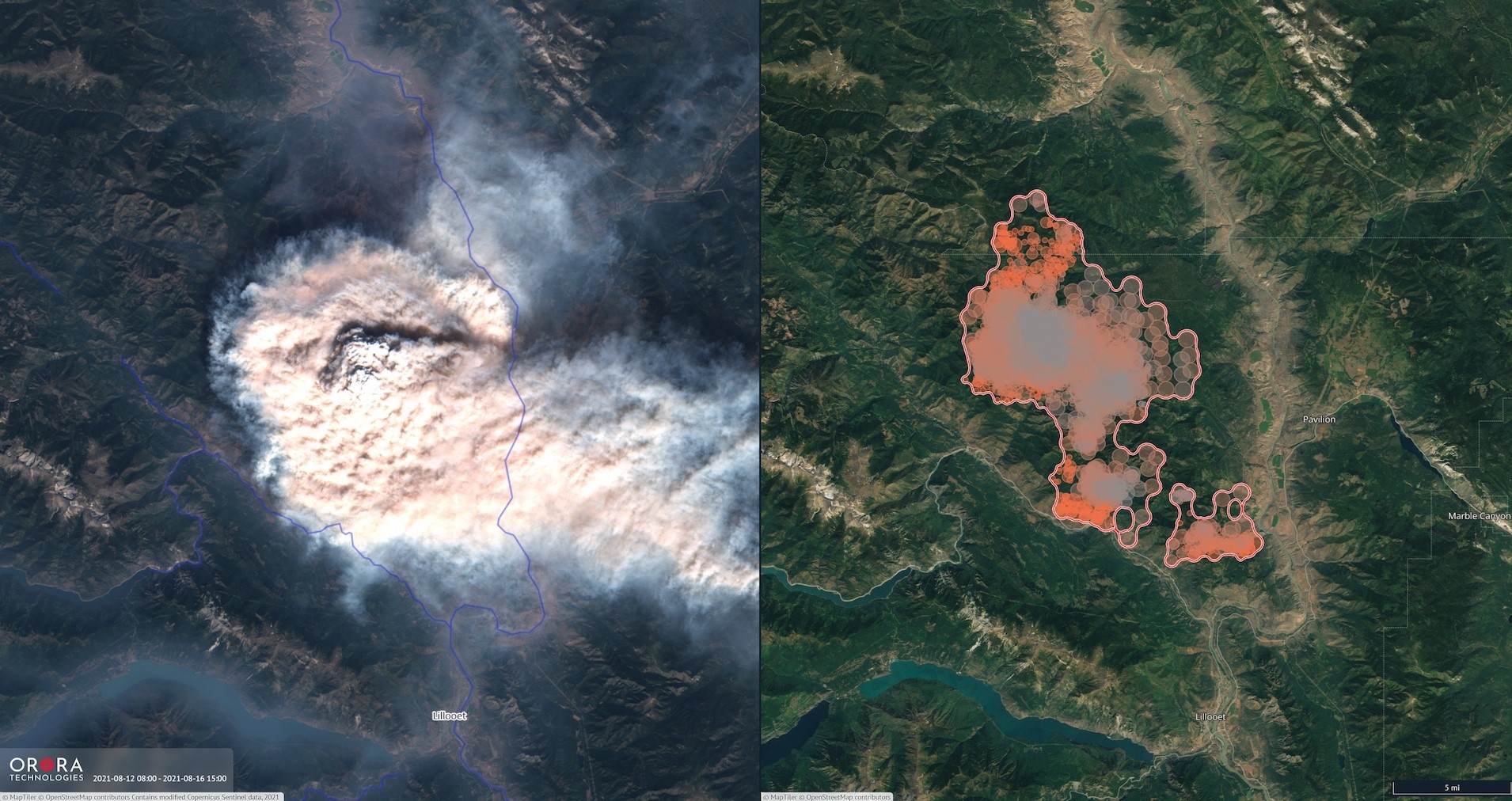
German start-up OroraTech has hit the ground running in 2022, with the launch in January of not only its first CubeSat but also an InCubed co-funded activity to begin developing its successor platform and payload. The satellites’ dedicated remote-sensing capabilities will enable the Munich-based company to enhance its established wildfire detection and monitoring services.

Wildfires continue to be a growing risk for many of the world’s crucial yet delicate forestry systems. 2019 saw record levels of damage in South Australia’s bush fires, and the recent Marshall Fire in Colorado destroyed over a thousand homes and cost the state more than $1 billion.

The ability to predict, detect and monitor the presence of wildfires clearly has enormous advantages for authorities, citizens and the environment, with consequent benefits in preparedness, response times and damage limitation. Founded in 2018, OroraTech already has a number of global customers for its wildfire service, including SOPFEU Quebec, Australia’s Forestry Corporation NSW and Arauco in Chile. The service draws on sensor data from a variety of existing satellites to provide intelligence for protecting forests and nearby assets.

In a first move towards vertical integration, OroraTech has recently launched a Thermal Infrared (TIR) imager on a Spire 6U CubeSat. The findings from this first launch will feed into the company’s next initiative, the InCubed co-funded development of a customised CubeSat with TIR and optical imaging instruments and onboard Artificial Intelligence (AI) computation. “With current SSO [Sun Synchronous Orbit] satellites, there is a data gap in the peak burn time from 15:00 to 18:00 and a general delay until the information is available on the ground,” explains OroraTech CTO Martin Langer. “We need our own TIR imaging resources and on-orbit processing to close that gap and reduce the delay from hours to minutes.”

The InCubed-supported activity forms part of a longer term relationship between OroraTech and ESA. The company was originally aided by ESA BIC Bavaria, and was then able to advance the wildfire services product through ESA Kick-Start. Michael Nyenhuis of the German Space Agency at DLR underlines the significance of institutional support for this and other local start-ups: “OroraTech is a leading example of Southern Germany’s pedigree in seeding space entrepreneurship. From its beginnings at the Technical University of Munich, the company has enjoyed considerable growth through both private and public investment, and numbers among ESA BIC Bavaria’s hundreds of alumni. We are very happy that OroraTech has now garnered funding from InCubed to support the commercialisation of its globally important services to the forestry ecosystem.”

The initiative has kicked off with a de-risking phase to evaluate requirements and develop a CubeSat-compatible payload. The team will also study the trade-offs between a 3U and 6U platform size. For ESA Technical Officer Roger Walker, the possibility of filling a current hole in data availability has significant implications: “OroraTech’s expansion into upstream data acquisition will undoubtedly elevate the performance of the wildfire service for the benefit of its growing customer base. Additionally, there is the potential to capture thermal imaging data in the afternoon gap for improved detection of other climate-change parameters such as gas flaring on oil rigs, and it’s particularly encouraging that OroraTech is already considering broadening its services in this way.”

To know more: OroraTech, CubeSat, ESA BIC Bavaria

Registration now open for the Φ-lab Investing in Industrial Innovation Event

ESA Φ-lab is organising a two-day forum to bring together major players in the commercial Earth observation sector. Scheduled for 24 and 25 February, the online event will include representatives from industry, public institutions, national delegations and investors.

The Φ-lab Investing in Industrial Innovation Event is both a unique networking platform and a broad-based showcase for the host of activities of the ESA InCubed programme. In the context of the Commercialisation priority of ESA’s Agenda 2025, the event aims to stimulate and develop market-oriented Earth observation (EO) by connecting European companies with not only investors, venture builders and potential customers, but also Delegates from ESA Member States.

The proceedings will kick off with an introduction by ESA’s new Director of Earth Observation Programmes, Simonetta Cheli. Other speakers are expected to include Géraldine Naja, ESA Director of Commercialisation, Industry and Procurement, plus guests from the agriculture, insurance and water management sectors. The programme will feature presentations from a number of activities co-funded by InCubed, together with talks on innovation, institutional support and the commercial end-user viewpoint. There will be numerous round-table discussions and a final session where private investors will give their perspective on EO. The winners of an InCubed video-pitch competition will also be announced.

More information on the Investing in Industrial Innovation Event can be found on the dedicated website. To participate, register here.

To know more: InCubed, ESA Agenda 2025

ESA Φ-lab and World Food Programme launch joint innovation initiative

The EO & AI for SDGs Innovation Programme is now open for submissions. Launched by Φ-lab together with the World Food Programme Innovation Accelerator, the initiative aims to find Earth observation and Artificial Intelligence-based solutions to global hunger issues.

In a world where we produce enough food to feed everyone, there are 811 million people – or 10% of the global population – that still go to bed hungry every night. The COVID-19 pandemic, climate change and the complex social-economic landscape only serve to make the situation more dire, but as a counterpoint to this daunting backdrop, advances in space, satellite and Artificial Intelligence (AI) technologies have radically transformed humanity’s ability to observe and model the Earth’s systems.

This then begs the question of how Earth observation (EO) and AI can help solve global food crises. To find an answer, Φ-lab and the World Food Programme (WFP) Innovation Accelerator are joining forces to launch the EO & AI for SDGs Innovation Programme. The initiative will seek out cutting-edge innovations that use EO and AI technologies to address the challenges that WFP faces in its operations, while striving for business viability and industry leadership.

Read the full article at wfpinnovation

InCubed-supported HyperScout imager selected for high-profile Australian CubeSat mission

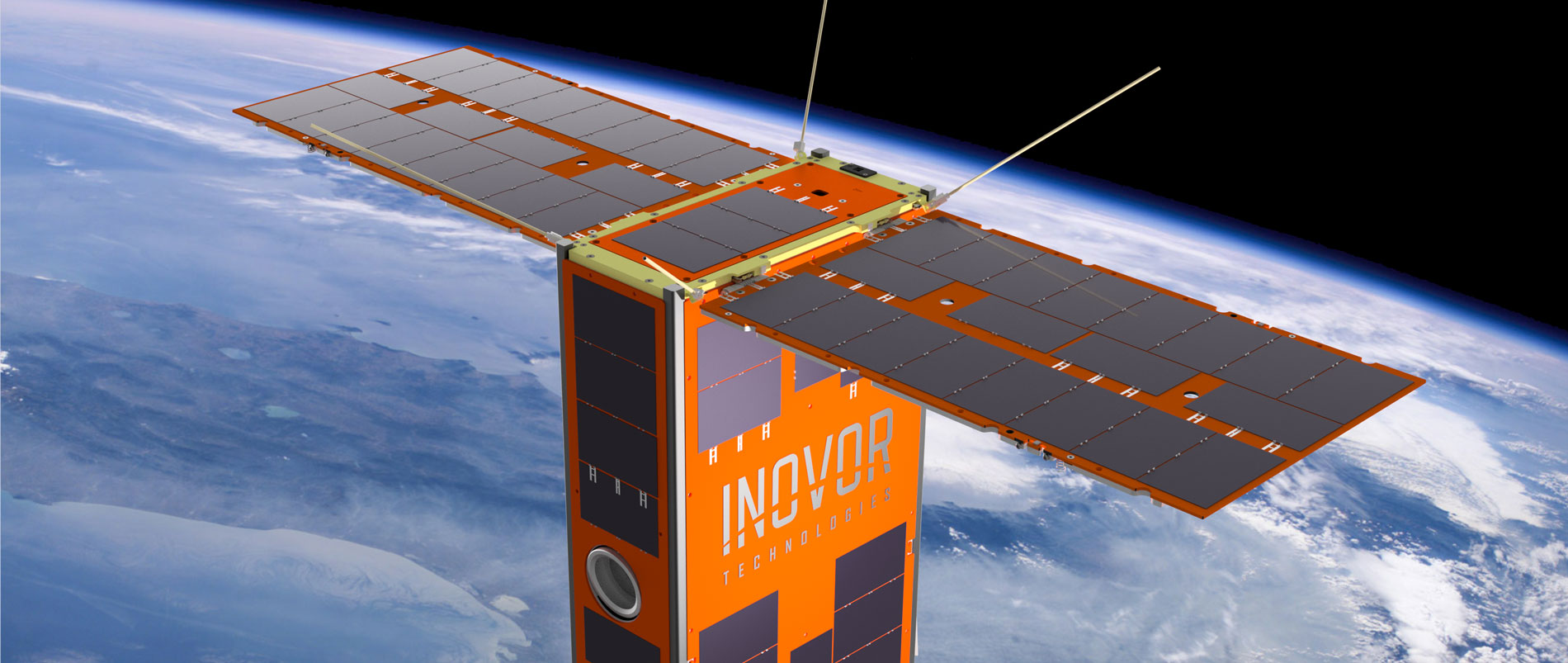
The HyperScout instrument, partly developed by cosine Remote Sensing under an ESA InCubed co-funding activity, has been adopted as the hyperspectral imager of choice for Australia’s first satellite mission funded at state level. Scheduled for launch in 2022, the Kanyini is based on a 6U CubeSat platform and is being engineered by SmartSat CRC and two South Australian companies.

The SASAT1 Kanyini project is aimed at promoting and developing the South Australian space industry through the launch of a CubeSat nanosatellite with Earth observation and Internet of Things (IoT) payloads. With funding from the South Australia state government, Kanyini is a collaboration between local entities the SmartSat Cooperative Research Centre, Myriota and Inovor Technologies.

Data collected from the project is intended to support informed decision making in the areas of water usage, climate policy and disaster management. There is also an associated educational programme, which commenced with a competition in schools to name the satellite itself. The winning entry, ‘Kanyini’, is a Pitjantjatjara aboriginal word that describes the principle of responsibility and unconditional love for all of creation.

The HyperScout 2 is a three-in-one instrument that combines hyperspectral and thermal imaging with high-level data processing and Artificial Intelligence (AI) capabilities. Available for deployment on satellites of any dimensions, the imager is however particularly suited to small platforms built around a smart blend of custom-made and commercial off-the-shelf (COTS) components. The HyperScout series was designed and brought to production by the Remote Sensing business unit of Dutch company cosine, with initial co-funding support provided by the Dutch government through the Φ-lab InCubed programme.

“We needed a compact imaging payload that gave us a much more nuanced Earth view than a three-band sensor,” explained Pete Nikoloff, Kanyini Mission Director at SmartSat. “The spectral range of the HyperScout 2 enables an extremely detailed analysis of land cover, benefitting research into crop health, forests, inland water and coasts, while the thermal infrared imager will provide vital information on heat generators in South Australia. In parallel with the development phase, a research programme is being formulated with SmartSat’s partners to make the best use of the systems once in orbit.”

cosine Remote Sensing Managing Director Marco Esposito underlined the AI credentials of the company’s brainchild: “The HyperScout 2’s onboard processing power will give Kanyini the opportunity to utilise advanced AI algorithms directly in orbit, ultimately reducing data traffic requirements or accelerating decision making for rapid-response scenarios.”

ESA Scout System Manager Massimiliano Pastena sees a crucial link with the ethos of the Φ-Department: “We’re very happy that HyperScout 2 has been selected for Kanyini, as it provides another example of an InCubed-supported initiative that subsequently grows and enjoys take-up at a global level. We also found the name of the satellite, with its reference to care and responsibility for our planet, an inspired choice that matches well with our approach to future Earth observation.”

“The purpose of the ESA InCubed Programme is to support and develop the commercial EO sector  through de-risking business-focused products and services along the EO value chain,” added ESA InCubed Programme Manager Amanda Regan. “Improving Hyperscout was one of the first InCubed activities and is a good case in point of where we were able to help de-risk a commercially focused development. We are very pleased to see that Hyperscout 2 has been picked up by the Kanyini project and we wish them every success.”

To know more: cosine, HyperScout 2, Kanyini, SmartSat

ESA-ECMWF workshop: turbocharging EO and Earth System data with AI

The Machine Learning for Earth System Observation and Prediction (ML4ESOP) workshop, an annual gathering organised by the ESA Φ-lab and ECMWF, has proven once again to be a key focal point for practitioners in the field. With over 1,100 participants from 85 countries, this virtual event gave truly global insight into the trends, strengths and weaknesses of the application of Artificial Intelligence (AI) to Earth System monitoring and predictive modelling.

In addition to more established applications such as image recognition and medical diagnosis, the benefits of Machine Learning/Deep Learning (ML/DL) techniques have started to garner interest in the last few years in the fields of Earth System Observation and Prediction (ESOP). ML and DL can improve our understanding of the Earth’s complex and wide-scale dynamics by drawing on new methodologies and enhanced computing power to process and analyse huge volumes of data automatically.

Held this year from 15 to 18 November, the ML4ESOP workshop is a platform for leading scientists to share expertise, domain experience and best practices. “The workshop centres on the synergies to be gained from the intersection of Earth observation, Earth System Prediction and ML,” explained Pierre Philippe Mathieu, Head of the Φ-lab Explore Office. “Just like last year, the 2021 edition has been an invaluable opportunity to gather together a fast-growing, multi-disciplinary community of practitioners, all of whom are exploring the power of ML to help scientists quantify the current and future state of our planet and the impact of human activity.”

ECMWF Director of Research Andy Brown also praised the event’s aims and achievements: “There are both huge opportunities and huge challenges in observation processing, data assimilation and modelling as part of ESOP, and ML will undoubtedly play a significant part in meeting those challenges. This workshop, convened jointly by ESA and ECMWF, has been a great opportunity to bring together a broad community to explore the state of the art and the road ahead, and I’ve been extremely impressed by the range and depth of material covered.”

In fact a brief glance at the event’s agenda confirms the variety of topics presented. For the first three days contributors gave talks under the four thematic areas of enhancing satellite observation, approaches to hybrid data assimilation, geophysical forecasting, and post-processing and dissemination. Applications discussed included wildfire forecasting, water resource management and food security, while from the computational perspective there were several presentations on neural networks and an intriguing contribution on autonomous robotic teams. The final day was dedicated to working groups split according to the four themes, with each group discussing current limitations and ways forward in ML4ESOP. The findings were then summarised at the closing plenary session.

The workshop was also accompanied by an e-poster side event. Attendees were treated to an expansive assortment of subject matter, with some 30 presentations from academia, research institutes and industry. The ocean and maritime monitoring was a recurring theme, and the curiously titled ‘It’s a Bird, It’s a Plane, It’s a Meteor!’ from NVIDIA and the SETI Institute drew considerable attention.

“It was a pleasure to lead the organisation of the 2021 ML4ESOP workshop as it provided me with the opportunity to connect with a large number of universities and companies worldwide, all of which share an amazing commitment to AI4EO [Artificial Intelligence for Earth Observation],” commented ESA Research Fellow Rochelle Schneider. “The workshop conveyed strong messages on the potential of replicable, scalable and sustainable ML methods, not only for ESOP topics but also for economy, policy and health applications. This has set the stage for the far-reaching benefits that ML/DL will inevitably deliver.”

The workshop content is available here.

To know more: ECMWF, ESA AI4EO, ESA ɸ-lab

InCubed and SENER Aeroespacial’s EO-DDL development continues apace

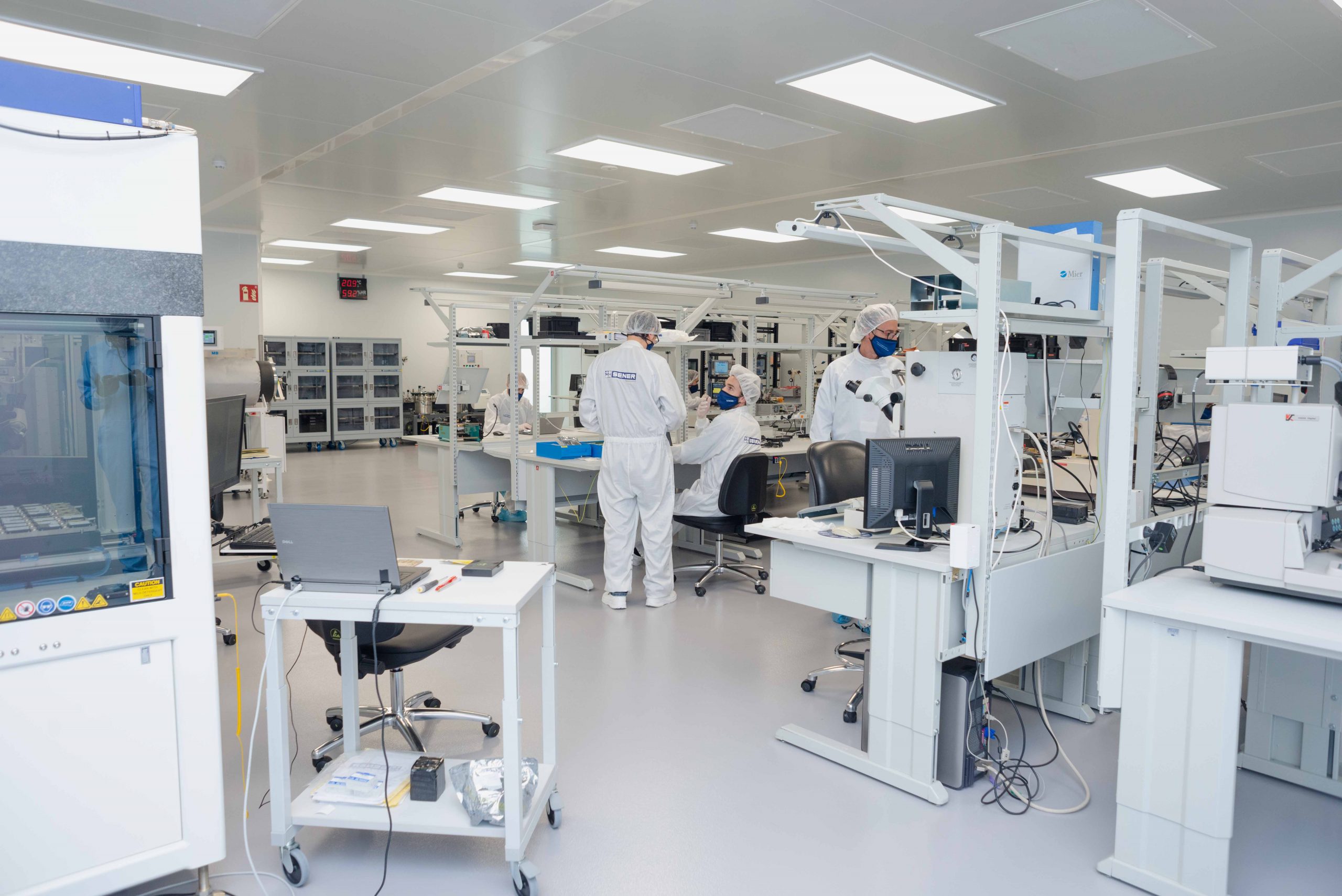
Eight months after kick off, the EO-DDL payload data transmission system is currently undergoing prototype construction. Designed to meet the downlink requirements of tomorrow’s Earth observation satellites, the InCubed co-funded activity is well on the way to reaching a key Technology Readiness Level milestone.

With the rapid transformation of the Earth observation sector, satellites are increasingly being launched in large constellations with payloads of next-generation sensors producing considerable volumes of data. This presents significant challenges for data transmission, as the growth in spacecraft numbers leads to congestion of frequency bands and current hardware struggles to keep up with payload data-rate requirements.

ESA has proposed to alleviate the problem of overcrowded airwaves by moving the frequency range for sensor data from the X-band (8.025-8.4 GHz) to the K-band (25.5-27 GHz). While the K-band has the advantage of a greater bandwidth, it does bring its own challenges, such as requiring highly directional beams and complex signal modulation to cope with the infamous ‘rain fade’ effect.

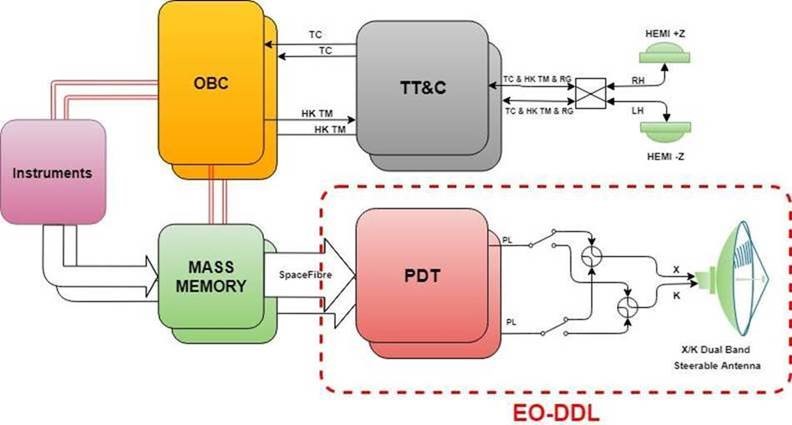
Responding to these trends and technical requirements, SENER Aeroespacial is developing a bespoke, future-proof solution for satellite-to-ground-station data transmission: the Earth Observation Data DownLink system (EO-DDL). The EO-DDL consists of a Payload Data Transmitter (PDT) unit in tandem with a Dual Band Steerable Antenna (DBSA) assembly. The system can transmit in both X and K-band and will handle data rates of over 2.6 Gb/s per channel.

Building on a feasibility study it previously carried out for ESA, SENER is now working under an InCubed contract to develop the product further. “Collaborating on this InCubed activity is an exciting opportunity for SENER, as it will enable us to meet the increasing demands for high-throughput LEO-to-ground communication in institutional and commercial EO markets. We’re very happy to contribute to cross-fertilisation within ESA by extending the experience we’ve gained in the Science Programme to Earth observation. We’re also hoping to agree strategic partnerships as a result of the development, with several satellite manufacturers already showing interest in the proposed product line,” commented Jose Antonio Gomez, SENER Project Manager for the EO-DDL.

Andrea Modenini, ESA Technical Officer, was also keen to underline the importance of the activity: “Developing the EO-DDL represents a major step forward in satellite communication architecture. The dual-band capabilities will provide unprecedented flexibility, while the data-rate capacity of multiple gigabits per second will ensure that the data transmission module can tackle the expected traffic from big-data payloads.”

Since signing the contract in March of this year, product development has been progressing steadily. Following the definition and design phase, the team successfully passed the Preliminary Design Review and will hold the all-important Critical Design Review within the next few weeks. Meanwhile the prototype components are being produced and assembled in preparation for functional testing, with the activity expected to meet its final objective of achieving a significant level of technology readiness (TRL 6) during the second quarter of 2022.

To know more: SENER Aeroespacial, ESA Technology Readiness Levels, Satellite frequency bands