ESA title

Living Planet Symposium Extra News: Day 5

ESA’s Living Planet Symposium came to a close today, concluding a week of networking, discussions and meeting of curious, scientific minds.   

Today, one of the focal points was thermal imaging instruments, which are critical for monitoring land-surface temperature – and will be carried on upcoming missions such as the upcoming Copernicus Land Surface Temperature Mission. ESA’s Soil Moisture and Ocean Salinity (SMOS) mission celebrated passing its 15-year milestone in orbit – the mission has helped improve weather and climate models.

Three new contracts were signed for ESA’s InCubed programme, which is central to the agency’s efforts to turn promising concepts into successful Earth observation services, strengthening Europe’s position in this rapidly evolving sector. 

Read the full article on www.esa.int.

Unmissable Φ-lab moments at LPS 2025

At this year’s Living Planet Symposium, ESA Φ-lab will present its innovations and initiatives at the forefront of Earth Observation. Make sure not to miss our key moments.

The European Space Agency’s Living Planet Symposium (LPS) is one of the world’s largest events dedicated to Earth Observation (EO). LPS25 – this year’s edition – will take place from 23 to 27 June, in Vienna (Austria), gathering scientists, policymakers, and industry experts to share the latest research, satellite-based applications, and innovative technologies addressing environmental and societal challenges.

As part of this dynamic programme, ESA Φ-lab will be actively involved, presenting its next-generation solutions at the intersection of EO, transformational innovation, commercialisation for human prosperity, climate action, and sustainability, among others.

Curious about Φ-lab? Make sure to pass by the Φ-lab corner at ESA’s stand (Main Hall, ground floor) to meet the team, discover how Φ-lab drives cutting-edge research and disruptive technologies in Earth Observation, and learn about opportunities for collaboration.

Here are Φ-lab’s must-sees:

1. The future of geospatial data discovery and use

The rapid growth of EO data availability calls for new approaches to efficiently manage, analyse and extract meaningful insights from heterogenous and enormous satellite datasets. In this context, self-supervised learning and foundation models are emerging as transformative tools, offering unprecedented capabilities for detecting patterns, changes, and anomalies across the planet.

Φ-lab has built a strong expertise in using powerful AI models. The latest example is the joint ESA/IBM Research Europe release of TerraMind, a next-generation geospatial foundation model designed to help us better understand and protect our planet.

AI is reshaping EO, enhancing data analysis, discovery, and interaction through multimodal data and language models. In the session “AI and Earth observation – where to now?”, Φ-lab Visiting Professors will share the latest advances and lead a thought-provoking debate on the future of AI in remote sensing.

During the session “Foundation Models for Earth Observation: Current solutions with less labelled data to improve environment monitoring and future perspectives to revolutionize geospatial data discovery and utilization”, you will learn about three of the latest Φ-lab-supported projects on the topic of foundation models for EO: TerraMind, FM4CS (Foundation Models for Climate and Society) and PhilEO.

EVE (Earth Virtual Expert) is a large language model (LLM) developed to support the EO and Earth Science communities. It builds on open-source LLMs, trained on billions of curated EO data tokens and fine-tuned with tailored datasets. Designed to assist both expert and non-specialists, EVE makes complex EO knowledge accessible to everyone through natural language processing. In the session “EVE: A Comprehensive Suite of LLMs and Data for Earth Observation and Earth Sciences”, attendees will discover how EVE was built, explore its capabilities, and learn how to interact with it for their own applications.

Ensuring AI technologies are explainable, trustworthy, and physics-aware is essential. “Explainable AI for Earth Observation and Earth Science will explore cutting-edge advancements in Explainable AI methods across diverse data types, including SAR, optical, and hyperspectral data. Attendees will discover innovative strategies to bridge data gaps, address physical inconsistencies, and promote responsible, ethical AI use in support of Earth Action initiatives.

2. Advancing weather and climate forecasting with Machine Learning

The monitoring and prediction of Earth’s weather and climate systems have seen remarkable progress in recent years. With the growing availability of high-resolution satellite data and sophisticated in situ sensors, we have now access to an unprecedented amount of data about our planet’s interconnected systems. Machine learning and deep learning techniques are transforming the way we interpret, model, and forecast the complex dynamics of Earth.

Machine Learning for Earth System Observation and Prediction” will bring together researchers exploring the latest AI-driven approaches in environmental science. It will highlight innovations in data assimilation, climate prediction, and the development of large-scale, data-driven Earth system models.

3. Investing in commercial ideas that change the way we see our planet

Great ideas need more than ambition. They need backing, and this is where the ESA InCubed programme steps in. By blending co-funding, technical expertise, and commercial and industrial guidance, InCubed is a key tool of ESA’s EO commercialisation strategy to effectively bridge the gap between vision and commercial success in the EO sector.

As the demand for agile EO solutions grows, public-private partnerships are emerging as a powerful model to accelerate innovation and optimise resources. “New approaches to support commercialisation” will gather industry and institutional voices to explore the opportunities of new approaches, but also address challenges such as goal alignment, intellectual property, and data access.

Enhancement of EO products using advanced multi-instrument and multi-platform synergies” will focus on methods that exploit synergies between complementary observations, modelling and multi-sensor data, using data from missions like Copernicus’ Sentinels, EarthCARE, MTG, EPS-SG, PACE, among others.

Commercial Earth Observation Missions: Embracing New Paradigms and Innovative Models will explore new commercial EO mission concepts designed to meet both institutional and market needs. With examples of business models – from public-private partnerships to fully private ventures – this session will offer insights into the evolving commercial EO landscape.

Driven by new climate regulations such as EU ETS and CBAM, the demand for accurate GHG monitoring is rising. “Opportunities in the Earth Observation Market: A Focus on GHG Monitoring” will focus on the commercial opportunities at the intersection of Earth Observation and climate policy, featuring an overview of the regulatory landscape, and a panel discussion with EO companies developing services to meet emerging compliance needs.

4. Harnessing Quantum Computing for a smarter, greener future

Quantum Computing (QC) promises to process vast amounts of information more efficiently than classical systems, creating new opportunities for climate modelling, environmental monitoring, and the analysis of highly complex, interconnected natural systems. By accelerating data processing and enabling new types of simulations, quantum technologies could improve the accuracy of climate predictions and support more responsive decision making in the face of global challenges.

In the HPC and Quantum Computing Insight Session, experts will discuss how quantum technologies are beginning to transform the way we work with EO data. It will also explore hybrid quantum-classical approaches, which combine the strengths of both computing paradigms.

Joint ESA-GRSS initiatives for the exploitation of Earth Observation data” will focus on the work developed by the Quantum Computing for Earth Observation Working Group, an initiative that is part of the IEEE-GRSS Technical Committee QUEST (Quantum Earth Science and Technology) and operated in collaboration with Φ-lab. This project fosters collaboration between the QC and EO communities and is working to turn the promise of QC into practical, impactful applications for EO, through joint research, open knowledge exchange and hands-on projects.

5. Smarter satellites, faster insights: inside the Φsat-2 mission

Designed to test new mission concepts and onboard data processing using advanced AI processors, ESA’s Φsat-2 is an innovative nanosatellite that runs multiple applications directly in orbit. Equipped with a high-resolution multispectral instrument, it supports tasks like cloud detection, vessel classification, wildfire monitoring and image compression.

The ESA Φsat-2 mission: an AI empowered 6U Cubesat for Earth Observation” session will present the mission’s status, AI demonstrations, and opportunities for the community to engage. Make sure not to miss the Φ-lab-led presentation: “All4One or One4All? Tailoring Onboard AI with NAS and Foundation Models”.

6. Where future careers in Earth Observation begin

To secure the future of Earth Observation, it is essential to engage and inspire young professionals today. The “Exploring Space Opportunities with ESA Φ-lab and EUSPA: Pathways for Students and Young Professionals” session is designed for students and young professionals eager to enter the European space sector, with a focus on innovation, technology, and entrepreneurship.

The session will introduce two key institutions: ESA Φ-lab and EUSPA, the European Union Agency for the Space Programme, which manages operational EU space services like Galileo, EGNOS, and Copernicus.

The Grand Marathon, organised by Φ-lab, is an innovation challenge rewarding scalable, market-ready solutions addressing climate events and infectious diseases, with a focus on younger populations. Launched in November 2024 and held in partnership with Save The Children and Hello Tomorrow, the competition celebrates the power of AI-based technologies and blockchain for global resilience.

The “Grand Marathon Finalists pitching and award” session will host the final pitch between the two top teams – GEOMATYS and Plastic-i – who will receive € 50.000 each and compete for the € 150.000 first prize.

Join Φ-lab at LPS25 and take the opportunity to connect, explore new possibilities, and be part of the conversation driving the next wave of Earth Observation innovation.

To know more: Living Planet Symposium, ESA Φ-lab, TerraMind, FM4CS, PhilEO, EVE, InCubed, QUEST, Φsat-2

Photo courtesy of ESA

Join ‘Call for Φdeas’ and make your transformative mark in Earth Observation

‘Call for Φdeas’ is a call for ideas sponsored by ESA Φ-lab to stimulate transformative innovation in the Earth observation sector. This call encourages the submission of groundbreaking ideas that can make an impact in scientific fields like Earth Science, green-tech, climate-tech, and sustainability, institutions, NGOs or in the commercial sector. Selected ideas can receive up to € 1.000.000 in funding and the deadline for submissions is 31 August 2025.

In a rapidly evolving world, Earth observation (EO) plays a vital role in understanding and addressing global and local challenges. To keep pace with emerging needs and technological advancements, it is essential to look for fresh perspectives and novel approaches. Funding calls such as ESA Φ-lab’s ‘Call for Φdeas’ create valuable opportunities to explore untapped potential for transformative innovation in the Earth Observation domain.

‘Call for Φdeas’ is open to research and academic institutions, NGOs, commercial entities (start-ups, SMEs and LSIs), international collaborators, among others, to propose ambitious, forward-thinking initiatives that will have an impact in scientific fieldslike Earth Science, green-tech, climate-tech, and sustainability, institutions, NGOs or in the commercial sector.

The main targets for this call are ideas with transformative potential, not incremental innovation. Selected ideas are expected to deliver significant technology progress and/or impact the reference sector/market/system by a different use of current technologies.

Selected ideas can be used to populate future ESA Φ-lab workplans or as input for other ESA programmes (e.g., FutureEO, InCubed). ‘Call for Φdeas’ offers a maximum funding of € 1.000.000 per idea and co-funding is encouraged. For more information, please refer to ‘Evaluation Criteria’ in the dedicated Call for Φdeas channel on the Open Space Innovation Platform (OSIP).

Ideas should fall into three categories: ‘Exploratory Ideas’ (to investigate novel, unconventional or unproven EO-related concepts, including technologies, mission studies or EO applications), ‘Capacity Building’ (to build the competences, techniques, or ecosystems needed to mature promising disruptive EO ideas), and ‘Innovation Impact’ (to translate a mature idea into a transformative solution ready for adoption for an identified use case).

This is a recurrent call and accepts new submissions twice a year. For 2025, a single round of submissions is foreseen, and the submission phase deadline is 31 August 2025 COB.

By encouraging diversity of ideas, ‘Call for Φdeas’ helps ensure that the Earth observation sector remains dynamic, relevant, and responsive to the complex realities of our planet.

To know more: ‘Call for Φdeas’ OSIP, ESA Φ-lab

Photo courtesy of ESA

Emerging European thermal imaging firm enjoys global success

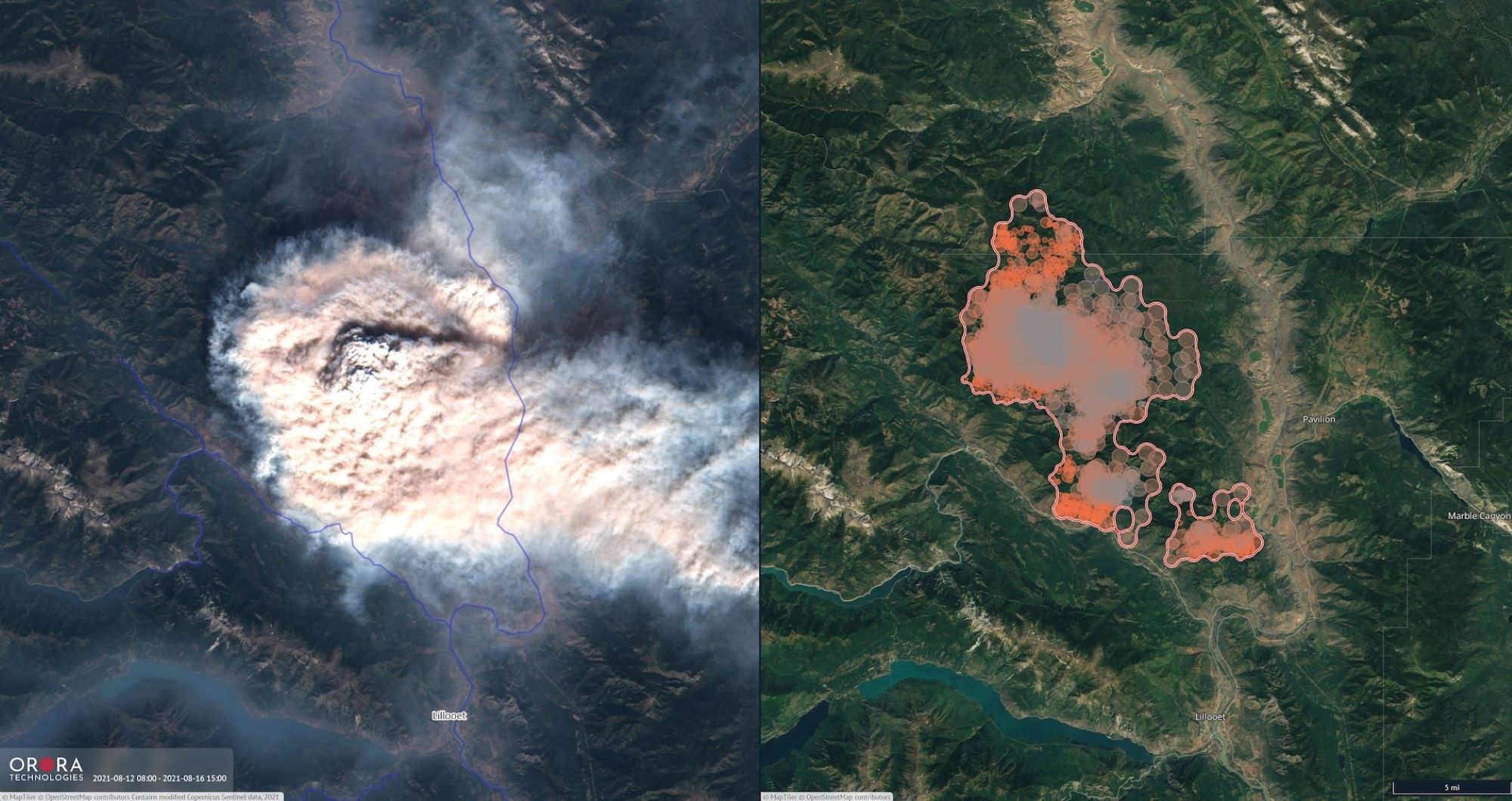
OroraTech, a leading supplier of thermal sensing data and predictive wildfire solutions, has been subcontracted by Spire Global to develop a Canadian wildfire monitoring service as part of a major government contract. 

Spire Global, a space-based data, analytics and space services provider, is leading the project, with OroraTech – which has worked closely with ESA in recent years to hone its capabilities – preparing the constellation’s instrumentation. This marks an important milestone in the growth of the emerging Germany-based company. 

This achievement demonstrates the shared objective of ESA and the European Commission to empower growing European data providers to scale their operations and achieve commercial success in the global Earth observation marketplace. 

Read the full article on www.rapidresponse.copernicus.eu.

Norwegian EO industry lifts off with new ESA InCubed national call

Norway-based companies of any size are invited to participate in the latest InCubed call by submitting proposals for the development of groundbreaking and commercially promising products in the Earth Observation (EO) field. The call opens on 15 April and the deadline for submissions is 27 May 2025 at 14:00 CET.

ESA InCubed is an Earth Observation commercialisation programme managed by ESA Φ-lab that aims to boost entrepreneur initiatives in the Earth Observation (EO) sector, supported by its signatory Participating States. With a focus on leveraging the benefits of EO data and services, InCubed provides co-funding for the development of any elements of the EO value chain, namely full satellites and constellations, platforms, payloads and instruments, ground segment-based systems, and downstream applications and value-added services. 

Depending on the type of activity, companies can apply for co-funding support and will be guided by ESA top-tier experts to create sound products/services from a technical, commercial, and financial standpoint, with ESA acting as the de-risking partner.

In collaboration with the Norwegian Space Agency (NOSA), the upcoming Norway national call will open on 15 April 2025 and has a budget of €2.1 million. Proposals should be focused in developing innovative and commercially successful EO products and services.

Norwegian companies with innovative ideas leveraging EO data or developing relevant EO technologies may apply. Universities and research institutes with no commercial interest in the project may be funded up to 100% of their costs if those do not surpass 30% of the total activity funding. Business ideas currently being funded by other ESA/NOSA programmes are not eligible for this call, unless for complementary tasks.

Interested Norwegian companies should submit an idea pitch on the Open Space Innovation Platform (OSIP), which will be ranked based on defined criteria, including the understanding of InCubed’s objectives; quality and completeness of the business and technical proposals; adequacy of the management approach, planning and co-funding; and level of experience. Qualifying pitches will be invited to submit a full proposal to ESA. Successful applicants will be contacted directly by ESA to discuss further contract negotiations. The first evaluation cycle will be in June 2025.

Interested companies can find out more about this call during the InCubed meeting at NOSA, in Oslo, on 7 April, and enrol via the NOSA dedicated link. The call opens on 15 April 2025 and the closing date for submissions is 27 May 2025 at 14:00 CET.

To know more: ESA InCubed, Norwegian Space Agency

Photo courtesy of ESA

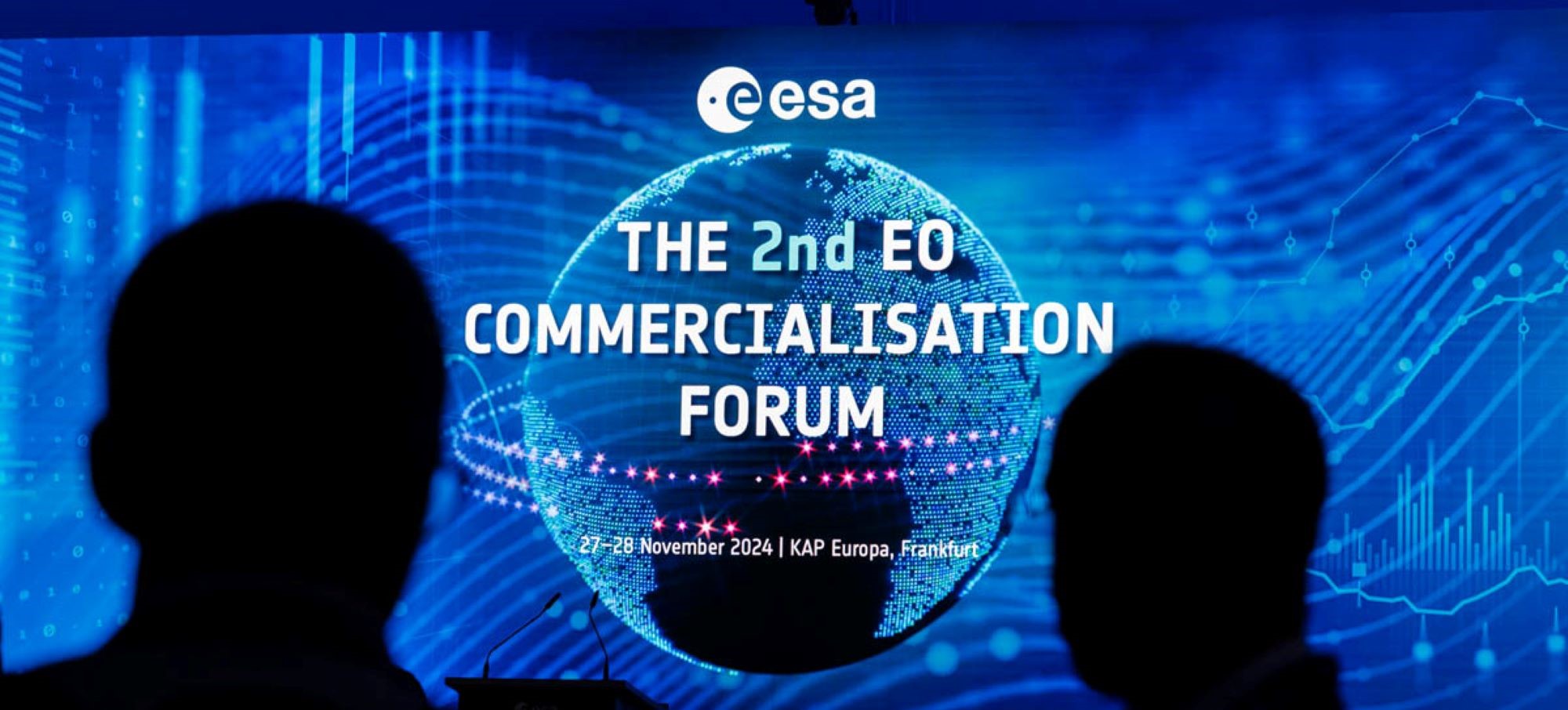
The 2nd ESA CommEO retrospectives: Setting the Course for Europe’s Space Future at CM25

As the upcoming ESA Council at the Ministerial Level draws near, relive ESA’s strategy to advance Europe’s leadership in the global commercial Earth Observation market, discussed during the 2nd ESA Earth Observation Commercialisation Forum.

The 2nd ESA Earth Observation Commercialisation Forum (ESA CommEO) brought together investors, institutions, entrepreneurs and companies of all sizes from the Earth Observation (EO) sector. This event offered the perfect opportunity to discuss the strategic priorities for the upcoming ESA Ministerial Council (CM25).

As CM25 approaches, ESA reiterated its ambitious strategy for the coming years, focusing on strengthening collaborations with the European Union to ensure alignment in space initiatives, and reinforcing science ambitions, particularly in Earth science, to address critical global challenges. ESA underscored its role in supporting policy development, enabling informed decision-making across sectors, and is committed to advancing resilience, safety and security activities to safeguard the sustainability of space operations and protect vital infrastructure on Earth and in orbit. 

As demonstrated by the 2nd EO Commercialisation Forum, one of the main pillars in ESA’s strategy is to boost commercialisation, positioning Europe as a global hub for space entrepreneurship and investment. In fact, some of ESA’s Earth Observation flagship programmes – such as Digital Twin Earth, ESA InCubed and FutureEO – were extensively discussed during the forum.

The ESA Digital Twin Earth (DTE) proposal for CM25 aims to reduce barriers for accessing and using EO data while integrating the novel capabilities of ESA Member States into the DTE development lifecycle. Built collaboratively with the community, it leverages state-of-the-art technology and industrial excellence to drive environmental sustainability, establish best practices and measure impacts through broad participant collaboration. The programme seeks to explore cutting edge technologies such as quantum computing and AI, while advancing a geographically distributed framework for collaborative DTE component development and local reuse.

The ESA InCubed programme, an Earth Observation Programme managed by ESA Φ-lab, has established itself as a fast and effective mechanism for supporting innovation in EO, funding 140 activities. The ESA InCubed programme has promoted several successful national calls – in countries like the UK, Spain and Portugal – engaging a broader range of stakeholders and aligning projects with regional priorities.

InCubed has been a catalyst for venture capital investments in New Space start-ups, amplifying its impact beyond initial funding. This programme has not only driven growth in the Earth Observation sector but also enhanced its credibility with industry stakeholders, solidifying its position as a key player in the European commercial space ecosystem.

FutureEO, a world-leading R&D programme for the preparation, development, management and use of ambitious EO research missions and data also set its strategic commercial objectives for 2026-2028: to strengthen industrial competitiveness, address critical technology developments and Earth Action, and to reinforce ESA’s role as enabler and customer.

As a first buyer or initial anchor customer, the ESA Third Party Mission (TPM) programme enables New Space EO data to be opened to the broader European scientific community for innovative research and pre-operational application developments, including green commercialisation and Earth Action. More than 17.700 research application development and incubation projects have used TPM data since 2008, highlighting the programme’s role in supporting EO data commercialisation.

EO data buy is a powerful way to support the European EO industry. Through data buy, ESA assesses the quality of commercial EO data, allowing for capacity building, enhanced recognition, trust amongst data customers and investors, and stimulation the synergy between commercial and public EO missions.

The insights gained from this forum will shape ESA’s strategy for CM25, paving the way for Europe to strengthen its position and thrive in the highly competitive global EO sector.

See the full “ESA CommEO Approach Towards CM25” session here.

To know more: ESA CommEO, ESA Φ-lab, ESA InCubed, ESA Third Party Missions, Digital Twin Earth, FutureEO

Photo courtesy of Marc Jacquemin Photography

InCubed launches highlight ESA’s support for innovation

Three InCubed satellites have launched from the Vandenberg Space Force Base, California, highlighting ESA’s role as partner to industry and its support for business and technology innovation.

InCubed, the ESA Earth observation programme for ‘Investing in Industrial Innovation’ managed by ɸ-lab, focuses on developing innovative and commercially viable products and services that generate or exploit the value of Earth observation imagery and datasets.

The launch took place on 14 January on a SpaceX Falcon 9, Transporter 12, which placed multiple small and nano satellites into Sun-synchronous orbits.

With the launch site approximately 200 km to the North-West of the wildfires that have caused huge damage to northern areas of Los Angeles in the past week, it’s apt that one of the InCubed satellites offers improved detection for wildfires.

Read the full article on www.esa.int.

Next ESA InCubed Portugal National Call focusing on ‘Earth Observation for Municipalities’

Supported by the ESA InCubed programme, the Portuguese Space Agency has announced a call for innovative projects to modernise Portuguese cities through the use of Earth Observation (EO) technologies. This InCubed call has a total budget of €1.5 million. The deadlines for the first and second cycle of applications are 12 March and 2 June 2025, respectively.

The ESA InCubed programme plays an important role in growth and competitiveness within the space economies of its Participating States by supporting the development of commercially successful business ventures in the Earth Observation sector. As a longstanding participant in InCubed, Portugal has reaffirmed its commitment by announcing a new call for applications seeking InCubed co-funding.

Building on the ‘EO for Municipalities’ initiative by the Portuguese Space Agency, this new call promotes innovation and the adoption or generation of EO data and services at the local government level, targeting participation from the Portuguese industry.

Possible themes include, but are not limited to, territory and urban planning; climate adaptation and mitigation in urban and rural context; air quality and pollution monitoring; biodiversity monitoring and preservation; forestry management and fire preparedness; natural hazards monitoring and emergency management. The budget for this call is €1.5 million, with no upper limit for individual projects.

Submitted proposals must demonstrate that the proposed product or service will be commercially viable or (pre)operationally ready by the conclusion of the InCubed activity, and they should align with the technical specifications for systems integration outlined by the Agency for Administrative Modernisation, I.P. (AMA), under the framework of the National Strategy for Intelligent Territories (ENTI).

Proposals can be submitted at any time, with two evaluation cycles per year. The first evaluation cycle is scheduled for March 2025 and the second one for June 2025. Two online webinars to explain InCubed opportunities in Portugal will take place on 3 March 2025 and 5 May 2025.

“Launching targeted national calls allows us to collaborate closely with our Participating States to drive Earth Observation innovation within individual countries, and the ‘EO for Municipalities’ initiative from Portugal highlights the strong dedication to support commercial initiatives”, commented Michele Castorina, InCubed Programme Manager and Head of the ESA Φ-lab Invest Office. “We are committed to working closely with our Participating States to expand financing opportunities for Europe’s EO sector, and we look forward to receiving innovative proposals from Portuguese companies.”

Further details can be found on the Portuguese Space Agency website. Applicants should summit their proposals on the Open Space Innovation Platform (OSIP) by 2 June 2025.

To know more: ESA InCubed, Portuguese Space Agency

Photo courtesy of Pexels/Diogo Miranda

ESA Φ-lab and Altair join forces to drive innovation in Earth observation

ESA has signed a letter of intent with Altair to encourage the development of Earth observation (EO) commercial products and services. The collaboration will target companies supported by ESA Φ-lab, the InCubed EO commercialisation programme, ESA-PhiLabNET, ESA Business Incubation Centres (ESA BICs) and ESA Technology Brokers, within the ESA Partnership Initiative for Commercialisation (EPIC) framework.

ESA Φ-lab plays a pivotal role in driving innovation and commercialisation in the European EO sector, by providing technical, commercial and financial support to a large group of enterprises through the ESA InCubed programme and other numerous research initiatives. Its contributions go beyond funding and guidance, extending to the formation of strategic partnerships that offer essential business and commercialisation services.

One of such partnerships, established through the ESA Partnership Initiative for Commercialisation (EPIC), was secured with the German division of Altair, which provides software and cloud solutions in simulation, high-performance computing (HPC), data analytics, and AI, and has decades of global experience and reach in the space and newspace sector. Altair is used by primary companies and emerging startups to develop, test, optimise, and build their innovative products, including satellites, launchers, sensors and antennas, probes and rovers.

The partnership between Φ-lab and Altair, within the ESA-Altair Space Acceleration Programme, is focused on the development of a dynamic and thriving EO commercial ecosystem, by making use of digital engineering, AI and data analytics tools, and increasing awareness of EO-based services.

“This collaboration with Altair marks a significant milestone in our mission to push the boundaries of Earth observation exploration and technological development”, comments Giuseppe Borghi, Head of the Φ-lab division. “Together, we aim to leverage the use of HPC and data analytics for the advancement of groundbreaking projects, creating new possibilities within the space research field and enhancing Europe’s position as a leader in Earth observation innovation.”

Further details about this partnership and the two offers for start-ups and large companies provided within the Φ-lab-Altair partnership can be found here.

To know more: Φ-lab, InCubed, ESA BIC, ESA Technology Broker, Altair

Photo courtesy of Pexels/Pavel Danilyuk

EO MakerSpace: crafting the future of smarter Earth observation systems

The Earth observation (EO) domain is undergoing a disruptive transformation featuring onboard intelligence and innovative sensing capabilities. With the support of InCubed, ESA EOP co-funding programme led by Φ-lab, IngeniArs is implementing EO MakerSpace – an initiative dedicated to AI on edge for the development of EO smart sensors.

The space sector is currently experiencing a technological and business evolution driven by increased demand and specialised advancements, such as onboard intelligence. Through the use of advanced AI techniques to process information directly on spacecraft, onboard intelligence promises to deliver more efficient, agile, autonomous, and reconfigurable Earth observation (EO) systems. ESA Φ-lab has a track record of developments in this area, as depicted below.

Timeline of Φ-lab-powered satellites and constellations

The latest research efforts have been committed to exploring the use of AI on edge for EO applications, such as the early detection of natural disasters, vessel incidents, and gas leaks. Onboard intelligence is also capable of identifying low-quality data, like cloud-covered satellite data and remote sensing images with limited information of interest, discarding them to save downlink data bandwidth to the ground station.

Leveraging the full capabilities of AI on edge in EO systems needs the development or enhancement of both space-related software and hardware. These improvements are essential for seamless integration with innovative sensors, as well as for preprocessing, calibrating, and correcting sensory data to guarantee the accurate performance of AI algorithms. To cope with the limited power and energy budget in space, it is essential for hardware and software design to work in tandem to maximise energy efficiency.

To achieve these goals and with a focus on the Italian ecosystem, ESA InCubed is partnering up with IngeniArs, a company specialised in the development of innovative high-tech electronic and informatics systems, in the aerospace, healthcare, cybersecurity and AI domains. IngeniArs has been developing GPU@SAT, a hardware/software ecosystem for space systems dedicated to AI and Computer Vision applications.

This contract is focused on the rapid and responsive prototyping of core elements of smart EO payloads within the GPU@SAT ecosystem, based on joint software and hardware developments. IngeniArs will coordinate the elements of individual (sub-)activities, while ESA InCubed will oversee and expedite the approval process. IngeniArs will be responsible for managing each (sub-)activity development with suitable entities.

Italian individuals, start-ups, SMEs, LSIs, university spin-offs and any innovative entities are welcome to apply and participate in the development of EO payloads.

Activities can be developed within the following domains: algorithm optimisation and software abstraction, sensor selection and integration, onboard data compression, smart sensor management and AI-based autonomous navigation. To facilitate the development of these activities, the GPU@SAT ecosystem will be implemented on a representative device, creating a dedicated development kit – the GPU@SAT devkit. To know more about these activities and to apply, visit the dedicated IngeniArs project webpage.

Giuseppe Gentile, CEO of IngeniArs, comments: “At IngeniArs we are very proud of leading this project. It will be a very important moment to gather the Italian ecosystem around the hot topic of ‘enabling Artificial Intelligence on-board’. We will make our GPU@SAT platform available for the development of applications and modules within a fully representative space environment, and we are very excited to see the results.”

This initiative will offer the EO ecosystem a report with the overall findings, including improved mechanisms to spur innovation and possible demonstrations or pilots, followed by a technological roadmap with the remaining open questions and technical gaps.

“The integration of AI algorithms with specialised hardware and software co-design can accelerate the future of Earth observation missions, leading to substantial reductions in time, costs, and the need for human resources while improving performances, latency time, and missions’ autonomy” comments Michele Castorina, Head of the Φ-lab Invest Office. “This collaboration with IngeniArs aligns with the InCubed mission to foster innovative technologies in the space industry, improving the efficiency and agility of autonomous EO systems through cutting-edge AI techniques.”

To know more: ESA InCubed, IngeniArs

Photo courtesy of Pexels/SpaceX