Would you like your Estonian company to be part of Europe’s Earth Observation (EO) success story? The ESA Φ-lab and InCubed programme will present the opportunities and benefits of EO in this free online workshop on Thursday 4 February 2021. The European Space Agency support for business development and innovation event is organised by Enterprise Estonia Space Office in cooperation with ESA and ESA Business Incubation Centre (BIC) Estonia.
This free virtual workshop will introduce ESA opportunities for Estonian companies such as the InCubed programme and ESA BIC Estonia. The workshop will also explain which activities can be funded and co-funded, what the application processes are, and how the programmes can add value to your business. Business opportunities and challenges facing Estonian companies will also be discussed, and participants will be invited to an open discussion so ESA can better understand your challenges and needs.
Does your satellite data suffer from sub-optimal resolution? Find out how InCubed activity in1 can be used to enhance your satellite data at Sobolt’s free two-week virtual trial, starting on Monday 15 March 2021.
AI solutions provider Sobolt joined the Investing in Industrial Innovation (InCubed) programme in February 2020 and has worked to develop state-of-the-art Artificial Data Enhancement (ADE) software called in1.
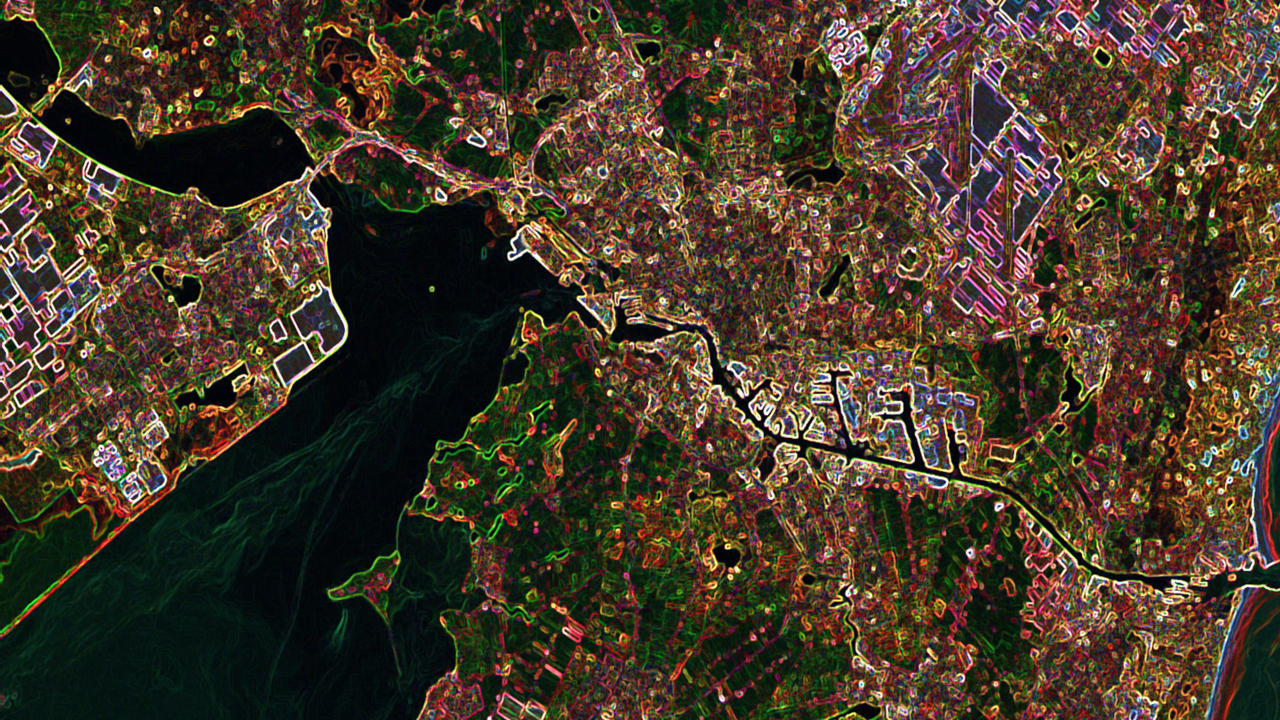
in1 uses a sophisticated image processing model for unpaired super-resolution to reduce the cost of enhancing satellite data in real-time. The so-called “unpaired” problem consists in super-resolving a low resolution satellite image with AI deep learning techniques, without having a high resolution target image to compare it to. To do so, Sobolt has developed a dedicated state-of-the-art artificial intelligent model that provides potential customers with upgraded data and unlocks exciting new use cases for existing datasets and satellite programmes such as more accurate data analyses. Find out more here.
The free Copernicus Sentinel-2 trial of in1 will start virtually on Monday 15 March 2021 and run for two weeks. Anyone working with Sentinel-2 images can participate in the free trial, using Sobolt’s image library provided on the website or super resolving own images with an API in the cloud. In three easy steps participants will be able to upload an image, enter a short line of code into the API, and finally click on a button to get a higher resolution Sentinel-2 image emerging in a matter of seconds.
This free trial will allow participants to get first-hand experience of in1, be able to evaluate the models performance, and provide valuable feedback. Please register by emailing hello@in1.ai – hurry, only 19 spots available!
Since in1’s intermediate milestone meeting as part of the InCubed programme in December 2020, in1 has been enhancing the sharpness of Copernicus Sentinel-2 images whilst preserving and exceeding Sobolt’s benchmarking for bilinear upsampling. The meeting focused on performance metrics of in1’s original colour definition and how well object edges are defined such as houses and trees.
In1 is a toolbox of AI deep learning functionality focused on improving and enhancing Earth Observation imagery and data sets. This is an innovative software development which pushes the architectural boundaries of deep learning techniques and GPU operational capability. Using a continual improvement approach, Sobolt have developed automatic testing procedures and conducted external peer reviews on every new piece of code added to consistently improve the toolbox.
ESA’s Investing in Industrial Innovation (InCubed) programme will focus on the development, launch and demonstration of the first Multispectral Companion Satellite prototype of Aerospacelab’s Multispectral Companion Mission whose aim is to provide daily global coverage and commercially focused multispectral data products within a constellation architecture.
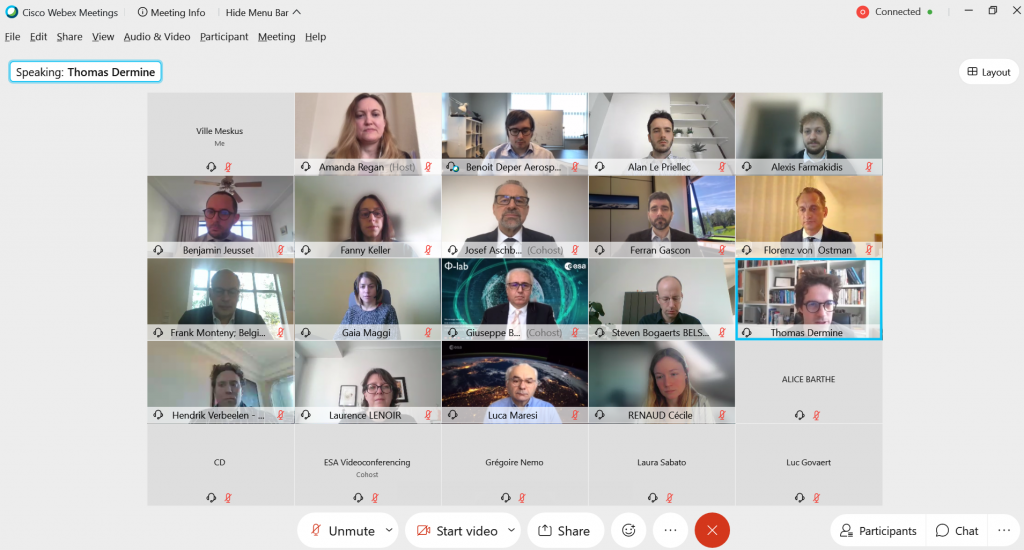
The contract was signed during a virtual event on Friday 12 February 2021 by ESA Director of Earth Observation Programmes Josef Aschbacher and the CEO of the Belgian company Aerospacelab Benoit Deper. The event was attended by Thomas Dermine, Belgium Secretary of State, and the Belgium Delegation (including Frank Monteny, the Head of the Belgium Delegation and Steven Bogaerts, the Belgium Programme Board for the Earth Observation delegate). ESA representatives included Giuseppe Borghi, Head of the Φ-Lab, Amanda Regan, Head of the Invest Office in the Φ-Lab and the InCubed Programme Manager.
The development, launch and demonstration of the first Multispectral Companion Satellite prototype of Aerospacelab’s Multispectral Companion Mission has become the latest activity under ESA’s InCubed programme. The Multispectral Companion Mission (MSCM) is one of two main constellations that Aerospacelab is developing to enhance efficiency and make geospatial intelligence actionable and affordable. Under the InCubed contract, Aerospacelab will develop an In-Orbit prototype.
Representatives from ESA and the InCubed programme, Aerospacelab, Belgium Secretary of State, and the Belgian delegation joined the virtual signing event. On signing the contract Josef Aschbacher, ESA’s Director of Earth Observation Programmes and the agency’s next Director General, said:
‘’ESA is excited to support the European Earth Observation commercial sector and we are looking forward to working with Aerospacelab to develop the first Multispectral Companion Prototype Satellite. The development is commercially focused and is co-funded by the Belgium contribution to InCubed and Aerospacelab. This is one of the biggest InCubed contracts so far, providing an important contribution to the development of the European commercial EO landscape.’’
This demonstration mission will comprise the first satellite of Aerospacelab’s constellation. The aim is to provide a daily global coverage with commercially focused multispectral data products that strive to reach Sentinel-2 specifications for parameters like spectral bands, MTF, SNR, resolution, within the constraints of a cost driven approach. Additional bands will also be investigated, considering the studies performed for Sentinel-2 Next Generation.
The InCubed activity will focus on developing the first prototype satellite whilst ESA’s General Support Technology Programme will develop the satellite’s payload.
Steven Bogaerts from the Belgian delegation said: “Aerospacelab is a young and very promising Belgian company with many brilliant and innovative ideas. With its support to the Multi Spectral Companion Mission (MSCM), the Belgian Science Policy Office (BELSPO) wants also to help Aerospacelab in reaching their ground-breaking goals.’’
Head of ESA’s Φ-lab Invest Office Amanda Regan added: “ESA’s InCubed programme is delighted to welcome Aerospacelab into the programme and would like to thank the Belgian delegation and Aerospacelab for co-funding this new commercially focused activity.”
The ambitious goal is – for some selected applications – to ultimately achieve interoperability with existing Sentinel-2 data products (as well as those to Sentinel-2 Next Generation) and offer strategic complementarity by fusing data sources between Sentinel-2 and this companion constellation.
Founder and CEO of Aerospacelab, Benoit Deper, said: “Copernicus was built for global environment and security monitoring and Aerospacelab aims to complement this with a constellation of multi-spectral satellites. We see this InCubed activity as an important first step to de-risk the first satellite. We are delighted to work with ESA and we are looking forward to exploring possible synergies between existing satellites and smaller spacecraft.”
Aerospacelab is a Belgian company with expertise in satellite hardware and data processing. A mixture of existing, off-the-shelf and new components will be used to build the first satellite prototype which Aerospacelab will integrate across the space, ground and user segments. More information about Aerospacelab can be found here.
Representatives from ESA and the InCubed programme, Aerospacelab, Belgium Secretary of State and the Belgian delegation joined the virtual signing event on Friday 12 January 2021.
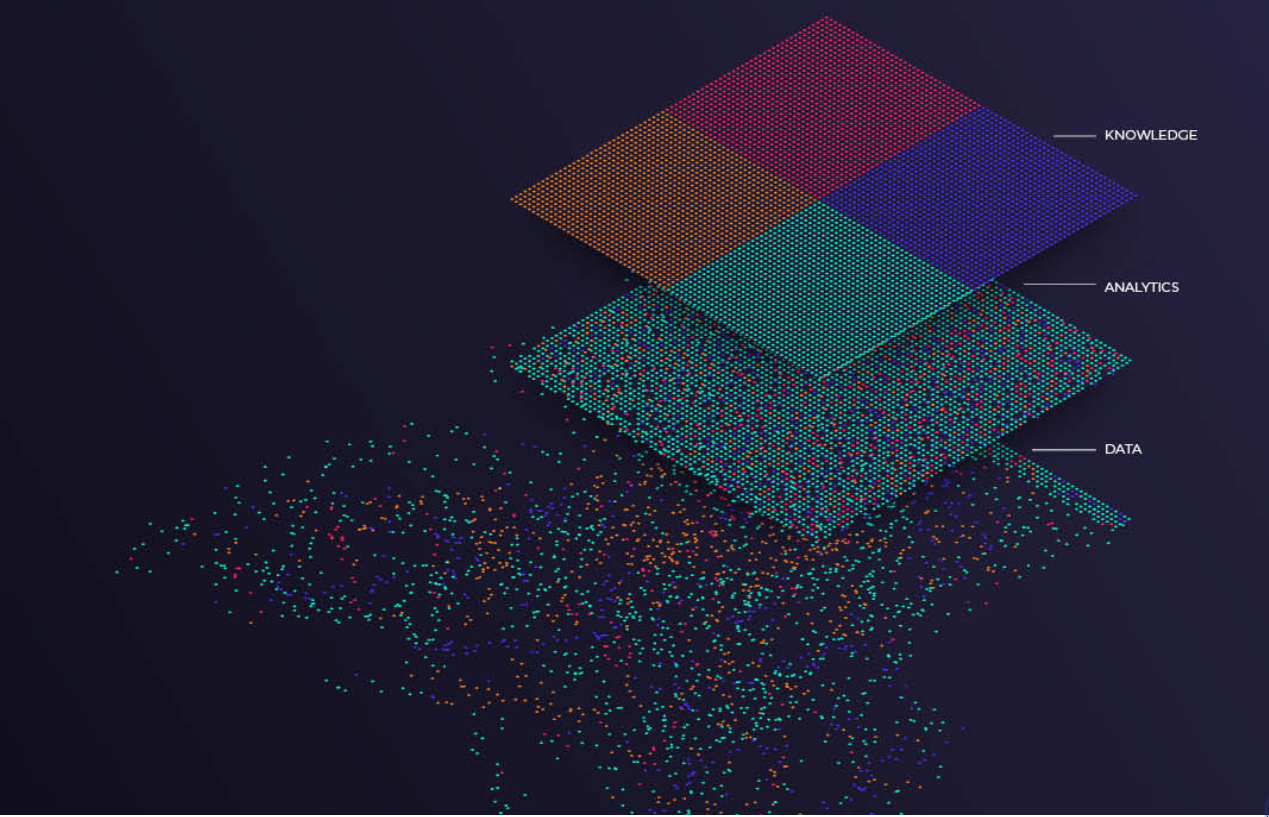
This virtual two-day summit will explore the concept of Geospatial Knowledge Infrastructure and how Fourth Industrial Revolution (4IR) technologies such as AI, IoT and 5G will influence the geospatial industry. The summit is jointly organised by Geospatial Media and Communications, and the UN Statistics Division. Register for the virtual summit here.
Space and Earth Observation companies are encouraged to attend the virtual summit which will include sessions on Geospatial Knowledge, data partnerships and analytics, and policy frameworks. More information can be found here.
When: 24-25 February 2021
Where: Online
To know more, see the full programme and register: Click here
The ESA Φ-lab and InCubed programme will be presented at the Finland Industry Day which takes place during the country’s Space Business Forum on Wednesday 17 February 2021.
Finnish companies interested in developing the Finnish space based value chain from satellites, systems, sub-systems to ground segments and the utilisation of space applications are invited to an Industry Day which will take place virtually on Wednesday 17 February 2021, 12:00-14:30 CET / 13:00-15:30 EET.
Kimmo Kanto, Head of Space at Business Finland, will open the Industry Day with an overview of Finnish space strategy followed by presentations from ESA representatives. Giuseppe Borghi, Head of ESA’s Φ-lab, will focus on how Φ-lab activities can support the use of Earth Observation for the Finnish commercial sector.
Amanda Regan, Head of ESA’s Φ-lab Invest Office, will give an overview of the Investing in Industrial Innovation (InCubed) programme and outline the application process for Finnish companies. Presentations on the InCubed and Φ-lab experience will follow from CEO of Swedish company Unibap Fredrik Bruhn, CEO of Reaktor Space Tuomas Tikka, and ICEYE Senior SAR Engineer Andrea Radius.
Jaan Praks, Assistant Professor of Electrical Engineering at Aalto University, will open the second half of the Industry Day with perspectives on Finnish space economy challenges. A company round table and open discussion will follow so that ESA can better understand and support the needs and challenges of the Finnish space ecosystem. To conclude we aim to have a discussion focused on the development of the Earth observation commercial sector and how Finland could play an important role in this emerging landscape.
If your Finnish company is interested in Space and Earth observation, and would like to attend the Industry Day, please contact Ville Meskus and Tiina Nurmi.
Join the E. Amaldi Foundation (Fondazione Amaldi), ambassadors of the ESA Business Applications Italy and InCubed Programmes, for a series of free training courses focussing on multispectral and hyperspectral imaging and data.
The E. Amaldi Foundation was created in 2017 by the Italian Space Agency and the Hypatia Research Consortium to propose a new way of interpreting applied research and technology transfer.
This free series of training courses is aimed at experts, entrepreneurs, researchers and anyone interested in discovering how Earth Observation (EO) satellite data works.
Artificial Intelligence (AI) was the focus of the first virtual training course which took place on 14-15 January 2021. The two day course started with an overview of ESA Business Applications in Italy and the opportunities presented by the InCubed programme. Participants then learnt about the role of AI in multispectral and hyperspectral imaging.
The second free two day training course will focus on the analysis of multispectral and hyperspectral data, taking place on 25-26 February 2021. Participants will learn about basic multispectral and hyperspectral data processing on day one, and advanced processing on day two. During the course, the Italian Ambassadorial Platform (AP-IT) will present the main funding opportunities of ESA’s InCubed programme and Business Applications. Find out more and register here.
Big data analytics applied to multispectral and hyperspectral images will be the focus of the third free training course on 25-26 March 2021. On day one, participants will be introduced to big data and how it is applied to EO. The series will finish on day two with sessions on data mining techniques. Funding opportunities for ESA’s InCubed programme and Business Applications will also be presented. Find out more and register here.
GeoVille and partners are the first companies to successfully complete an activity under ESA’s InCubed programme. The Austrian company has developed a new service for the agricultural sector together with partners from Austria (EODC) and the Netherlands (Hermess and Hilbrandslaboratorium B.V).
The agricultural sector is facing major challenges and opportunities, such as climate change, the steadily growing need for food and the implementation of the European “Green Deal Agenda”. Objective and timely information for decision-making is therefore becoming more and more essential.
GeoVille, a company from Austria specialised in the use of Earth Observation (EO) data, has now developed the new EO-PLUGIN service with partners that precisely addresses these aspects. This service is based on optical and radar data from Copernicus’ Sentinel-1 and Sentinel-2 satellites.
EO-PLUGIN elaborates this information and enables the agro-food industry to integrate it into their work processes in simple steps. The system offers a range of initial customer-oriented services. These include quantification of plant growth, meteorological data and derived statistics, determination of soil moisture, risk assessment for potato diseases, classification of crop types, and yield estimations and forecasting.
GeoVille was co-funded by the Austrian Research Promotion Agency (FFG) and the market-oriented ESA programme InCubed (Investing in Industrial Innovation). ESA provides funds to co-fund market-driven and innovative industry-led activities. InCubed supports companies in the commercialisation of EO focused technologies and services.
The EO PLUG-IN system was first tested by a specially spun out subsidiary called Geo4A, which focuses specifically on services for the agricultural sector. The specialised company was able to build up a strong position in the potato sector within two years.
So far, the activity shows how EO satellite data can be integrated into operational processes to actively support the agro-food value chain. This approach represents a blueprint for the entire EO sector.
The activity was concluded this year following the final review meeting on 1 December 2020.
David Kolitzus, Project Manager of EO PLUG-IN, adds: ‘’The commitment to bring EO based information solutions into the agro-food sector still holds up. The InCubed programme enabled us a quick and innovative market entry through financial and technical support. The primary market is currently the potato sector in the Netherlands. The topics range from reducing losses during breeding and logistics, through control capacities for production and trade, to develop new markets. EO PLUG-IN closes the gap between EO and the agro-food sector and supports public and private actors along the entire global potato value chain.’’
Unibap’s SpaceCloud™ Services framework, co-funded by ESA’s InCubed programme, has become a member of the Amazon Web Services (AWS) Partner Network and will begin integration with AWS. Together, Unibap and AWS will improve satellite data efficiency for aerospace and satellite customers.
On 15 December 2020, Swedish company Unibap announced its membership with the AWS Partner Network and phased integration with AWS during 2021. As well as providing aerospace and satellite customers with real-time access to AWS, this integration will simplify data management with lower latencies and reduced costs.
ESA has been co-funding Unibap’s SpaceCloud™ Services framework since it was selected under the InCubed programme for enhanced software functionality and standardisation in April 2020. Unibap’s collaboration with AWS will allow customers to quickly collect and immediately analyse data instead of relying on traditional storage and processing methods which can take up to 24 hours.
In Unibap’s press release, CEO Dr. Fredrik Bruhn says: “The timing of our collaboration to bring full cloud experience to space is perfect and is the culmination of many years of in-house development and continuous support from the Swedish National Space Agency and the European Space Agency. I am extremely pleased to be taking the next step of cloud computing to space with AWS and foresee enablement of new business models and space mission architectures that benefits commercial and government endeavors”.
In co-operation with the Dutch Network Levee Monitoring, the Dutch company Miramap is organising an online workshop dedicated to the ESA InCubed co-funded activity Sat4Flood.
The workshop will be on Thursday November 26th, from 1:00 to 3:00pm and held entirely in Dutch.
The speakers will explain the functioning of Sat4Flood and show a demo of this product. Two proof of Concept participants, Vlaamse Waterweg (BE) and Arcadis (NL), will also present their first experiences with the application.
ESA InCubed programme just published an open call for Greek companies and partners.
The aim of the Investing in Industrial Innovation (InCubed) programme is to support and develop the Earth Observation (EO) commercial sector. The objective is to de-risk innovative and commercially viable products and services based on EO data.
The focus of Greece within the InCubed is to develop national end-to-end spaceborne capabilities aiming to contribute to a dedicated satellite constellation to provide commercial Earth observation products and services, through international cooperation and focused on addressing national needs
For more information please go to ideas.esa.int, register on the platform and follow the specific Greek InCubed campaign channel.
To know more about:
The Greek InCubed call can be found here ideas.esa.int. For specific requirements follow the Greek campaign channel on ideas.esa.int