

Ph.D. in pure mathematics at Uni Leeds. Graduated with an M.Phil. research degree At Uni Manchester. Research scientist at mindtrace.ai. Developer of computer vision algorithms for neuromorphic vision sensors and neuromorphic computing platforms, as well as the problem of few-shot learning.
Archives: Team
Anne Braakmann-Folgmann
I am working on satellite remote sensing of large icebergs as a third year PhD student at the Centre for Polar Observation and Modelling, University of Leeds, UK. Now, I am excited to collaborate and be part of the ɸ-lab team to explore the use of Artificial Intelligence for my field of research.
My background is in remote sensing and I have done my B.Sc. and M.Sc. degrees in Geodesy and Geoinformation at the University of Bonn, Germany. Taking part in two Polarstern research cruises to Antarctica sparked my fascination for polar science. And a YGT at ESTEC confirmed my desire to work in this field using satellite observations combined with machine learning methods.
Athanasia Nikolaou
She holds a MSc in integrated climate system science and a PhD in planetary science. She has worked in the Advanced Concepts Team of the ESA in the NL and in the GAC. She is part of the international science consortium of the ARIEL space mission.
Begüm Demir
Begüm Demir is a Professor and Head of the Remote Sensing Image Analysis (RSiM) group at the Faculty of Electrical Engineering and Computer Science, Technische Universität Berlin, Germany. She received the PhD degree in 2010 in Electronic and Telecommunication Engineering from Kocaeli University, Turkey. She performs research in the field of processing and analysis of remote sensing images for Earth Observation with interdisciplinary approaches associated to remote sensing, machine learning and big data management. She was a recipient of a Starting Grant from the European Research Council with the project “BigEarth-Accurate and Scalable Processing of Big Data in Earth Observation” in 2017, and the “2018 Early Career Award” presented by the IEEE Geoscience and Remote Sensing Society. Dr Demir is a senior member of IEEE since 2016.
Bertrand Le Saux
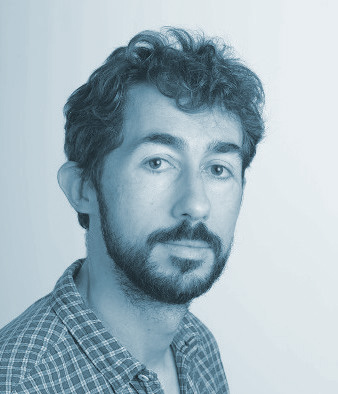
He’s a scientist working on data-driven techniques for visual understanding, with a background in machine learning and computer vision. He’s interested in tackling practical problems that arise in Earth observation, to bring solutions to current environmental and population challenges.
Carlos Urbina Ortega

I hold a masters in telecommunications engineering intensified on space systems development by the University of Alcalá in Spain.
I started my professional career in 2010 developing INTA-µSat-1, a mini-satellite platform for earth observation mission of I.N.T.A.. Then I moved to ESTEC as a full-time researcher on future data systems and on-board computers. During those two years I developed engineering, verification and quality practices for digital electronics deployment in the Mars surface.
Afterwards, at SSBV I contributed as a Hardware/Software co-designer for a modular Synthetic Aperture Radar.
At the end of 2014, I started working for Telespazio as an On-Board Computer and Data Systems Engineer, dedicated exclusively to their main customer: ESA. In that specialist role I supported a variety of missions in my discipline (Lunar Orbital Platform Gateway, ASIM, SMILE…) which culminated with my role as Principal Avionics Systems Engineer for the Vigil mission (EOP/SSA).
I also developed several space electronics products from R&D to commercialisation, and was enrolled in the initial AI initiatives at ESTEC. This ultimately brought me to collaborate with the Phi-Lab and finally to my current position here as End-to-End System Engineer in the Invest Office through TEC-ESG.
Carlotta Spallino
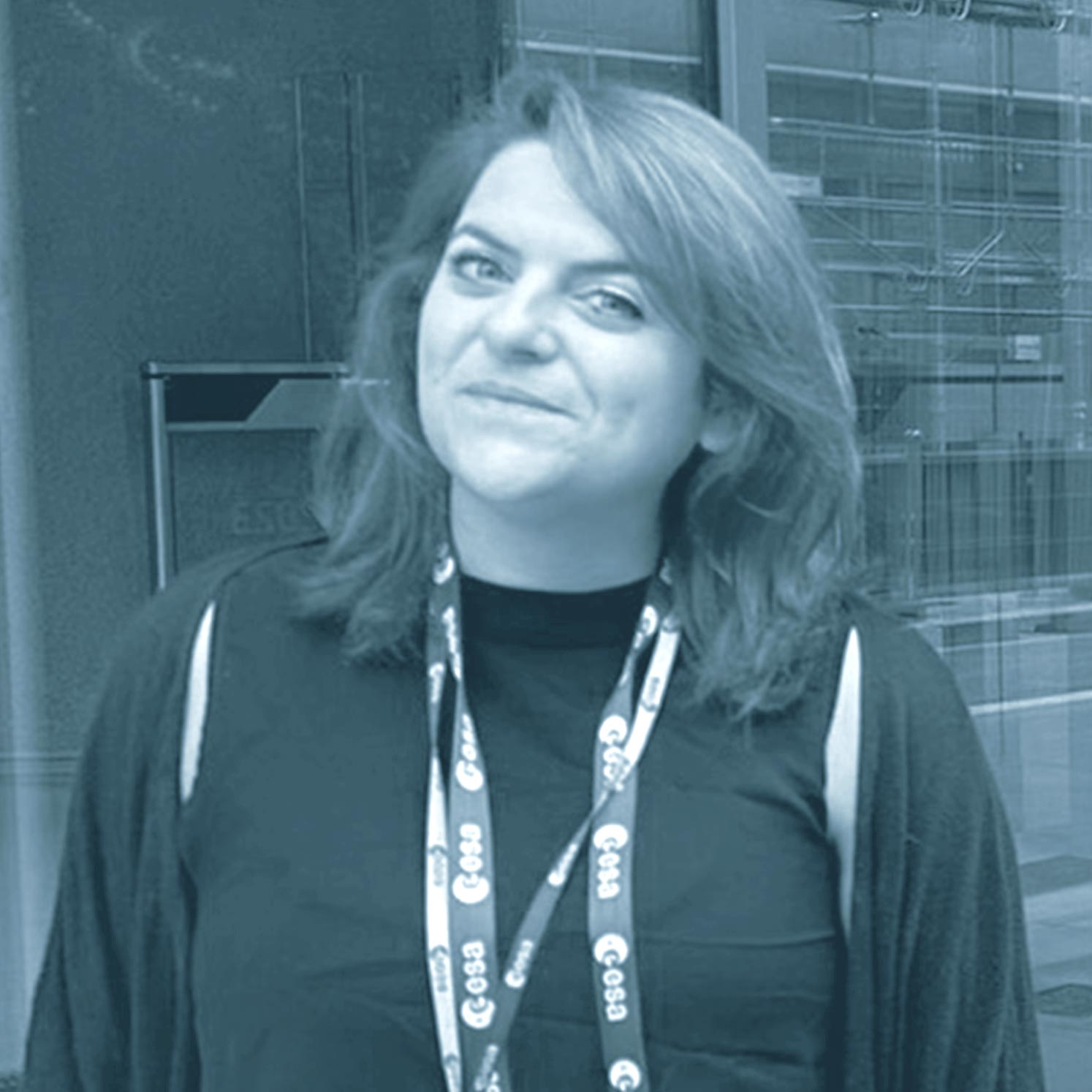
Immediately after graduating in Interpreting and Translation in Rome, I started to work as an administrative assistant in the European sector. While working, I attended a Master Degree in Management in Procurement at the University of Rome Tor Vergata. Thanks to the master, I had the opportunity to work in the procurement sector in EFSA in Parma. I strongly believe that being passionate about the work we do, also makes it possible to achieve the change we are working for, and this is why I have the aspiration to surround myself with those who are committed to change and development
Chiara Maria Cocchiara

Characterized by a strong attitude for innovation, Chiara is an aerospace engineer with an extensive background and career in the Space Sector. Forbes listed her as 30Under30 Leader in the category Industry.
She did the concept development of a new drone technology which makes use of EO satellites to support saving human lives on Earth, which awarded her the MIT Innovator Under35 Prize and the ESA ESNC competition Prize.
She initiated a new pharmaceutical strategy for the Space Industry, working as Space Expert for the pharmaceutical company Boots. Together they developed a series of new skin products to support astronauts in long space missions (e.g. to Mars). The products, being waterless, will also be used in areas of Africa or other regions that lack of water, to support the population on multiple areas of our Planet.
For 12 years she worked with Earth Observation ground segment operations at EUMETSAT, supporting both Routine Operations and the preparation of future EO Space Missions.
Pushed by her dreams of becoming an astronaut, she was selected as Crew Engineer and then took over the role of Crew Commander of a Mars Analogue mission with the Mars Society and experiments from NASA in the Utah Desert in the United States.
She speaks five languages, has one Bachelor and three Master degrees in Aerospace Engineering, an MBA and she is currently a PhD candidate in Space Economy at the University of Palermo. In the Space Community, she received the IAF Young Space Leaders award, and Space & Satellite Professionals International – SSPI 20Under35 Promise award.
Casper Fibaek
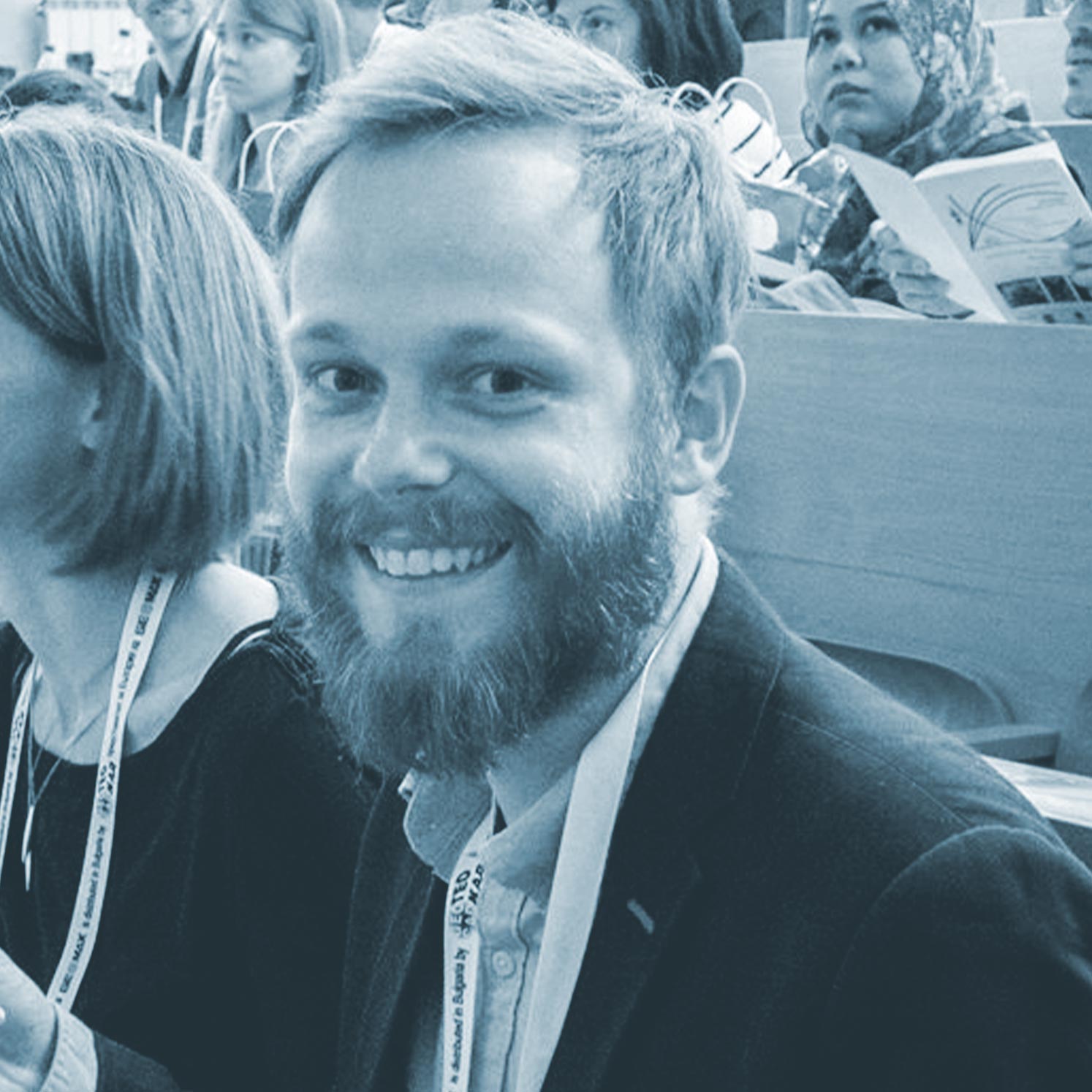
Casper is an industrial PhD at the engineering consultancy NIRAS and Aalborg University, working on developing tools and methods that utilise Earth Observation (EO) and Deep Learning to support the Sustainable Development Goals. The topic of the PhD came out of a personal interest in applying innovative technologies to global development challenges. Casper is a part of the Mapping and GIS Department at NIRAS, where he has worked on a diverse range of projects in numerous roles. He holds an AP. in Multimedia Design and Communication, a BSc. in Surveying, Planning and Land Management and an MSc. in Geoinformatics from Aalborg University in Copenhagen. His MSc. thesis was on the use of EO in monitoring compliance with the European Union’s Common Agricultural Policy.
For most of the PhD, Casper has lived in Oxford, supporting the close collaboration between NIRAS and Oxford Policy Management as the EO expert and industrial researcher on the “Savings at the Frontier” project. He currently serves as a quality expert on the EU Commission’s Technical Assistance Facility for EO projects in Latin America as well as the EO and GIS expert on the $105 million Integrated Coastal Zone Management (ICZM) project for Egypt’s Mediterranean coast. His previous work includes a feasibility study on new land management measures in Uganda – undertaken while working at the Ministry of Lands, Housing and Urban Development in Kampala, a study on using Sentinel imagery to detect invasive plant species in Denmark, as well as the creation of the WebGIS platform underpinning the coverage maps of the largest telecommunication service provider in Denmark.
Casper’s research area is the application of EO and Deep Learning in service of the Sustainable Development Goals by facilitating data-informed geospatial decision-making. To that end, he has developed a software toolbox – Buteo and two distinct sets of Graphical User Interfaces to support the processes. He has published articles on estimating structural characteristics using satellite data, predicting population using data from the Copernicus Programme, forecasting urban growth using time series of satellite imagery and cellular automata, using geospatial analysis to support Financial Inclusion, and predicting the presence of protected dikes and walls using Deep Learning. He won the FIG Young Surveyor award, the CLGE Student Geoinformatics award, and the second-place award in the Integrated Geomatics track at the ESA/GSA Space week. He is a guest lecturer at multiple universities in Remote Sensing and has supervised multiple master thesis projects and interns at NIRAS.
Chloé Carrière
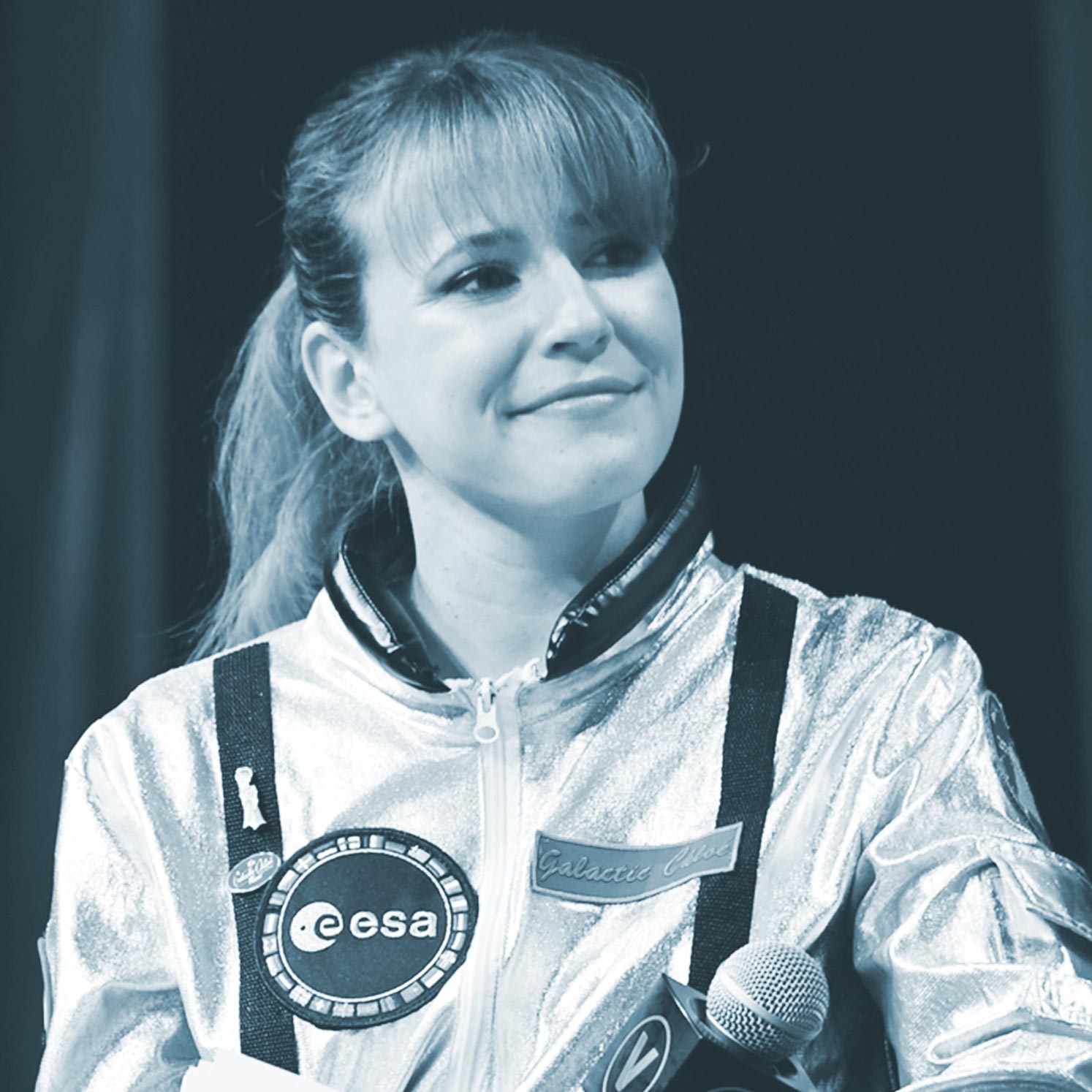
Chloé Carrière, also known as ‘Galactic Chloé’, is a Management of Technology and Entrepreneurship student at the Federal Institute of Technology Lausanne, where she specializes in space technologies. Besides her studies, she brings the science around space travel, astronomy and astrophysics to wider audiences by hosting her own show, ‘The Galactic Chloé Show’. As the creator of the student association Space@yourService, Chloé Carrière organises events, talks and lectures accessible to anyone interested in space travel and the science and technology behind it. She also founded the Asclepios program, the first student-led analogue space missions in Europe. Thanks to her engagements for the space community, Chloé was nominated as an Emerging Space Leader by the IAF and awarded ESA Champion. Chloé now wishes to be one of the first women to step on the Moon and to contribute to the future of space exploration