ESA title

Artificial Intelligence: European R&D strategies

All over Europe, governmental strategies and development plans have been set to stimulate and promote R&D for Artificial Intelligence (AI) and the solutions it provides.

At present, six countries have officially presented their AI strategy, as well as budget and scope. Finland, France, Germany, Italy, Sweden and the United Kingdom have announced investments ranging from € 200M for Finland to € 3B for Germany. All of them are planning, amongst others, to provide funding for new AI-dedicated laboratories and research institutes. Some have focused their strategy on specific sectors, such as Italy towards public services or France towards healthcare, transportation, environment and defence. Most of them also seek to attract AI investors to their country as well as to support the development and growth of innovative start-ups.

Although some countries do not have an AI strategy themselves, they have launched a comprehensive digital plan, in which the issue of AI is often discussed. This is particularly the case of Belgium, Denmark, Luxembourg and Spain.

The situation varies between different European countries, with some foreseeing the announcement of an AI-specific development plan (Estonia, Poland and Austria) while others rely more on the private sector in terms of R&D (Ireland, Netherlands, Norway and Switzerland).

The space sector was only explicitly mentioned in two of the AI strategies: that of France and Germany. The French Ministry of Defence have dedicated € 100M per year to AI (including space applications) while the UK will invest £ 93M into robotics and AI in extreme environments (including space).

French President Emmanuel Macron presenting the “AI for humanity” strategy at the AI Summit held at the College de France Research Centre

Post contributeD by  Julie Autuly

Tools: The open SAR toolkit

The Open SAR Toolkit – the API for SAR processing

There is a need for higher level processing software of SAR datasets for developers that don’t have deep remote sensing or signal processing backgrounds to still do interesting geospatial analytics. ESA Φ-lab is addressing this issue by working on such a tool with ESA’s SNAP Toolbox under the hood.

Initially, the Open SAR Toolkit (OST) was developed at the Food and Agriculture Organization of the United Nations (FAO) under the SEPAL project (https://github.com/openforis/sepal). It has now been completely re-factored and transferred into a simpler and less-dependency rich python3 version.

OST automates the production of small to large-scale Sentinel-1 time-series and timescan data and therefore lowers the entry barrier for pre-processing of Sentinel-1 data. Jupyter notebooks are developed on top of this core package and should help to get started.
The python package is available on our GitHub page (https://github.com/ESA-PhiLab/OpenSarToolkit) and can be easily installed using the python-3 pip package manger.

Sentinel-1 C-Band SAR | Credit: ESA

Post contributed by Andreas Vollrath.

Case study: Computer vision & food security issues

How images of cats and dogs can help solving food security issues?

Current development in Artificial intelligence shows the strong ability of computers to learn information about our world. One of the most applicable methods artificial intelligence can offer is generalization of information based on some examples. These approaches applied to a certain problems resulted in a great success. For example, in computer vision domain, machines are now capable to classify any image into one of around a thousand of object categories with the accuracy comparable or even better than humans. The roots of the successful methods come from biomedical discoveries of how mammal brains analyse visual information.

This way is now being reflected in artificial intelligence by so-called deep learning. But our brain is capable to analyse not only images from our daily life environment, but also can recognize objects in satellite or drone images. So, why do not apply deep 

learning techniques for Earth observation images? The only problem is that to achieve a good results, deep learning methods need a huge number of learning examples, which is typically not assured in Earth observations.

This is why Φ-lab is conducting a research on how methods and knowledge developed for computer vision can be transferred to Earth observation images via a process called transfer learning. Our first success was to show that general information learned by deep neural networks pre-trained on images of objects like cats and dogs can be very useful in crop types mapping on drone images.

Partnerships

This achievement is now being explored with our partners, World Food Programme and UNICEF Innovation for improving agricultural monitoring which helps manage food supplies and children’s welfare in developing countries.

Rohingya children playing at a UNICEF child friendly space. Credit : Anna Dubuis /DFIDComputer vision & Food security issues

Rohingya children playing at a UNICEF child friendly space. Credit : Anna Dubuis /DFID
Computer vision & Food security issues

Post contributed by Artur Nowakowski.

Case study: Swarm data analysis for precursor assessment

SWARM analysis using a data-driven approach Machine Learning

During a three month research sprint, an analysis of SWARM data was carried out to support existing activities which aim to identify possible earthquake precursors. To maintain an unbiased approach, unsupervised machine learning techniques were carried out to identify any possible correlations with earthquakes. In the timespan of the research activity it is has not yet been possible to confirm or deny the utility of SWARM data as earthquake precursors. However, a framework is being built which facilitates researchers to carry out similar, and more in-depth, analysis of multimission datasets, including SWARM, for precursor assessment of earthquakes and other phenomena, such as volcanic activity and lightning, using machine learning.

Case study: Mapping global palm (oil) plantations

Palm oil is nowadays the most common vegetable oil used globally. As the demand grows, the expansion of palm oil plantations in the tropical regions will remain one of the main drivers of deforestation, having a considerable impact on biodiversity and disrupt the carbon cycle. Although the current hot spot of production is located in South-East Asia, future expansion is expected for African and South American tropical regions. The monitoring of its current extent and future expansion is crucial for validating the recent efforts towards a sustainable production on a global scale.

Palm oil plantation in Indonesia | Credit: Aul Rah

Φ-lab on mapping global palm plantations

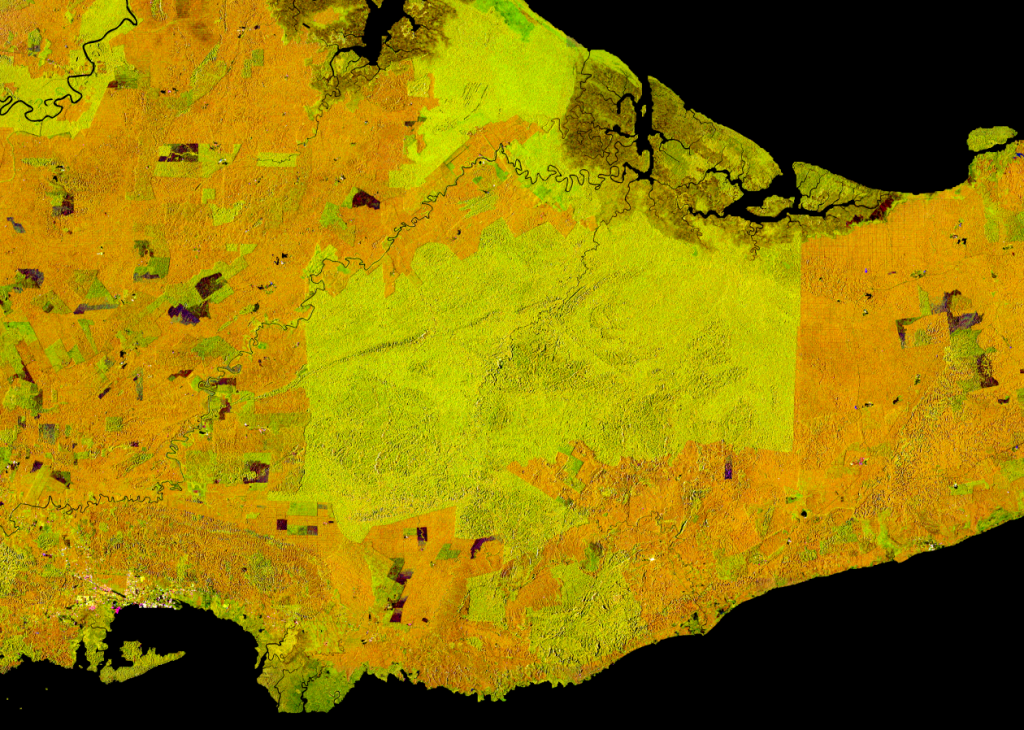
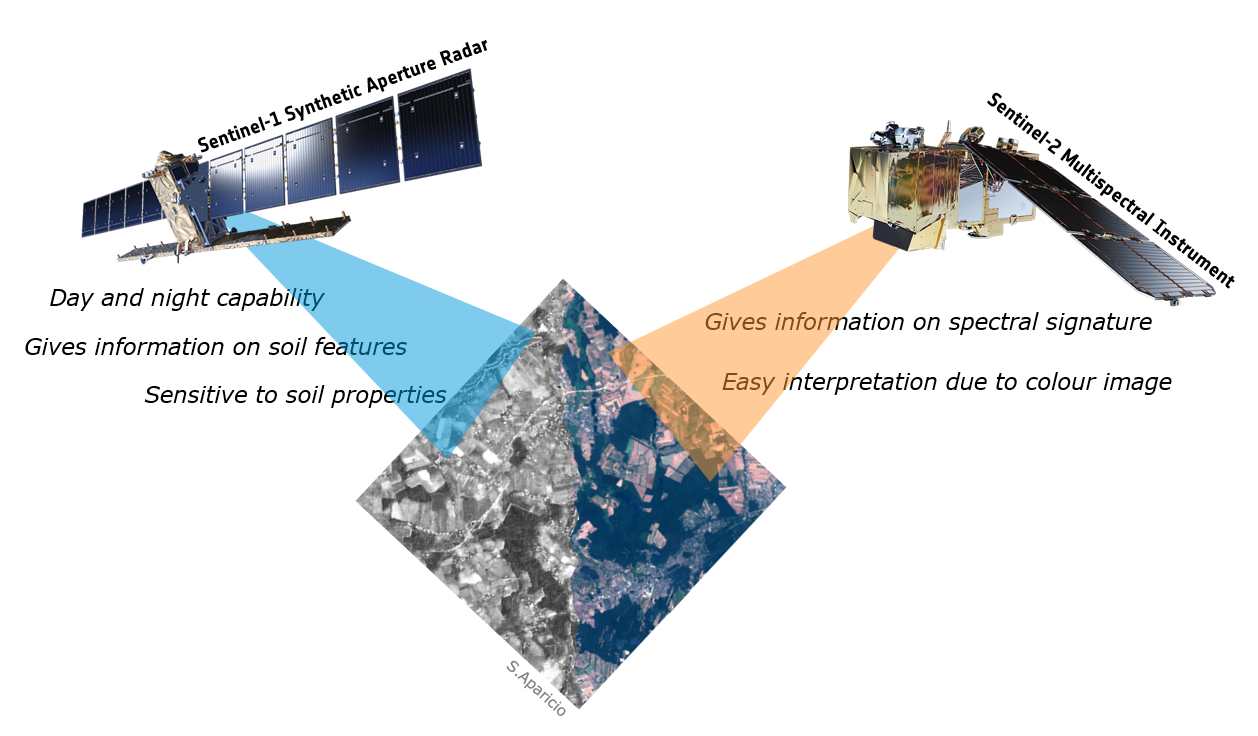
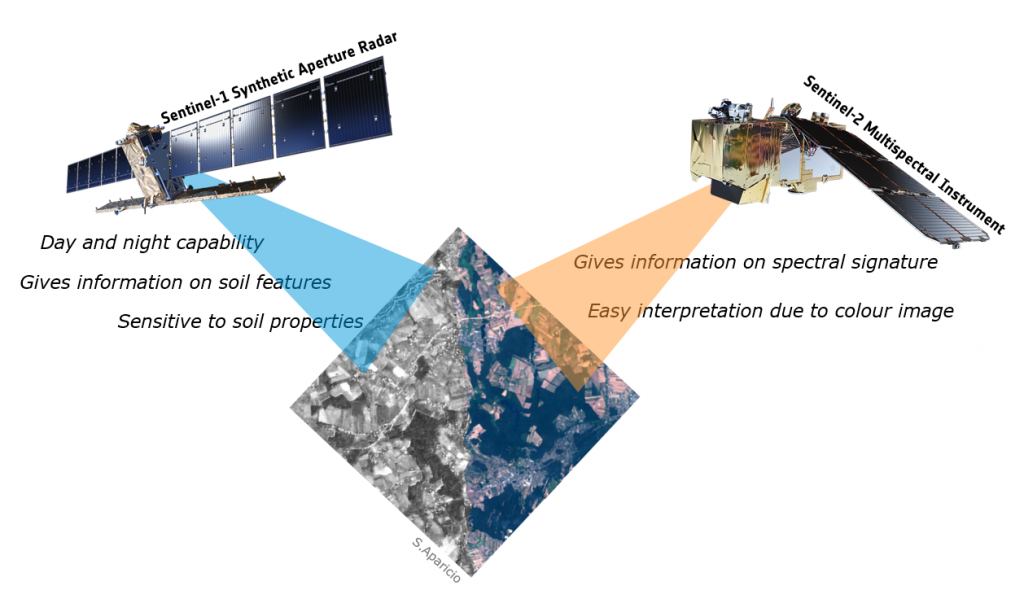
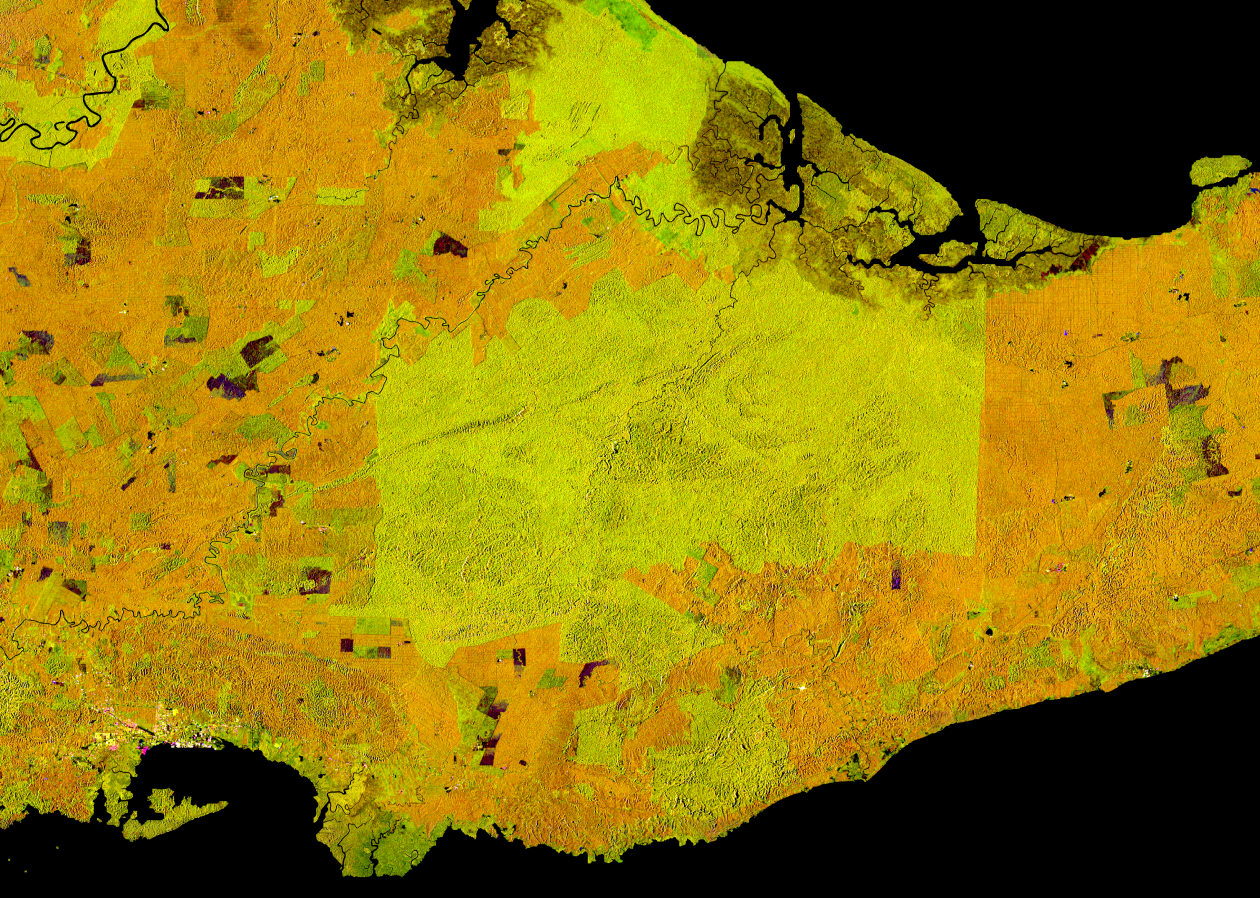
One of the main difficulties in mapping palm oil on a global scale is the regular cloud coverage over tropical regions and its spectral similarity to natural forests in the optical domain, which both hinders its applicability on a global scale. In this study taking part at Φ-lab, we overcome both limitations by using Sentinel-1 C-band SAR, ALOS-2 Palsar-2 L-Band SAR and SRTM elevation data. Traditionally L-Band SAR data is considered to be most efficient in mapping forested areas due to its long-wavelength signal that is capable of penetrating the canopy. In contrast, the strength of our method capitalises mainly on the dual-polarised VV/VH C-Band SAR data from Sentinel-1, which is particularly well suited to distinguish palm trees from other forest types.

Sentinel-1 C-Band SAR | Credit: ESA
Alos-2 Palsar-2 L-Band SAR | Credit: EORC, JAXA

In addition, the 12-day revisit cycle of Sentinel-1 allows for the creation of dense time-series. The temporal behavior of the backscatter is then captured by using a timescan method, which depicts the usage of descriptive statistical parameters for every pixel in the full time-series. This helps in reducing the influence of environmental conditions and adds further strength in discriminating palm oil plantations. Simultaneously, the amount of data used for classification is reduced when compared to the full time-series and the number of input channels into the subsequent machine learning algorithm is standardized.


The drawback of this method is the huge amount of data pre-processing. To overcome this obstacle, we utilize the online platform Google Earth Engine that allows for the planetary-scale application of Earth Observation data.

Post contributed by Andreas Vollrath.
Workshop on Quantum Computing

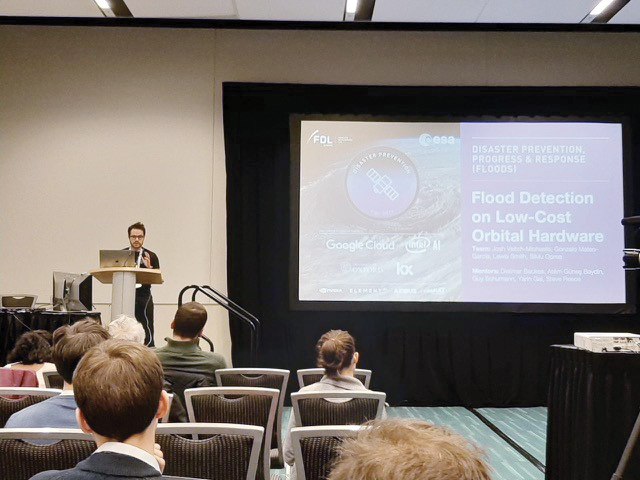
This event was conceived during a mini-workshop on Quantum Computing for Earth Observation which was held on 15 November 2018 at the ESA Φ-Week in ESA’s ESRIN establishment in Frascati, Italy. At this event representatives from the quantum computing community, from both academia and industry, met with Earth Observation practitioners. The objective was to explore possible synergies between the two technologies to stimulate their further development and to accelerate their impact for societal benefit. The focus of the workshop was on the application of quantum computing for downstream data processing and Earth observation data exploitation.

The workshop aimed to prepare the ground for the opportunities that will be presented when the quantum community will be able to produce software for quantum-enhanced optimisation problems of direct use in big data management. Together with machine learning, quantum computing has the potential to be a game-changer in data science and applications.

Φ-lab GitHub

Phi-Lab is on GitHub!

You can now access, host and review code – and join us on moving ideas forward. Phi-Lab is on GitHub to enable access and collaboration on working through Earth Observation-related challenge together. To access ESA-PhiLab GitHub just click the image below!

Curious about what is GitHub?

GitHub enables developers to create something (an app for example), making constant changes to the code and release new versions of it before its final version. ‘Git ‘- a version control system, allows to store these modifications in a central repository easing collaboration between developers as they can get the new version of the app, make changes to it and upload the its new version. Anyone can access these new changes, download them, change them and upload them again. 

The ‘Hub’ is where all takes place, where people can store their projects and network with other developers. Find more about GitHub here.

ESA’s Φ-Week 2018

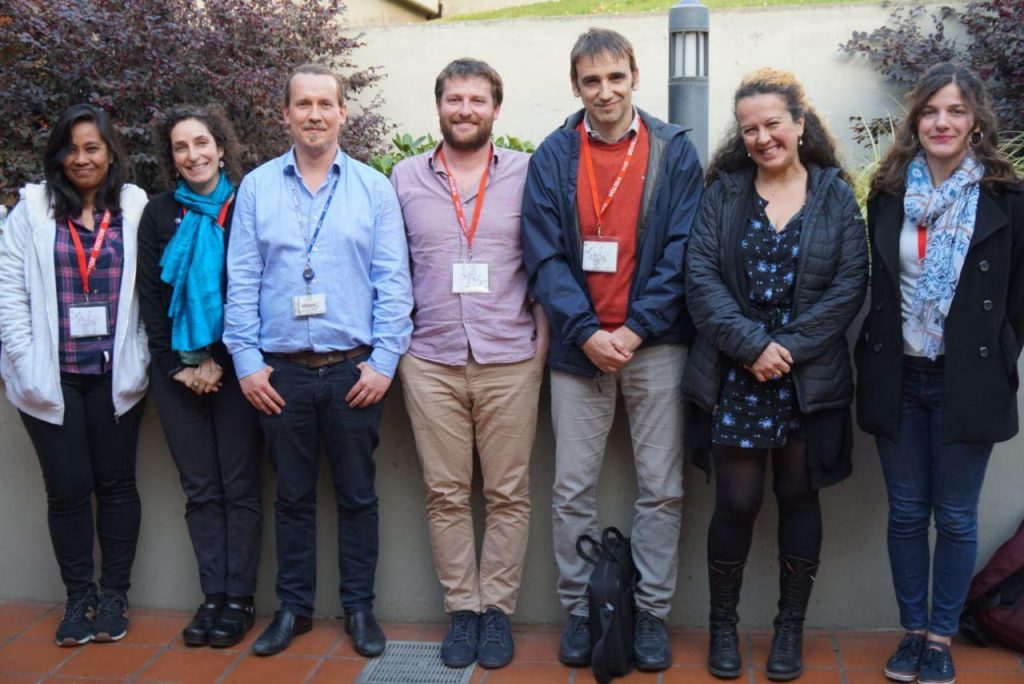
The European Space Agency (ESA) is organizing a Φ-week event focusing on EO Open Science  and FutureEO – to review the latest developments in Open Science trends and kick-start innovative activities of the recently created Φ-department looking at FutureEO, and its associated Φ-lab aiming to identify, support and scale bold EO ideas. The event will be hosted in ESA-ESRIN from 12-16 November 2018.   

The Φ-week will include a variety of events (e.g. inspiring talks, workshops, roundtables, startup pitch, hackathons) to connect multi-disciplinary communities – from EO researchers, data scientists, non-space corporate, tech leaders, entrepreneurs, up to startup and innovators – to (i) explore together how EO Open Science and innovation can benefit from the latest digital technologies and (ii) help shape FutureEO missions and services. Come and hear about the latest trends in EO – registrations are open unitl 4th November!

In case you cannot join event, you can watch live streamed. For #PhiWeek highlights follow ESA’s social media @ESA_EO and @EO_OPEN_SCIENCE which will be covering the event.

Artificial Intelligence for Earth Observation #AI4EO white paper

Towards a European AI for Earth Observation Research & Innovation Agenda

Over the last decade, rapid developments in digital technologies and in Earth Observation (EO) satellites have led to new and huge opportunities for science and businesses. There is an increasing need to mine the large amount of data generated by the new generation of satellites coming online, including for example the Copernicus system and New Space. Artificial Intelligence (AI) is certainly one important part of the full solution, enabling scalable exploration of big data and bringing new insight and predictive capabilities. 

In order to better understand how AI can impact the world of EO, ESA has convened a community workshop at ESRIN (Frascati) with experts in the domain. This document summarises their recommendations.

Open call: Ideas wanted

ESA is offering over 100 opportunities for industry, start-ups and scientific institutions to develop innovative ideas that bring Earth observation science closer to society.

ESA’s EO Science for Society programme aims to promote scientific exploitation of satellite data, pioneer novel applications and develop pre-commercial services while maximising the use of information and communications technologies.

The initiative also promotes community engagement and dialogue to increase the exploitation of scientific data while fostering an ‘open science’ environment through the use of digital and social media. In addition, the use Earth observation for the implementation of the UN Sustainable Development Goals is a key goal.

In response to a direct request by Member States, EO Science for Society has a permanently open call to apply for financial support to initiate activities that will meet the goals of this programme. 

“The initiative aims to boost European industry and scientific institutions by helping them to exploit Earth observation data and other resources in the competitive global market to develop platforms for enhanced large-scale data exploitation,” said Josef Aschbacher, Director of ESA’s Earth Observation Programmes.

For more information about this permanently open call click here.

To submit a proposal, click here.