The Frontier Development Lab (FDL) is an AI accelerator scheme based on a 8-week intensive research sprint addressing global challenges of our planet with AI and data. The initiative originated with NASA a few years ago and has now been extended with ESA, to Europe. FDL is an interdisciplinary PhD-postdoctoral level research programme that applies AI technologies to science. The scope is to push the frontiers of research and develop new tools to help solve some of the biggest challenges of our planet. These range from the effects of climate change to predicting space weather, from improving disaster response, to identifying meteorites which could hold the key to the history of our universe.
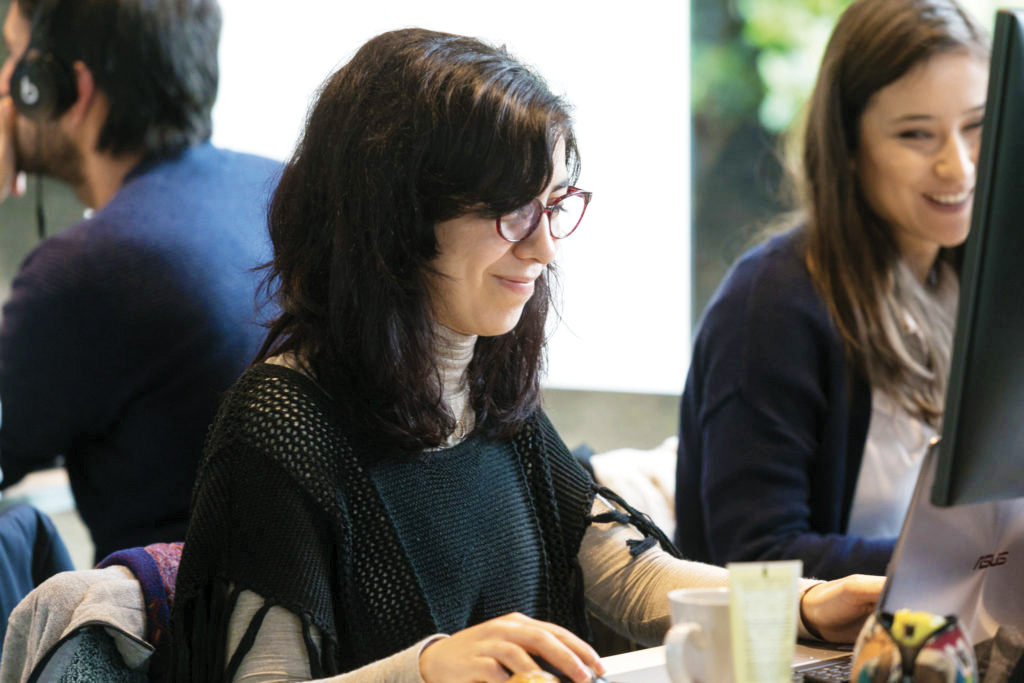
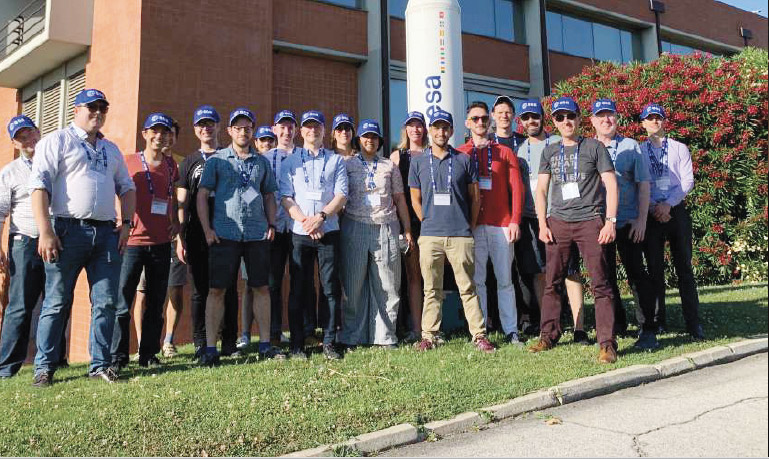
FDL Europe participants in ESRIN (ESA’s Center for Earth Observation). Credits: FDL Europe
In particular, FDL Europe is demonstrating the potential of ML for both scientific progress and discovery as well as new paradigms of engineering, from putting AI onboard spacecraft, to helping identify informal settlements. The central value is that subject experts – with deep knowledge of the problem domain – can develop AI enhanced work-flows and solutions with peers from the data sciences. The challenges have been coached by EO and AI specialists.
In 2018, FDL Europe in partnership with the European Space Agency, hosted a research sprint at the University of Oxford with a kick-off at Φ-lab premises. With the support of NVIDIA and the Satellite Applications catapults, two teams of researchers tackled challenges under the mission area “Mission Control for Planet Earth”. The research sprint was a great success and the outputs showed the great potential of Mission Control for Planet Earth. One team of researchers focused on identification and of mapping informal settlements to enable governments and aid agencies to better support these communities and a second team focused on the development of an AI technique, Multi3Net, to drastically reduce the time and effort required to create effective disaster impact maps to aid disaster response.
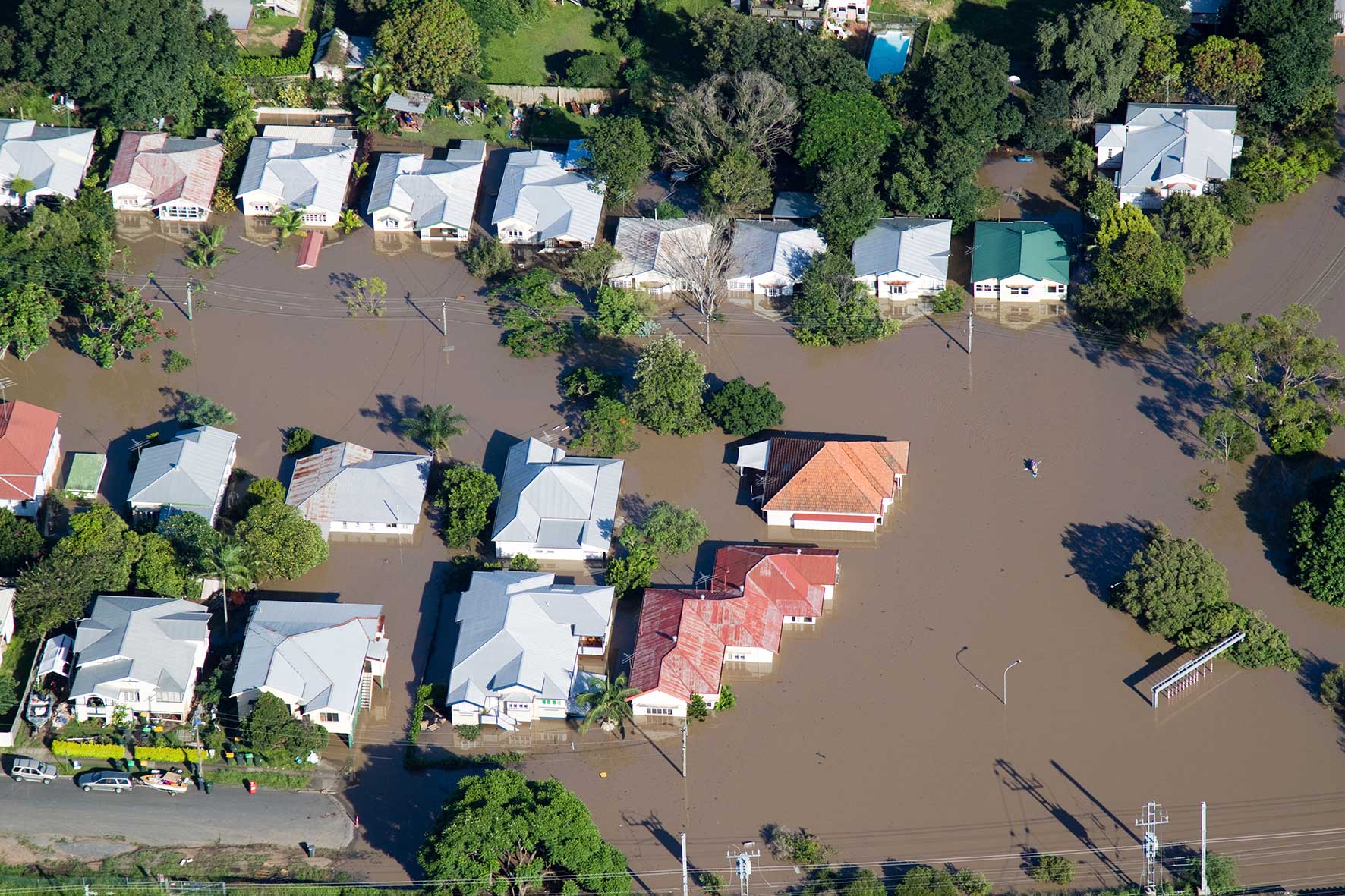
In 2019 the challenges included on-board ML for Disaster Response (Floods) and Atmospheric Phenomena for climate variability. The Floods team produced numerous innovations in onboard ML including a whole earth-scale pre-processed and labelled training set for flood segmentation called WorldFloods. The Climate team produced a valuable data product for the climate change community. CUMULO, a legacy of this project consists of a benchmark cloud data set for training and evaluating cloud classifiers at high spatial and temporal resolution.
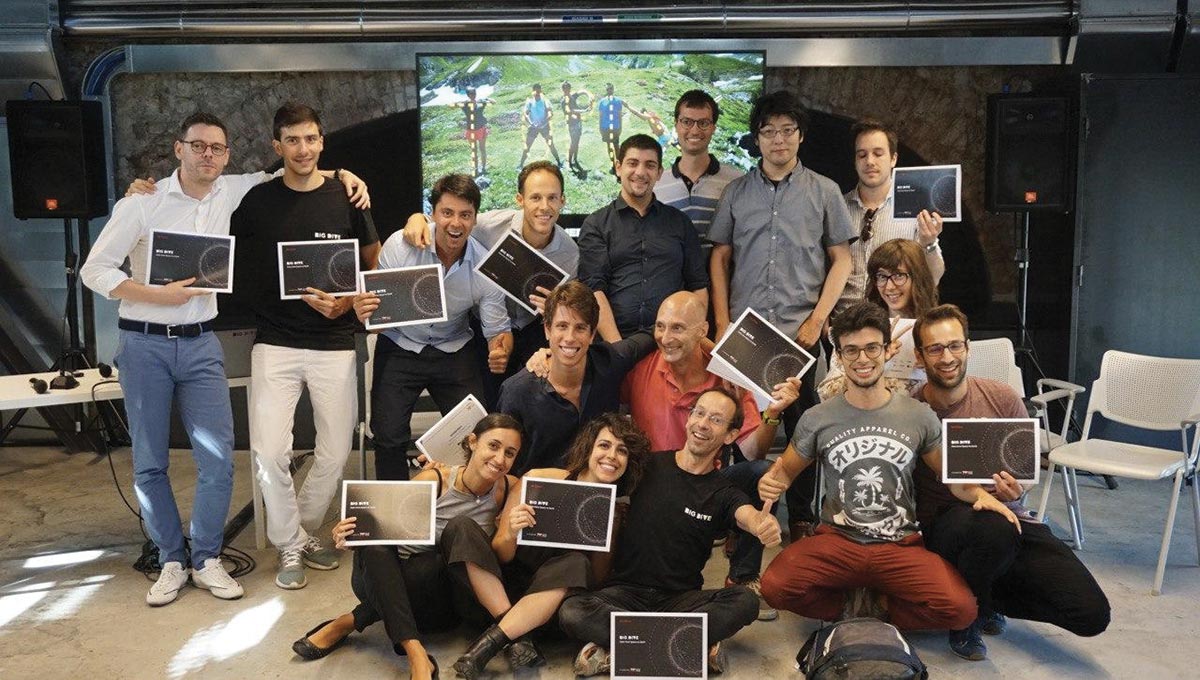
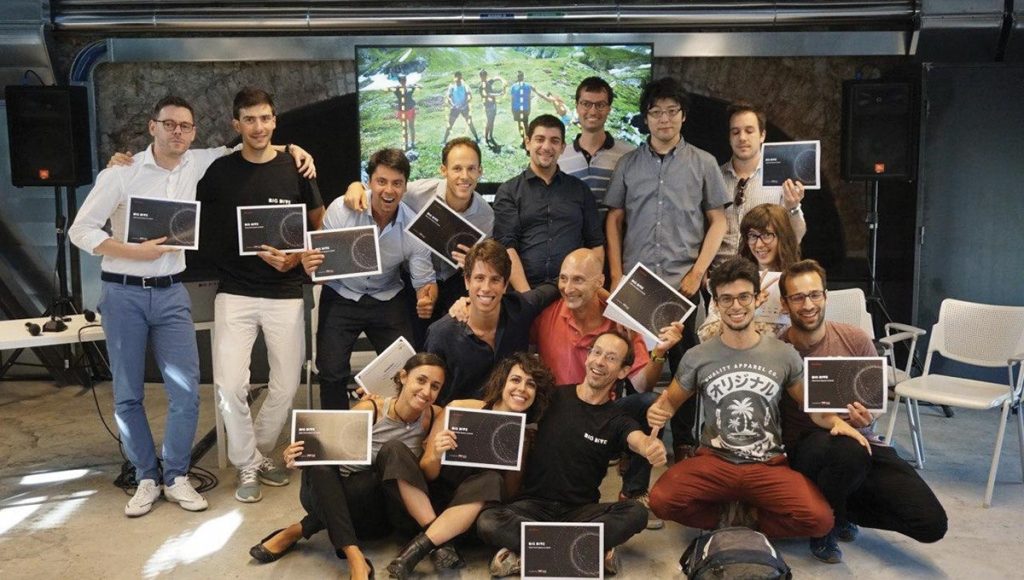
BIG DIVE is an initiative, organised by TOP-IX, ISI Foundation, AXANT offering private and public training on Data Science, Machine and Deep Learning, Data Visualisation, and Data Engineering. The BIG DIVE platform presents itself as an interactive “ street-fighting gym” which puts the raw material – in the form of high value datasets – into the hands of “ambitious smart geeks” tutored and mentored by experts in three key areas: Development, Visualization and Data Science. Courses include lectures by experts in the field and the latest resources and technologies.
Group picture of BIG DIVE participants. Credits: BIG DIVE.
In 2019, the focus for BIG DIVE 8 was space data and satellite images.
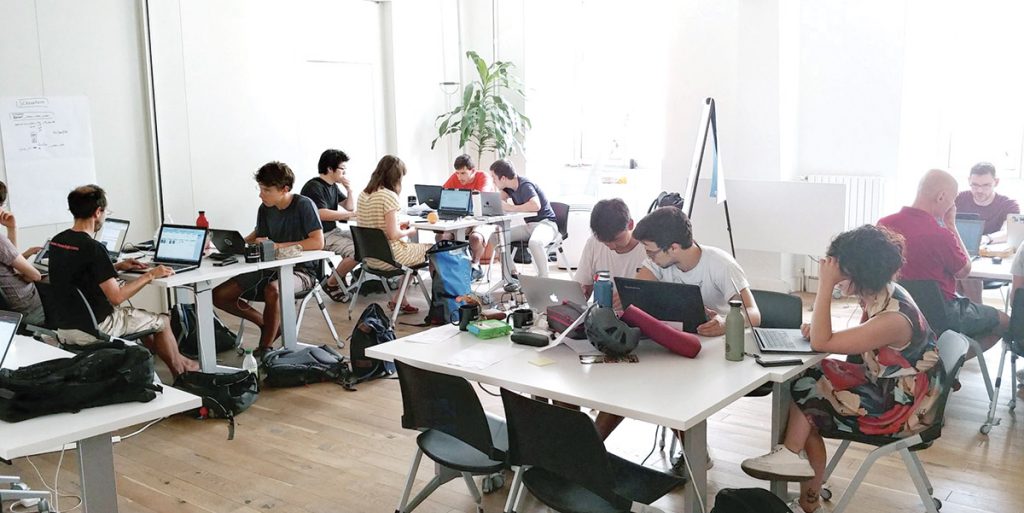
ESA as one of the main data sponsors collaborated from the beginning to decide the datasets for two of the final projects, ensure the challenges were up to date and relevant and prepare the class to tackle the real-world problems in the space sector and machine learning in general. The three-week training covered the necessary programming and data skills, the best approaches to predictive models, and lectures in the space industry by ESA, Target Detection, Starlab, and forefront research centres. The final week the students, mentored by the teachers, worked and presented four final projects on diverse fields such as urbanization, polar regions, agriculture, atomic clocks and space weather.
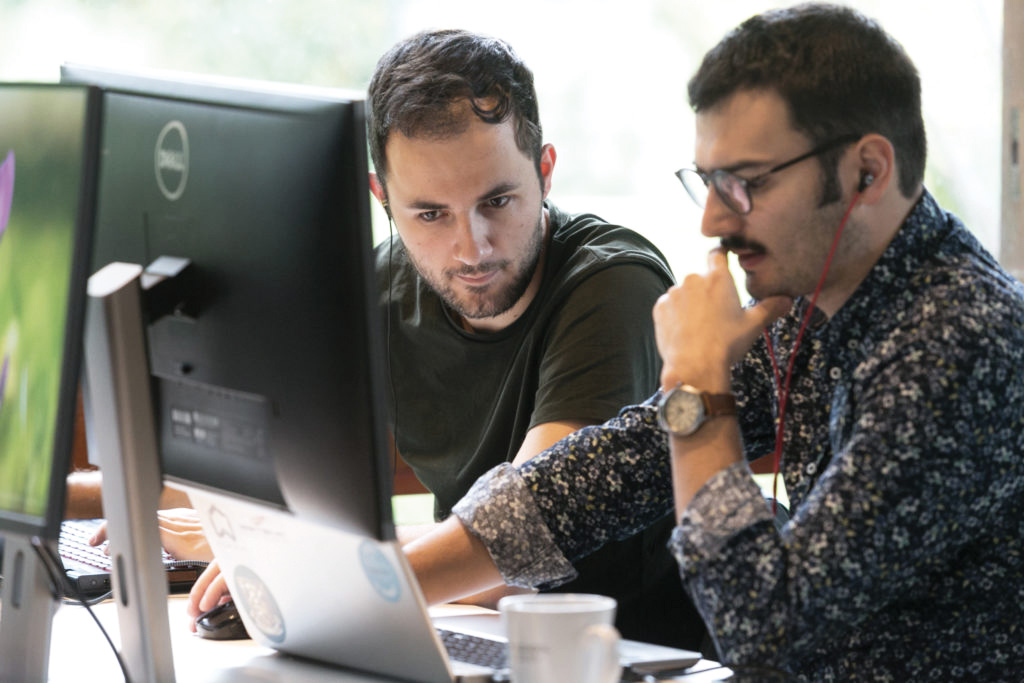
BIG DIVE participants working on the challenge. Credits: BIG DIVE.
One of the projects was the set up of an image recognition challenge with sea ice images a dataset of high-resolution Copernicus Sentinel-1 satellite images on a selected polar area. An ML system for the detection of ice presence and concentration was developed in order to automatically produce an ice map. The group explored the concentration of ice using the ASIP sea ice data set of 26 files in NetCDF format. From that data they extracted matrices and transformed them in order to feed the ML model. The trained a U-net model and evaluate the quality of the learning by using the Jaccard coefficient. Normally, the interpretation of the ice charts is done manually, therefore the project was an important attempt in making the process automatically and faster to allow in the future a scalable approach.
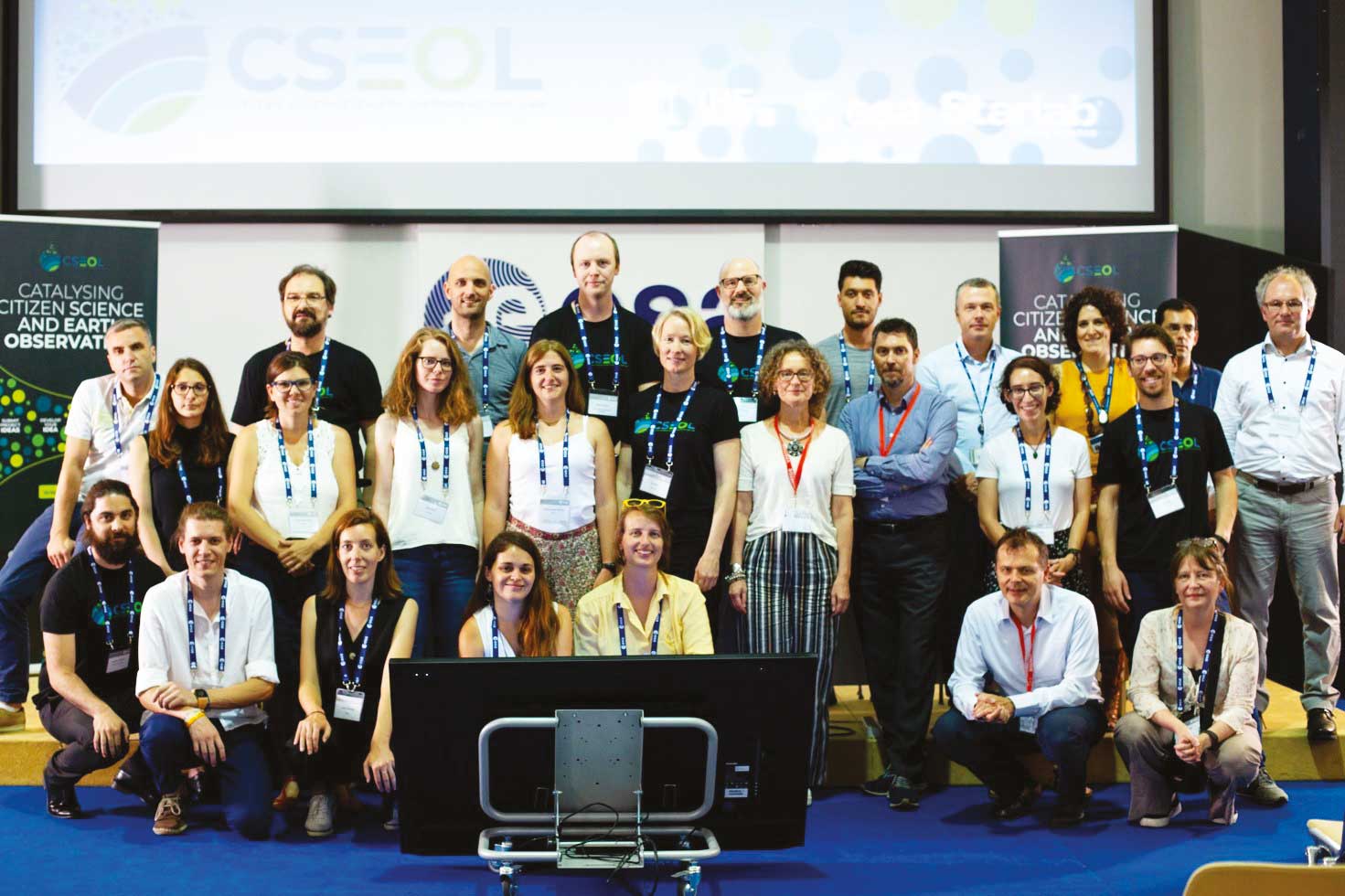
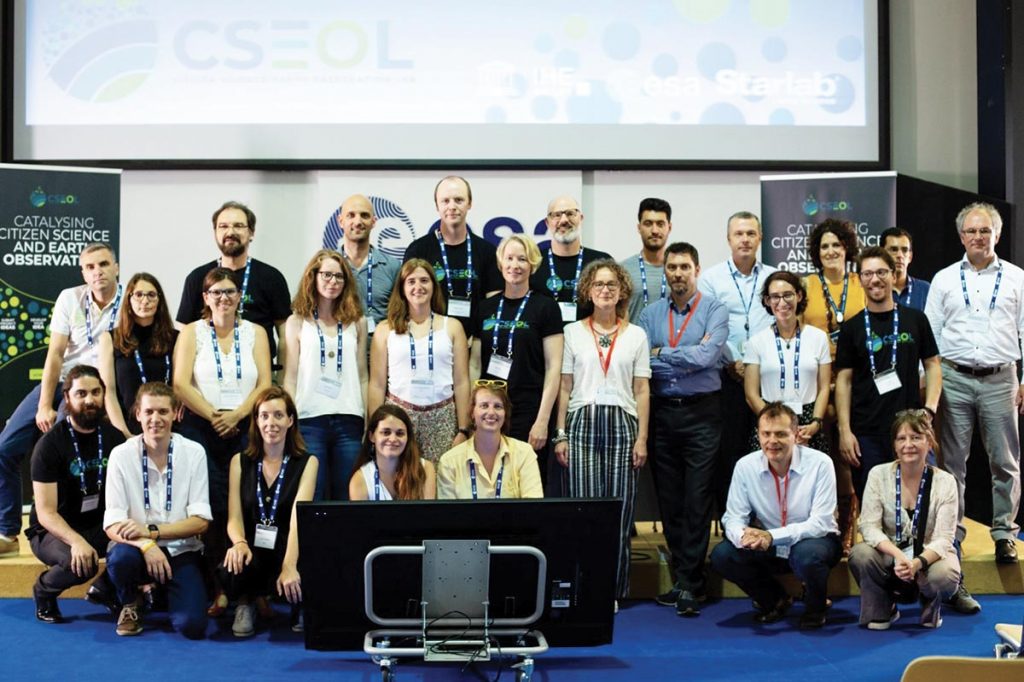
Esrin-ESA hosted the CSEOL Bootcamp and Pitch Day from 9–11 July 2019. The bootcamp, organised by the ESA-funded Citizen Science Earth Observation Lab (cseol.eu), prepared nine innovative teams from Europe and beyond on the topic of Earth Observation and Citizen Science. The overall objective of the Citizen Science Earth Observation Lab (CSEOL) project is to generate, implement and validate a methodology to continuously feed new Citizen Science projects and ideas, engaging with a wide community of users of EO data and providers of information to foster the use of EO.
Group picture of the participants of CSEOL bootcamp. Credits: CSEOL.
About 30 participants worked in teams to shape their proposed projects, guided by Citizen Science and Remote Sensing experts offering one-to-one on-demand clinics for each team in the two-days bootcamp. During the Pitch Day, the nine projects teams delivered their pitch to a high-level judging panel for competitive funding. The winning CSEOL ideas were announced in the closing ceremony of 11 July.
CSEOL’s Innovation methodology was based on three key phases – Ideation, Greenhouse and Implementation. The CSEOL bootcamp and Pitch day take place in the final part of the Greenhouse phase. Pilot projects selected and awarded during the Pitch day progress to the Implementation Phase, in which innovative ideas are developed and brought to concrete projects. The proposed projects entering the Implementation Phase to continue their experience in the CSEOL project were:
1.Phenotandem: Harmonised phenology products from optical satellite and citizen science observations. This project aims to create new phenology data combining in-situ observations and remote sensing products such as those provided by Sentinel-2. It will increase data quality for phenology at scale that has not been done before. The PhenoTandem team also participated in the Copernicus Roadshow and presented PhenoTandem in television programs in Spain.
2.IceWatchApp: A mobile phone application for sea ice observations. This project developed a data collection functionality, including attachment of photos from mobile devices, of its app for use by citizen scientists to map sea ice. These photographs will enhance satellite data from the Copernicus Sentinels and other missions where the lack of data from the Polar Regions hinders the development of automatic classification products. The IceWatch was the runner-up in the Nansen Poster Award, at the Arctic Frontiers Conference.
3.Schools and satellites (SaS): a reliable rainfall product for West Africa. This pilot project focused on the acquisition of ground and satellite data and interacted with citizen scientists on how to improve data collection as well as how to build the rain gauge from plastic bottles. It combined citizen science-based monitoring and a new satellite rainfall product which will use diverse sensors onboard Sentinel satellites. SaS also launched an initiative to collect smartphones that will be re-used by citizen scientists in Ghana.
4. Sentinel Citizen: setting foundations for atmospheric commons. The Sentinel Citizen pilot project contributes to enhancing air pollution forecasts through EO data in local communities in North Holland, with which they can influence policymakers to develop policy-oriented actions. For validation, data from the TROPOMI instrument and from the CAMS will be used. Sentinel Citizen delivered a project web page, presented the Sentinel Citizen project at different events and organised a workshop in the Netherlands.
5.MySnowMaps: Dynamic mapping of snow conditions. This pilot project displays convenient information in the form of maps of snow depth over large areas. It uses an innovative technology mixing physical models and satellite data and shares snow data for monitoring the water resources and improves the consciousness of the users. MySnowMaps has already developed the Android version of the MySnowMaps app which is now available in the Google Play Store. The team also organised a prize contest for engaging the citizen scientist community. MySnowMaps was featured on the Italian national television (RAI), a programme dedicated to innovation.
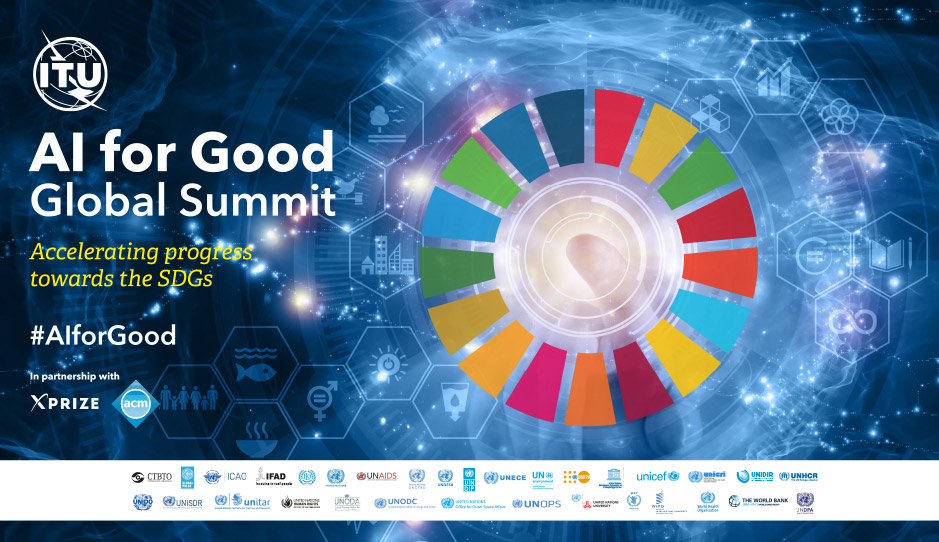
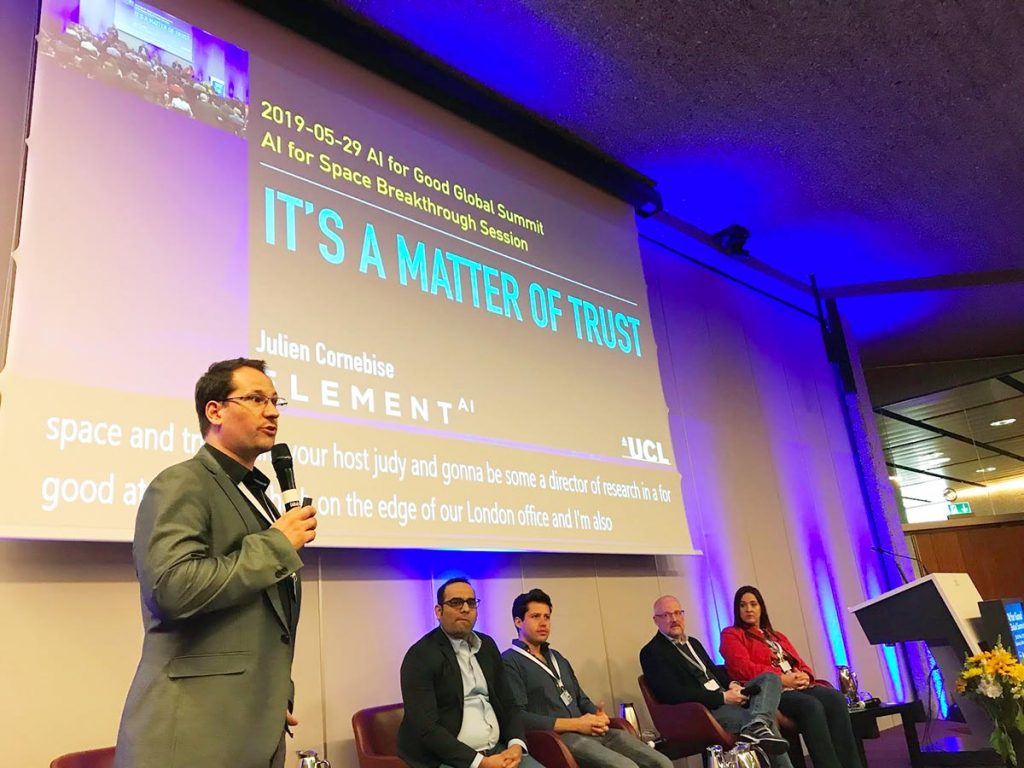
AI 4 GOOD was organised on the 28–31 May 2019, in Geneva, Switzerland by ITU (itu.int) in partnership with sister UN agencies, the X-Prize Foundation (xprize.org), and the Association for Computing Machinery (acm.org). The “AI for Space” session hosted inspiring talks from top industry professionals, focusing on areas where AI techniques can be applied to space datasets in order to accelerate progress towards the Sustainable Development Goals (SDGs). It also covered the processes, infrastructure and ethical considerations when using this powerful technology to protect our planet and generate benefit for all humankind. The session was joined by Pierre-Philippe Mathieu, Head of Φ-lab Explore office, who presented cutting edge use-cases, methodologies and emerging best practices to delegates, including the fusion of ESA data sets to create enhanced products and ways of working with partners to build consortia to tackle complex challenges such, as the SGDs, using space technology.
Participants at AI 4 Good Global Summit. Credits. AI 4 Good.
The discussion placed emphasis on the potential for AI and space to unlock a new era of planetary stewardship – leveraging AI’s unprecedented capacities for prediction and rapid understanding of complexity on both a local and global scale. The session involved evaluations on the current state of play in AI and Space, barriers to deployment and real-time insight and equitable access to data. It identified projects related to SDGs where AI and Space fields can be combined to deliver a positive benefit to humanity and discussed opportunities for interdisciplinary cooperation to move forward in areas such as data accessibility, trust, algorithmic inequity, and accountability.
The Rise of AI event is one of the leading global conference for AI. In Berlin, 2019 Rise of AI hosted over 800 investors, CEOs, researchers, politicians, entrepreneurs and enterprises.
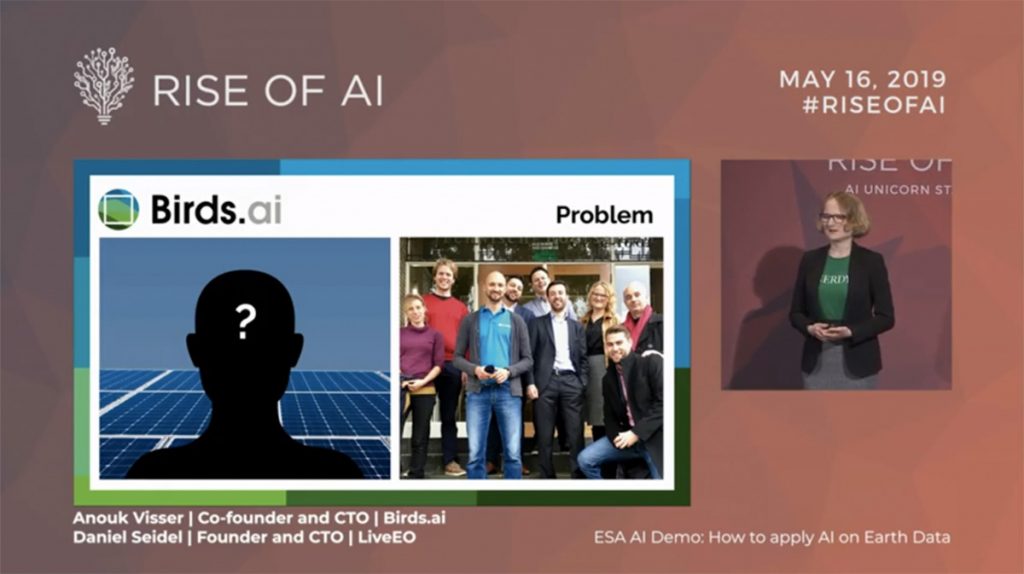
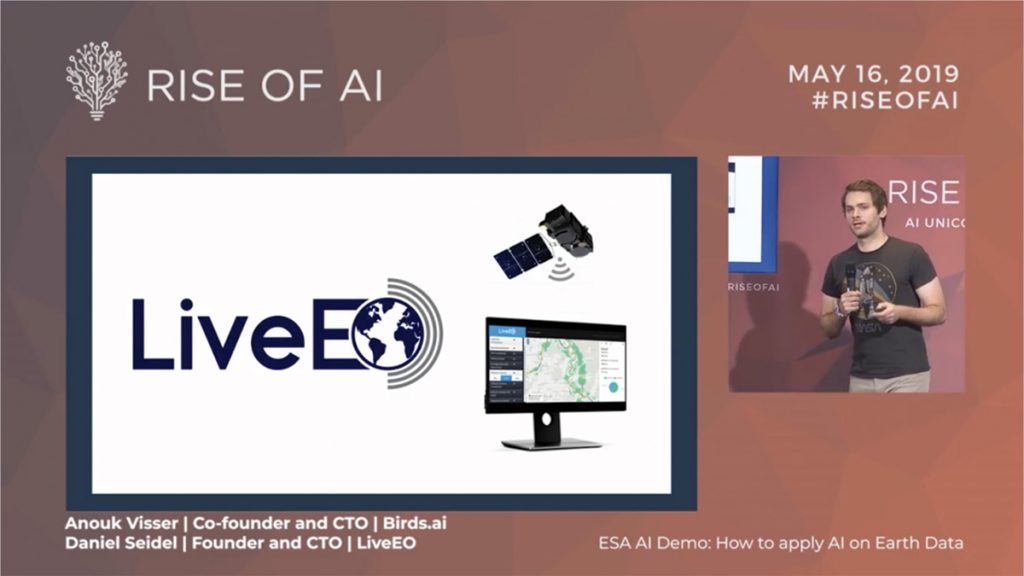
ESA participated with the AI demo: how to apply AI on Earth data. This demo, supported by the Φ-lab, focused on how to get insights out of satellite imagery with AI. The demo allowed selected AI start-ups seeking to exploit the opportunities brought by this disruptive domain, to present themselves through a set of talks.
LiveEO mastered the challenge of handling big data and showed how it is disrupting the utility sector. LiveEO uses satellite imagery to provide innovative infrastructure monitoring in the verticals railway, electricity and pipelines networks. It provides a solution which uses satellite data to identify risks to operations from vegetation, height changes and third party interaction along networks, enabling operators to work more efficiently.
Another startup, Bird.ai showed how they are giving customers insight into the degradation of their assets so they can proactively perform maintenance in order to keep them in top-condition. Their toolset contains artificial intelligence, machine learning, and predictive analytics. With this, Birds.ai creates intelligent analytical software for anomaly checks, functional statistics, and intelligent monitoring.
Start-up pitching at the Rise of AI (top) LiveEO, (bottom) Bird.ai. Credits: Rise of AI
Quantum Processing of Big Data: from Quantum Computing to Earth Observation
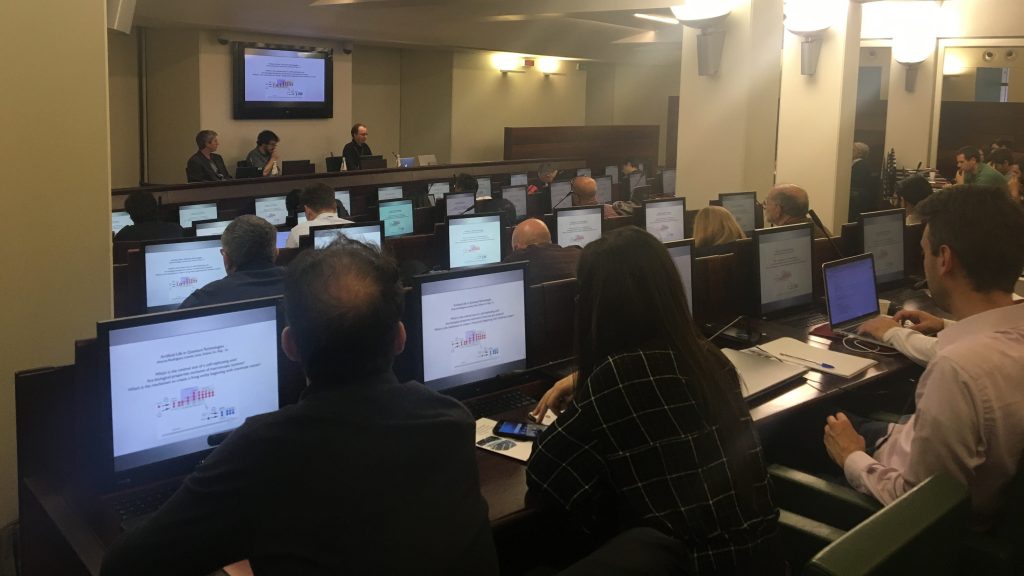
On 3 April 2019 a workshop was held at La Sapienza University in Rome, on the application of Quantum Computing for Earth Observation (with a focus on downstream data exploitation). The workshop had the following aims:
Introduce the Quantum Computing and Earth Observation communities (from both research and industry)
Explore possible synergies between the two technologies
Prepare the ground for the opportunities that will be presented when the quantum community will be able to produce software for quantum-enhanced optimisation problems of direct use in big data management.
The workshop was jointly organised by ESA, the COST Action QTSPace (CA15220) and La Sapienza University of Rome. It was held on the occasion of the Fifth Quantum Technologies Conference.
This is a short MOOC from ESA which consists of a series of interviews with leading experts across Earth Observation and related technologies. This MOOC also acts as an additional section for the ‘Earth Observation from Space: The Optical View’ MOOC.
The explosion in Earth Observation (EO) data from the Sentinel programme, a new generation of commercial satellites, and emerging constellations of small-sats, has created one of the greatest ‘big data’ challenges in the world today. In this course you will explore technologies such as AI, 3D data visualisation, cloud computing technologies and blockchain, and learn how they are meeting the needs of the ever growing data analytics and data navigation challenges in EO.
Enroll now in the course, clicking on the image below.
The Pi School is a next-generation school focused on building a better future through technology and creativity. The Φ-lab brought two EO challenges to Pi school to be developed over the course of eight weeks. The projects exploited free and open data from Europe’s Copernicus satellites, whose data is useful for a range of applications in various domains, from climate change to urban planning. Both projects demonstrated new aspects of the use of AI in terms of climate change and sustainability.
The first challenge addressed the agriculture sector and aimed at developing a proof of concept that will help monitor the crop fields all over Europe. The proof of concept, “SmartCrop”, was the result of work carried out during the eight-week programme. It aims at distinguishing different types of field crops contains (soybean, wheat, corn, etc.) using satellite images and deep learning techniques. Crop classification served as a starting point for several use cases related to improving the current state of the art in the field of agriculture by using AI. Adding space-based observation data to traditional crop-forecasting models enables more accurate harvest predictions and helps farmers to monitor the health of their crops and plan deployment of fertilisers.
Another challenge, also sponsored by Φ-lab was to explore the available solutions that will enable countries to to monitor emissions and improve adaptation and mitigation efforts – through air pollution forecasting. This eight-week challenge aimed at predicting levels of air pollution and air quality, through mathematical simulations of how pollutants dispersed in the air. This downscaling air quality forecast used Copernicus Atmosphere Monitoring Service (CAMS), and Sentinel-5P, to create a weather-forecasting model developed with deep-learning techniques.
Jamila Mifdal and Teodora Selea at Φ-lab developing the eight-week challenge and presenting the proof of concept that will help monitor the crop fields all over Europe. Credits: PI School.Luka Sachsse and Maximilien Houël teamed up for eight-weeks at Φ-lab and presented the enhancement of weather-forecasting model working at based on EO data and deep-learning techniques. Credits: PI School.
The Quantum Computing for EO workshop will take place in April 3 in La Sapienza University in Rome.
At this event representatives from the Quantum Computing community, from both academia and industry, met with Earth Observation practitioners.The aim was to explore possible synergies between the two technologies to stimulate their further development and to accelerate their impact for societal benefit.
Read the event page to find more information about the workshop.
Machine Learning glossary: some false friends in Earth Observation and Computer Vision
Quick introduction
If you are an expert in Earth Observation (EO) and you would like to apply the latest methodologies of Machine Learning like Deep Convolutional Neural Network to carry-out EO analysis in a data driven approach, or if you are an expert in Artificial Intelligence and you would like to apply your knowledge in Computer Vision in a Remote Sensing domain, you might want to make sure that you have the correct meaning of some words in mind when you migrate from one domain to another.
Beware of false friends
#1 CLASSIFICATION
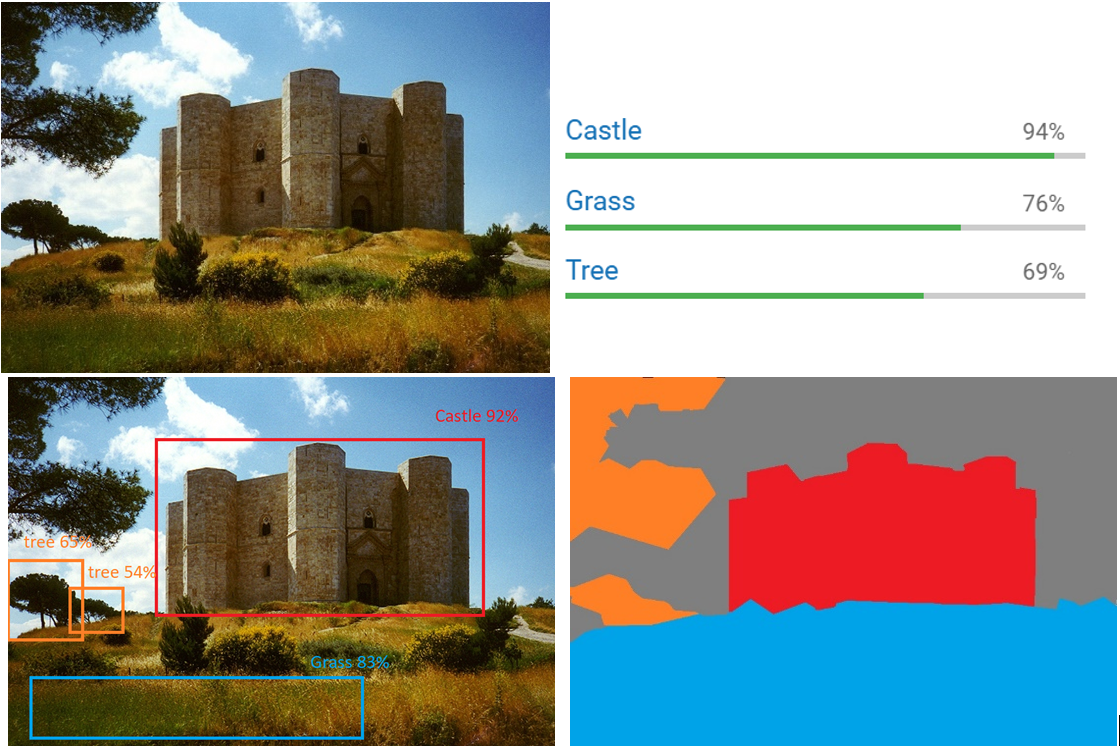
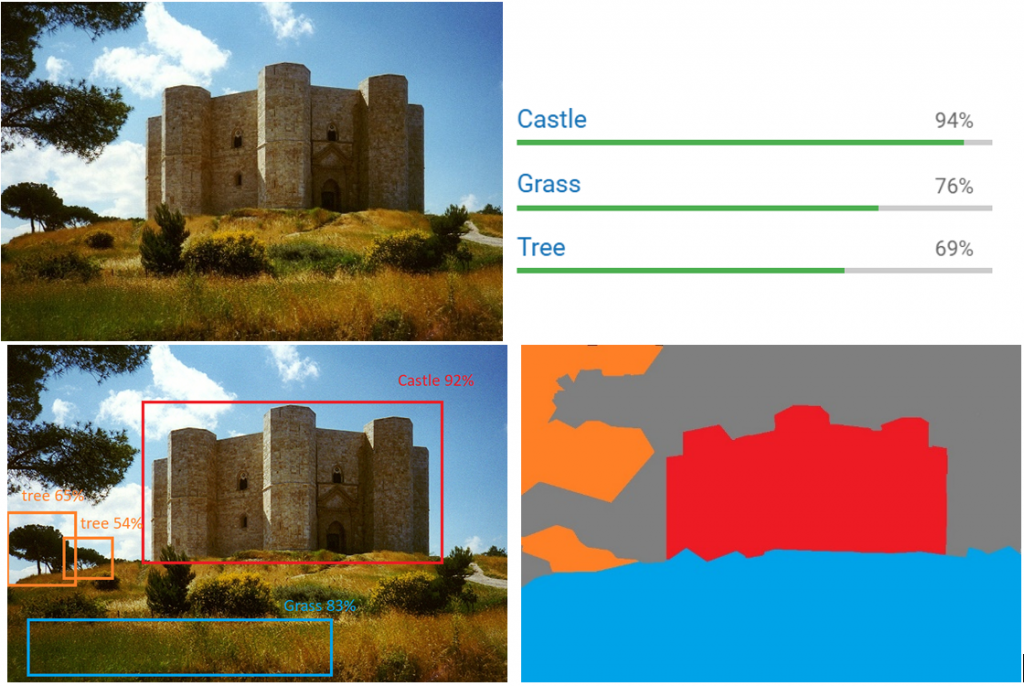
One of the first differences in wording I have noticed is related to the word classification: in Computer Vision the word classification includes the type of Supervised Learning problems which has classes (e.g. good, bad) as output type. This includes different types of sub-categories:
Image Classification: the model predicts if a certain class (e.g. cat, dog etc) is present in the picture
Object Detection: the model predicts if a certain class (e.g. cat, dog etc) is present in the picture and where it is located (e.g. Bounding box and location)
Image Segmentation: the model predicts for each pixel in the image the class that it belongs to
Figure1 Top left: example of Input image; top right: output of a classification; bottom left: output of an Object detection; Bottom right: output of image segmentation.
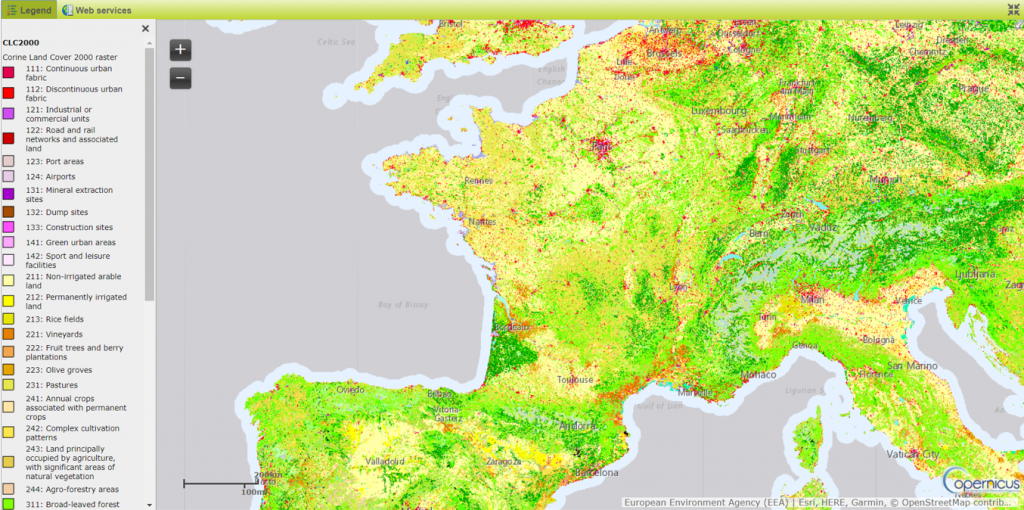
In Earth Observation the term classification includes a set of different products like Land cover or Land Use. An example of this is the Corine Land cover in Figure 2.
Figure 2: Example of Land cover classification
As you can see those types of EO products are the equivalent of an image segmentation in the computer vision domain but the wording in EO comes from the objective of map which is actually to classify –in this case- the different type of Land Cover.
#2 VALIDATION DATASET
Another element of misalignment which I have noticed sometimes between EO experts and Computer Vision experts is related to the usage of the term validation datasets.
In Computer Vision or more generically in Computer Science, the standard approach in Supervised Machine Learning is to split the dataset in Training, Validation and Test sets. Where:
Training Dataset: The sample of data used to fit the model.
Validation Dataset: The sample of data used to provide an unbiased evaluation of a model fit on the training dataset while tuning model hyperparameters. The evaluation becomes more biased as skill on the validation dataset is incorporated into the model configuration.
Test Dataset: The sample of data used to provide an unbiased evaluation of a final model fit on the training dataset.
On top of this, once the model is transferred to a production/operational chain, it is important to evaluate its performance also there.
In my experience, the meaning that the Earth Observation domain associates to the term “validation” is inherited more from the software engineering field where the validation process aims to verify that the system is doing the “right thing” and not just the “things right”.
The validation process includes also the data collection and data evaluation, from the process design stage and throughout production, which establishes scientific evidence that a process is capable of consistently delivering quality products. That’s why also in the Earth Observation domain you can hear about validation campaigns which aim to verify that a sensor in space is working as expected and it is generating data consistent with the model.
So you can imagine what kind of misunderstandings can be generated in a discussion where an EO expert is asking a Machine Learning expert: “do you have a validation dataset?”.
#3 TRAINING DATA SET
Last but not least, I have noticed in several conversations an improper usage of the wording “training dataset” in the EO domain. Sometimes EO experts refer to ground truth data, information collected on the Earth in a certain location (e.g. a national forestry inventory), as training dataset, while in the Machine Learning domain, training dataset is intended to mean the joint input / expected output, one to one association. This has on several occasions created a non-trivial misunderstanding/ambiguity because one thing is to start a Machine Learning project with/while in possession of a training dataset, and another is to start a project where you have to build it.
I would also like to raise awareness –to the AI experts- of the high probability of misalignment between ground truth data and remote acquisitions which should not be underestimated when planning to build a dataset. To give you the simplest example, imagine that you have a map (a ground truth map) of an area after a fire and that you want to use this to build a training dataset with EO data. Your aim will be to train a model which will then be able to automate (in computer vision I would have to say “predict” but this might be misleading for an EO expert here J ) the mapping of burned areas but, e.g. if you use an optical sensor, you might have cloud in that area.
This, the association of data to value (input/ expected output), required an enormous effort in the generation of the ImageNet dataset which was one of the enablers of the AI revolution we are witnessing in these years. On the other side the objective of remote sensing goes beyond simple image classification or segmentation or object detection (think about snow-water equivalent or biomass estimation) which require a level of expertise that cannot be delegated to the crowd -as we generally say, It’s not a cat/dog problem-. Because of this, I personally believe that the EO domain offers to the AI community great challenges and I am looking forward to seeing how this cooperation will grow in the future.
Conclusion
I only have one recommendation in this particular case which is applicable to any communication context but much more when different domains meet each other: “Do not take anything for granted!”, ask , make sure there is a common understanding and share your knowledge!



![[ESA MOOC] Earth Observation – Disruptive technology and new space](https://philab.esa.int/wp-content/uploads/sites/3/2021/05/delete2-1-1.png)