

Gianluca Murdaca is a PhD student at Politecnico di Milano, advised by Prof. Claudio Prati. He received a master’s degree (summa cum laude) in telecommunication engineering in 2020. Starting from his thesis on water bodies segmentation from SAR images through deep learning approaches, his research interests are mainly on Artificial Intelligence applied to remote sensing. Currently, his research focuses on developing deep learning approaches in Earth Observation, collaborating with the TRE-ALTAMIRA group, a world leader in analysing satellite data. In particular, he aims to develop innovative solutions to extract information from Synthetic Aperture Radar (SAR) satellite data, which provide high-resolution observations of the Earth’s surface.
Archives: Team
Gilberto Goracci

I am a former Gravitational Wave-oriented Astrophysicist with a strong interest in Data Science and Machine Learning.
I am currently working as a PhD. Researcher involved in developing new Artificial Intelligence-based algorithms for Space Objects Recognition via Light Curve Extraction.
During my career I have enriched my astrophysical and cosmological background with studies on Cybernetics, Machine Learning and String Theory.
Giulia Ciabatti
I am a PhD candidate in Robotics and AI Engineering.
My research specializes in the theoretical development and application of Physics-Informed Machine Learning and AI algorithms, with a focus on control of robotic systems by means of Reinforcement Learning techniques to enhance Transfer Learning and XAI.
I am also interested in the development of Reinforcement Learning embedded in a Quantum Computing framework.
I hold a Master’s Degree in Robotics and AI Engineering and a Bachelor’s Degree in Aerospace Engineering.
Giuseppe Borghi
Giuseppe Borghi leads the Φ-lab Division to ‘accelerates the future of Earth observation’, since June 2020. He holds a PhD degree in robotics and artificial intelligence, along with a Master’s degree in executive general management.
After few years in AI and robotics research @PoliMi (I) and IDSIA (CH), he joined the space industry and devoted 25 years to contributing to global innovation, holding multiple executive and managerial roles, such as Vice President of Strategy, BD and Sales @Teledyne e2v (UK-USA), Programme Director @OHB (I), BU Manager @Media Lario Technology (I), AIPAS(I) Board Member, Research Programme Manager TNO (NL).
Throughout his career, his primary focus has been on advancing the global space industry by harnessing transformative innovations in both technology and business models as catalysts for success.
Gurvan Lecuyer
| Research Fellow in Artificial Intelligence for EO after having spent a year at the Advanced Concepts Team at ESTEC. He graduated from the National Institute of Applied Sciences of Rennes, France. Master’s degree in Computer Engineering in 2016. He completed a Ph.D. in Computer Vision in 2020 at the University of Rennes and the Institute of Research and Technology b-com. |
Gustau Camps Valls
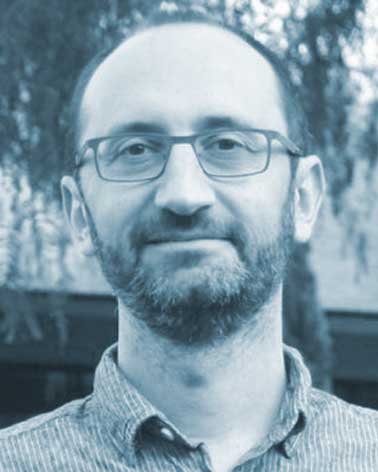
Gustau is a Full Professor of electrical engineering and the Research Coordinator of the Image and Signal Processing (ISP) Group, in the Image Processing Laboratory, Universitat de València (Spain). His main research areas are machine learning for Earth Observation and geoscience data processing. He received his PhD degree in physics from the Universitat de València (Spain).
Holger Hoos
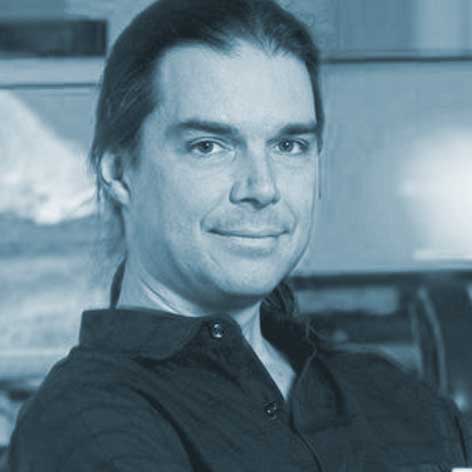
Holger is professor of Machine Learning at the University of Leiden (The Netherlands), adjunct professor of computer science at the University of British Columbia (Canada) and one of the co-founders of the Confederation of Laboratories for Artificial Intelligence Research in Europe (CLAIRE). His research interests are focused on empirical algorithmics with applications in artificial intelligence, bioinformatics and operations research with special interest for automated algorithm design and stochastic local search algorithms. He received his MSc and PhD degrees from the Darmstadt University of Technology (Germany).
Iñigo Alonso Etxebarria

I am an aerospace engineer, coming from the Business Applications program in ESA ESTEC, and I’m now focused in both downstream and upstream commercial Earth Observation projects. My background goes all along from a forestry start-up using Earth Observation to different manufacturing aerospace companies. My educational one is on both aerospace and industrial engineering, as well as on business and finance.
Jake Lever
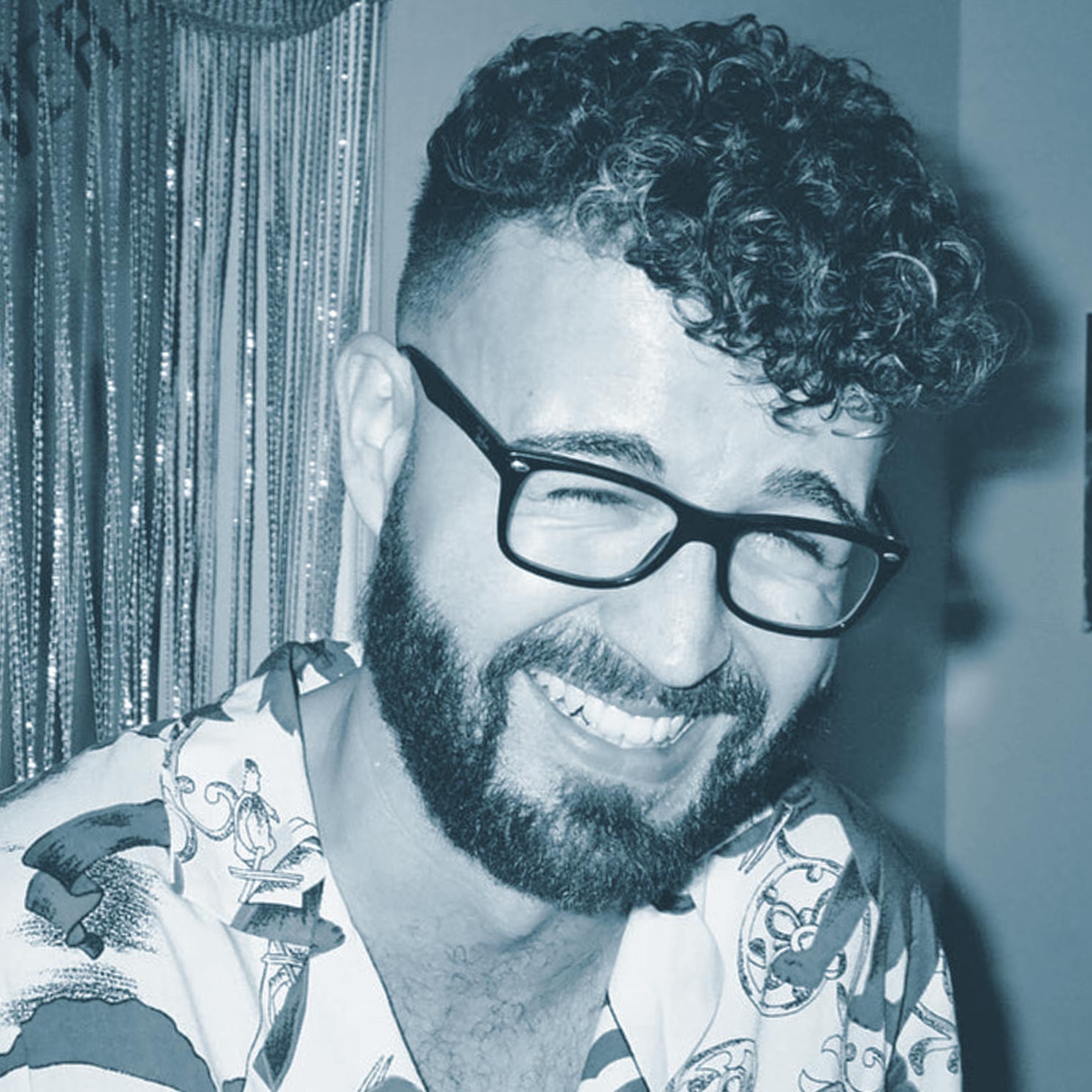
I am currently a third-year PhD student working within the Data Science Institute and the Department of Earth Science & Engineering at Imperial College London. My research focus is primarily on using data science and machine learning methods to increase the accuracy of natural disaster models and predictions, and improve the social response to these types of events. My research is supported by the Leverhulme Centre for Wildfires, Environment and Society and the Data Science Institute at Imperial College London.
James Wheeler
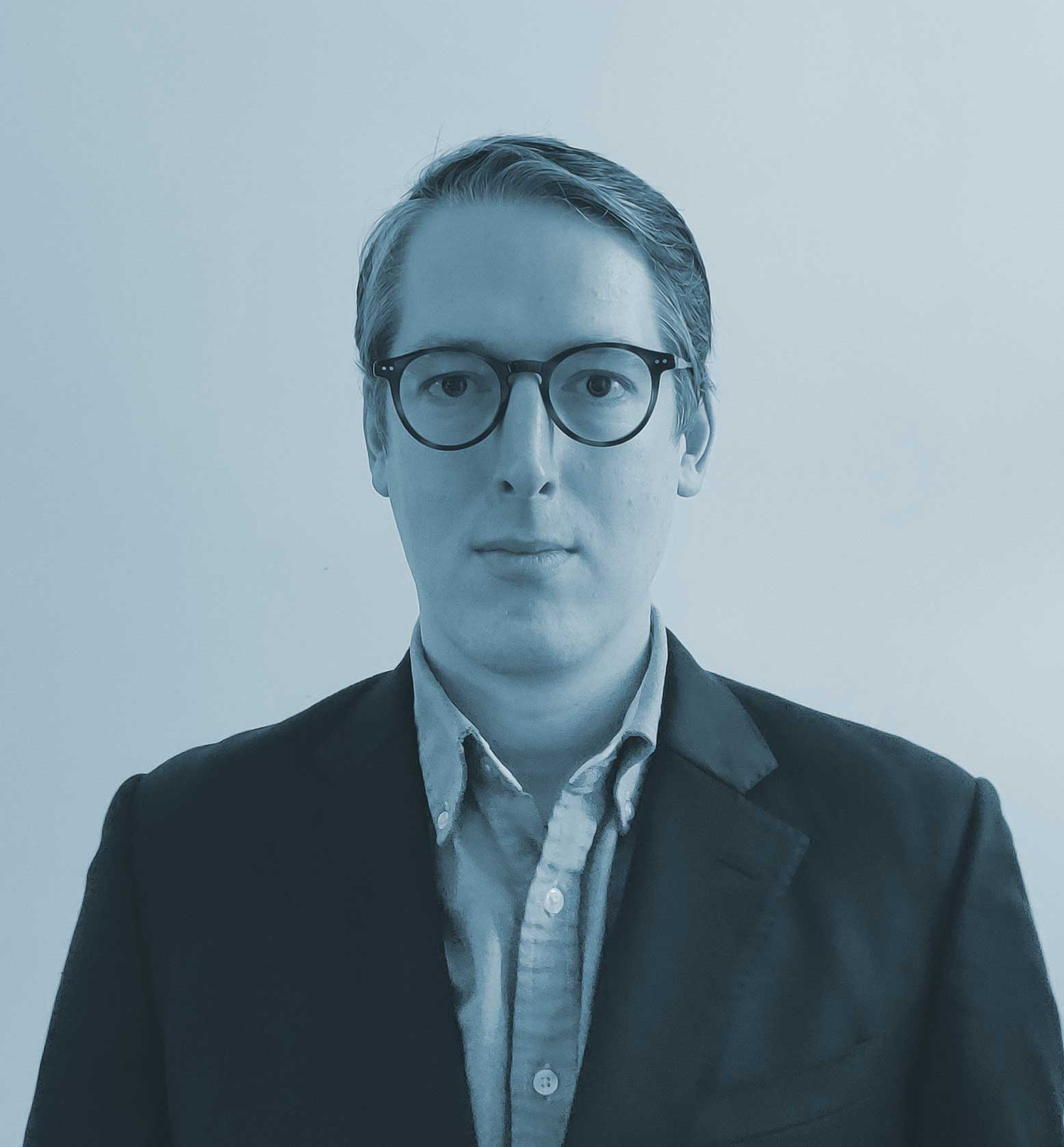
My primary research interests are in SAR remote sens- ing, land cover change mapping, and large dataset analysis. As I work with SAR imagery over large areas and long time periods, I also develop tools for process- ing and analysing these datasets.
My activities within the Φ-lab are a continuation of previous research into burned area detection, apply- ing Deep Learning methods to support this, and the generation of SAR datasets and applications for other purposes, including VR. I also support training and SAR processing among colleagues and visitors to the Φ-lab.
I began my remote sensing career with a MSc at University College Cork, Ireland where I looked at subsidence monitoring in a peat bog using an Envisat-ASAR time series. I then completed a PhD in the Centre for Land- scape and Climate Research at the University of Leicester, studying forest change in the Congo Basin and the discrimination of forest and flooded forest, using L-band SAR.