

Archives: Team

Kaushik Pillalamarri

I am Kaushik Pillalamarri, a Ph.D. student in the Department of Computer Science at North Carolina State University(NCSU), specializing in AI foundation models and agentic AI systems for Earth Observation. I received my B.S. in Electrical Engineering from National Institute of Technology Andhra Pradesh, India and my M.S. in Computer Science from NCSU.
My research centers on multimodal foundation models and agentic AI systems for Earth Observation. I investigate methods for integrating optical, SAR, and other remote sensing data to address challenges such as sea-ice monitoring and wildfire mapping, while developing autonomous agents capable of adaptive reasoning and decision-making in geospatial environments. Through advances in model architectures, multimodal fusion, and modality-aware learning, I aim to build trustworthy, open-source AI systems that accelerate climate research, environmental monitoring, disaster response, and other high-impact Earth Observation applications.
Francesco Cimarra

I’m Francesco, currently completing a MSc in Data Analytics & AI at EDHEC Business School in France, after earning a Bachelor’s in Economics at the University of Siena. Before starting my studies, I worked as a software developer at Loccioni, building and deploying automated systems.
Having lived and studied across Italy, the US, Spain, and France, I’ve grown to appreciate different cultures and perspectives, and that curiosity shapes everything I do, including a strong interest in technology, innovation, and fields like space exploration.
Pretha Sur
Pretha Sur is a PhD candidate at Deakin University, Australia, working at the intersection of Edge AI, TinyML, and satellite remote sensing. Her research focuses on developing efficient machine learning methods for onboard satellite data processing, with a particular emphasis on synthetic aperture radar imagery, lightweight vision models, and deployment-aware optimisation for resource-constrained spaceborne platforms.
As a visiting researcher at ESA, Pretha is exploring how artificial intelligence can enable faster, more autonomous analysis of Earth observation data directly on board satellites. Her work aims to reduce dependence on ground-based processing and support timely decision-making for applications such as maritime monitoring, disaster response, and environmental observation.
Valeria Pia Vevoto

I am a Remote Sensing researcher with a Bachelor’s degree developed in collaboration with the European Space Agency, currently pursuing a Master’s degree focused on Earth Observation and data fusion techniques.
My work focuses on the integration of multi-sensor EO data (e.g. Sentinel-5P and Sentinel-2) with in situ measurements (ARPA , AQP and HTP), using Machine Learning and Deep Learning approaches for environmental monitoring, air quality analysis, and vegetation and tree health assessment.
I presented my research at the ESA Living Planet Symposium 2025 in Vienna and participated in innovation-driven events such as the Maker Faire (2024–2025).
My goal is to develop EO/IoT data fusion solutions for vegetation analysis with applications in environmental protection and cultural heritage preservation.
Nikolaos Bountos

Nikos is an AI researcher specializing in deep learning for Earth Observation. He holds a PhD in Computer Science, completed jointly between the Orion Lab of the National Technical University of Athens and Harokopio University of Athens, an MSc from the Technical University of Munich in Data Engineering and Analytics, and a BSc in Computer Science from the Aristotle University of Thessaloniki.
His work has appeared in top-tier machine learning venues including NeurIPS, ICCV, and AAAI, as well as leading Earth Observation journals, and has been recognized twice among UNESCO IRCAI’s Top 100 AI Projects (2022 and 2025). During his PhD he conducted research visits to leading research institutions including Mila – Quebec AI Institute and the Technical University of Munich. He was also part of the winning team in the 2023 Cassini Challenge for the idea track.
Beyond science, Nikos can be found playing with his cat, running, playing football or basketball, or at an open-air cinema.
Martyna Durda
I am a Master’s student in Space Technologies at AGH University of Krakow, with a background in Geoinformatics. My work focuses on Earth Observation, remote sensing, and the use of satellite data for environmental and geoscience applications.
Through my academic and project work, I have developed a strong foundation in data analysis, satellite image processing, and geospatial technologies, with a passion for applying innovative solutions to real-world challenges. I am especially interested in New Space, Earth Observation, innovation, and connecting technology, data, and people to create a positive impact.
Damian Sabatini
My name is Damian Sabatini. I am an anthropologist with a Master’s degree in Material and Visual Culture from University College London, where I am currently developing my doctoral research. My work focuses on understanding how novel techniques are reshaping the ways we conceptualise and represent our environment.
To address this, I draw on a range of anthropological approaches, including visual culture studies, media studies, the anthropology of techniques, and outer space anthropology, among others. I am particularly interested in the different dimensions involved in producing and circulating images of the Earth and the places that constitute it.
I have been awarded two Becas Chile scholarships to pursue my Master’s and PhD studies, as well as a Wenner-Gren Foundation grant to support my fieldwork research (2025–2026). I have presented at three international conferences, published an article in the Journal of Material Culture, and produced a short expository documentary.
Amy Campbell
Amy is a Junior Professional in AI for Climate Science at ESA within the Actionable Climate Information Section (EOP-SCA), based in ECSAT, UK where she leads projects supporting the Paris Agreement and climate-AI activities. She is an interdisciplinary scientist, working at the interface of climate science, earth observation, machine learning and health. With a PhD in Ocean and Earth Sciences, her previous research utilised machine learning and EO data to model and forecast climate-sensitive infectious diseases (water-borne and vector-borne). She was previously a Graduate Trainee at the ESA Climate Office.
Bruna Strack Candido
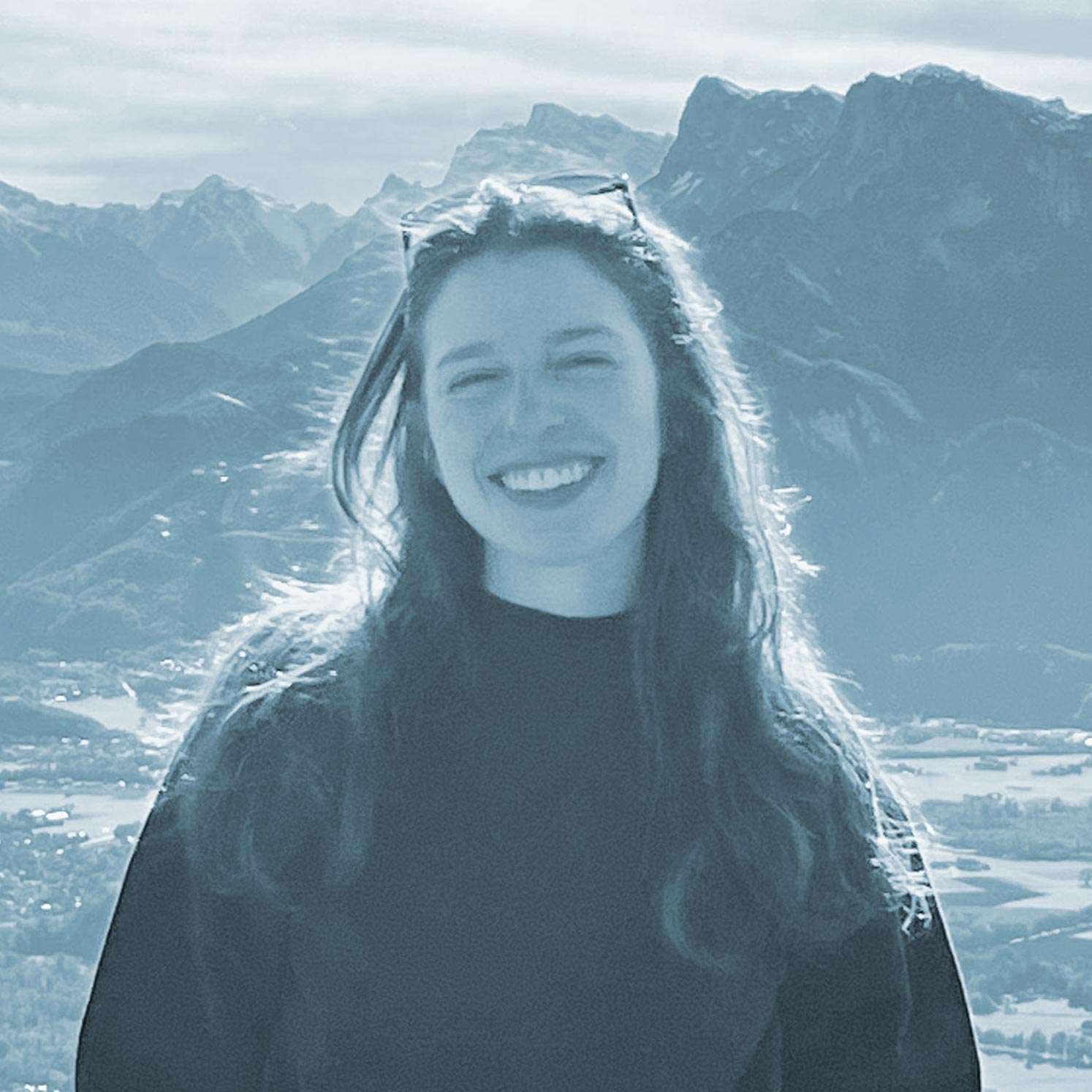
I am an oceanographer interested in machine learning and artificial intelligence applied to Earth observation. I am currently a Master’s student in GeoData Science within the Copernicus in Digital Earth Erasmus programme. My work involves using satellite data and machine learning techniques to study coastal and marine processes.
I am currently developing my Master’s thesis in collaboration with Φ-lab, focusing on Physics-Informed Neural Networks (PINNs) for subsurface ocean reconstruction.
I am interested in applying geospatial technologies to support sustainable ocean management and address climate-related challenges, with the goal of making meaningful real-world impact.